From 1968 to 1972, the Rolling Stones assembled perhaps the most remarkable run of albums in popular music history: Beggars Banquet, Let It Bleed, Sticky Fingers, and Exile on Main Street. Just one of these spectacular records would have been the climax of any band’s career, but Mick Jagger, Keith Richards, and company reeled off a four consecutive masterpieces over the same number of years. Alongside singles like “Jumpin’ Jack Flash” and “Honky Tonk Women,” these records showcase the Stones at their creative peak – and set an unrealistic standard for all the band’s subsequent work.
Only from such heights could solid outings like 1973’s Goat’s Head Soup and 1974’s It’s Only Rock ‘n Roll come to be seen as disappointments. But the Stones mounted a three-album renaissance at the end of the 1970s, starting with Some Girls in 1978 and concluding with Tattoo You, the band’s last truly impressive studio album, in 1981. Released 1980, Emotional Rescue often winds up a neglected chapter in the Stones’ last artistic gasp – but it’s a record that deserves more than a footnote in the history of the legendary rock band.
Not that the Rolling Stones have failed to make compelling music since. They’ve produced a number of catchy singles, from “Love Is Strong” and “You Got Me Rocking” in the mid-1990s to “Doom and Gloom” in the early 2010s. Blue and Lonesome, the Stones’ worthy 2016 tribute to the blues genre that first inspired its members all those decades ago, likewise stands out as a fitting capstone to the band’s enormous body of work. For the most part, though, since the early 1980s the Rolling Stones have amounted to the world’s greatest touring band more than a living musical force. In retrospect, Emotional Rescue can be viewed as the second-to-last major creative statement of a career that’s now spanned almost six decades .
The album itself picks up right where Some Girls left off with “Dance (Pt. 1),” a song with an underlying groove and beat reminds listeners of the preceding record’s “Miss You.” Jagger exhorts the band to “get up, get out, get into something new.” But the Stones clearly have no interest in or intention of doing so on Emotional Rescue; they’ll just continue doing what they do best. Richards and Ronnie Wood – who joined the band as its second guitarist in the mid-1970s – provide excellent guitar work, weaving together solos, riffs, and chords effortlessly.
It’s also clear from the start that Emotional Rescue is a summer album, intended for listening during the long, hot, and sticky days from early June to late August. Richards fires off a blistering solo on the aptly-titled “Summer Romance,” while Jagger’s vocals come to the fore on the plaintive, Caribbean-inflected blues number “Send It To Me.” “Let Me Go” is a pleasant enough break-up song, with Jagger listing the ways in which he’s tried to ditch a lover, including: “The bell has rung and I call time.” On “Indian Girl,” fine acoustic work from Richards and Wood backs up Jagger’s languid lament that “life just goes on and on gettin’ harder and harder.”
From the very moment they burst into public consciousness, the Stones have been driven by a decadent cocktail of ennui and sexual desire. That unstable compound seeps back to the surface on “Where The Boys Go,” where a bored Jagger tells potential female companions that he’s exhausted potential alternatives – playing football, watching television, and drinking to excess – and now embarks on a quest for “a little piece of ass” to divert himself. After all,“where the girls are now” is “where the boys all go.”
The record deftly segues into the desperation blues of “Down In The Hole,” where Jagger aggressively queries whether money actually buys anything of real value. It can’t keep a person from falling “down in the gutter,” reduced to bumming for cigarettes and nylons. Down in the hole, there’s “no escape from trouble” and “nowhere to go.” Richards and Wood knit blues licks together while Sugar Blue plays a mournful harmonica, lending the song an added touch of melancholy.
With a crash of cymbals and a steady bass groove, Emotional Rescue shifts tone with the upbeat title track. Jagger’s falsetto furnishes the song with its distinctive quality as he insists he’ll ride to the rescue of a lover attached to an unworthy partner as her “knight in shining armor” – and on a “fine Arab charger” no less. Sultry saxophone work by long-time Stones saxophonist Bobby Keys rounds out the song.
The Stones return to their central animating concerns with “She’s So Cold,” a tale of unrequited lust expressed with volatile imagery. Jagger fully identifies with his own desire, describing himself as “the burning bush, the burning fire” before outright declaring “I’m the bleeding volcano.” By contrast, the object of his attraction remains “so cold, cold, cold like an ice cream cone” and a tombstone – so much so that Jagger comes to believe she was “was born in an Arctic zone.” A saxophone siren blares midway through the song, layering urgency over the deceptively relaxed guitars of Richards and Wood. Emotional Rescue then closes with “All About You,” a slow dirge to a failed relationship featuring Richards on vocals.
Why give Emotional Rescue a listen? As a record, it’s a straightforward document of the quintessential rock band refusing to enter the twilight of its career with anything less than a roar. Sandwiched in the Stones’ late 1970s renaissance between Some Girls and Tattoo You, Emotional Rescue deserves a wider hearing from the band’s generations of devoted followers and more general rock aficionados alike.
Though the show serves itself up a rich array of satirical targets and boasts a wealth of talent, Space Force never quite reaches orbit. At best, it’s a light-hearted and mildly entertaining diversion from our current national travails. But though Space Force never quite succeeds as a comedy and proves too gentle to serve as real satire, the show nonetheless possesses enough daft charm to endear itself to viewers in its own peculiar way.
Space Force certainly identifies the right satirical targets, President Donald Trump first and foremost among them. Viewers can catch glimpses of a thinly-veiled stand-in for Rep. Alexandra Ocasio-Cortez, for instance, while a character clearly based on Elon Musk and Elizabeth Holmes takes central stage in an late-season episode. But Space Force fails to draw much if any blood. It gives its only decent scratch to the likes of Musk and Holmes when their analogue’s traveling publicist explains that if just one of their promised gadgets works no one will remember their repeated and frequent failures.
That goes double for the more generic archetypes Space Force attempts to lampoon. Self-absorbed social media consultant F. Tony Scarapiducci – likely a riff on the name of short-lived Trump communications director Anthony Scaramucci – represents the greatest missed opportunity, drawn too broadly by actor Ben Schwartz to effectively ridicule this particular pseudo-profession. Likewise, the transparent Russia spy who appears early on amounts to a caricature before he fades away in later episodes. Perhaps the closest Space Force comes to effectively here involves one lowly grunt’s attempt to impress the daughter of Space Force commander Gen. Mark Naird (portrayed by Steve Carell) by rattling off a spate of conspiracy theories he’s read online.
Despite its generally inert satirical execution, however, Space Force still contains some bright spots. It’s imbued with an occasional but all-too-infrequent sense of the bizarre that includes a farcical attempt to order a space chimp to repair a just-launched Space Force satellite that’s been disabled by the Chinese. As the always-exasperated and constantly put-upon Space Force chief scientist Dr. Adrian Mallory, moreover, John Malkovich chews scenery with remarkable aplomb. Mallory himself provides a bit of light satire of performative activism when he threatens to immolate himself in protest of a decision to go to war with China on the Moon but then backs away, saying he’s “proven what I wanted to prove.”
Strangely enough, though, it’s Space Force’s intermittent sincerity that becomes its most engaging feature. From the very first episode, Naird places a premium on people as Space Force’s critical element – and not in the human capital argot of business consultants and economists. Pressed to justify Space Force’s budget under hostile congressional questioning, for instance, Naird explains that, in his experience, “money doesn’t matter, people matter.” In the specific case of the Space Force, he contents, those people put their lives at risk “in the pursuit of science to solve our many problems.” Ironically enough, Naird and Mallory do a better job justifying the fictional Space Force than the Trump administration has managed to do in reality.
But there’s the rub: Space Force takes far too many liberties with reality and does so in ways that reinforce popular misperceptions about America’s space program. To start with, the basic premise of the show seems to rest on the assumption that Space Force has absorbed NASA and the rest of America’s civil space program. Referencing the Trump administration’s stated (if unrealistic) goal to return astronauts to the Moon by 2024, moreover, the fictional Space Force is tasked with putting “boots on the Moon” in a similar timeframe. These deviations from reality would make sense if Space Force were a sharper satire, poking holes in the very concept of a space force as put forward by President Trump – or presenting the bland and boring reality of the actual Space Force that belies the image both Trump and the show itself have concocted.
As it is, however, Space Force leaves viewers with fantastical notions of both America’s overall space program and, perhaps more importantly, what human spaceflight takes. At the climax of the series, the Chinese land taikonauts on the Moon and claim the Sea of Tranquility – the site of the Apollo 11 landing – for Beijing. Naird orders a crash program that sees untrained Space Force personnel almost immediately rocketing to the Moon, as if landing humans on the lunar surface were simply a matter of choice rather than one of hard work, intense planning, and lengthy preparation. By its final episode, Space Force winds up debasing the fine rhetoric it put in Naird’s mouth early on.
There’s more to like and dislike about Space Force. Naird’s single-parent relationship with his daughter Erin (played by Diana Silvers), for instance, weaves another strand of earnestness into the show. But it’s undermined by the bizarre decision to include Naird’s incarcerated wife (portrayed by Lisa Kudrow) in the story. It’s unclear at best what purpose her character serves, beyond giving the show’s writers license to make some stale jokes.
In the end, Space Force squanders its satirical potential. Though the show picks the right targets, it pulls its punches far too often and lets its quarries off with a slap on the wrist. The show’s winning if largely occasional sincerity amounts to a double-edged sword, working against its satirical possibilities at the same time paints sympathetic portraits of a number of its lead characters. John Malkovich’s exquisite exasperation notwithstanding, Space Force gives its inherently absurd premise a gentle ribbing rather than the good-natured pounding it deserves.
[The first in what I hope will be an occasional series.]
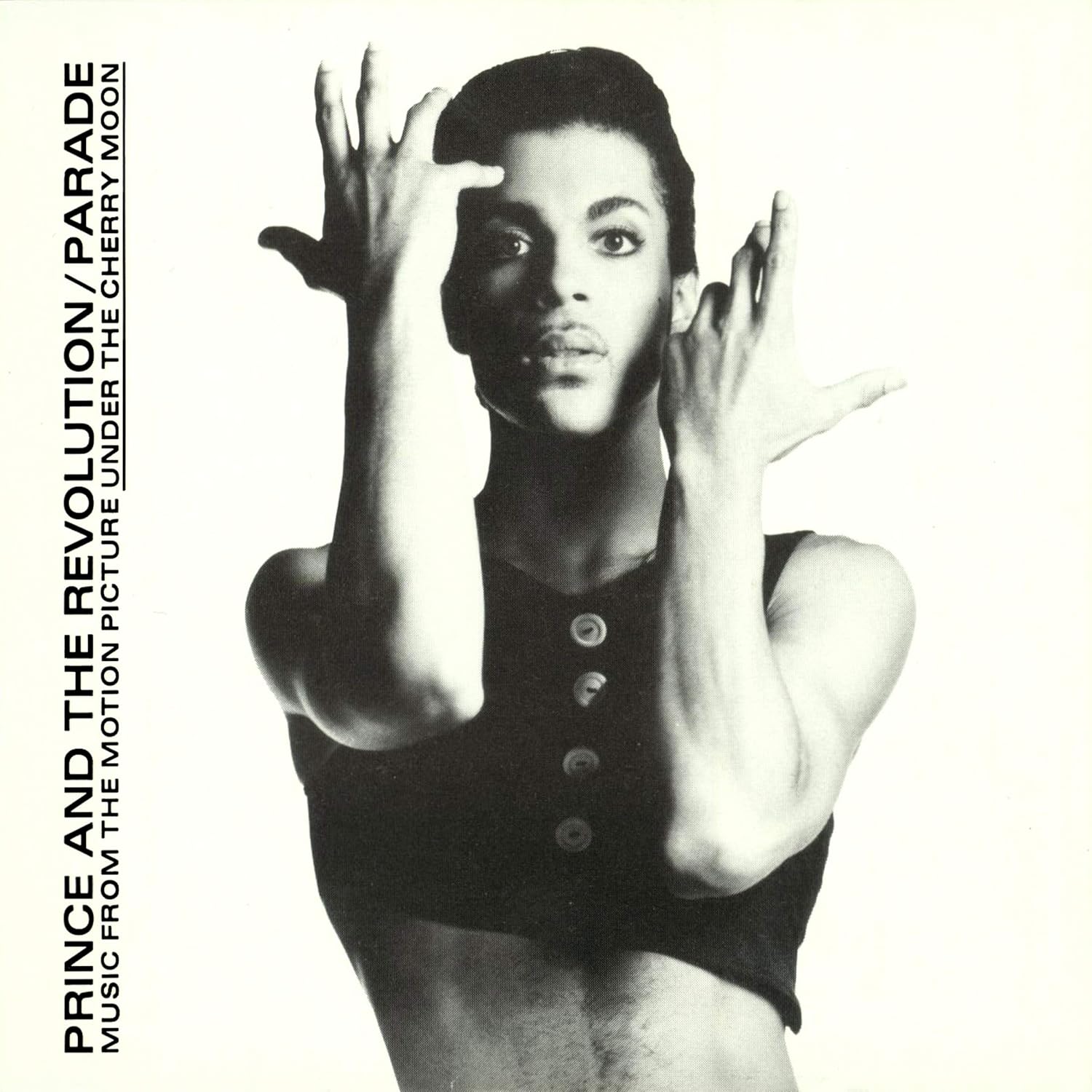
In 1986, Prince released Parade: Music From the Motion Picture Under the Cherry Moon. It would prove to be Prince’s last full album the Revolution, the band that backed him at his artistic peak in the mid-1980s. Situated chronologically between masterpieces 1999and Purple Rain on the one hand and Sign O’ The Timeson the other, Parade is an unjustly overlooked gem from Prince’s most fertile creative period.
To the extent that anyone other than die-hard Prince fans remains aware of Parade today, it’s as the album that includes the superlative single “Kiss.” But Parade – especially the album’s excellent second side – is more than just “Kiss.” In order to capture the sonic subtleties Prince employs with great effect on Parade, it’s necessary to listen actively and attentively to the record as a whole. Indeed, it’s easy to dismiss this album if a you’re not paying attention as you listen. But the music’s well worth the effort involved.
Beyond “Kiss,” Parade contains a number of standout if lesser-known Prince tracks: “Girls and Boys,” for instance, displays Prince’s fondness for lyrics that juxtapose love and lust as horns, guitars, and vocals work together to create a whimsical melody. He closes out the record’s first side with “Venus de Milo,” a dreamy jazz-inflected instrumental driven largely by piano, flutes, and muted horns. It’s a short, slow interlude that eases the listener into the album’s superior second side.
That side starts with a bang: “Mountains” opens with a strong and incessant beat that forms the song’s backbone. A cascade of percussion quickly brings us to a keyboard and guitar riff that fills the space between the beats and drives the song forward. Prince’s falsetto enters to relate the psychedelic story of a lover from “a land called Fantasy” who’s convinced “that another mountain” will appear and “sea would one day overflow with all your tears” whenever “somebody broke your heart.” But rest assured, Prince says: “it’s only mountains and the sea.” The Revolution plays together seamlessly, as evidenced by the song’s breakdown where Prince strips the song down to guitars and drums.
Then there’s “Kiss” – and the song’s introductory guitar riff and opening grunt tells us all we need to know about where it’s going. Here again, Prince’s falsetto works wonders as he expresses his desire to please his lover over a propulsive groove that amounts to funk at its finest. The breakdown brings the song’s infectious guitar strumming back to the fore before transitioning to the twangy, minimalist solo that leads to the back end of the song.
“Anotherloverholenyohead” picks up with a brief guitar solo; pianos and a steady beat then join in to create the song’s crunchy main chord. Prince aggressively begs his now-former lover to return to him, reminding her that they “were inseparable” and that he “gave you all of my time.” His lover says she’s had enough, but Prince warns her that she needs “another lover like you need a hole in your head.” After all, she knows “there ain’t no other/That can do the duty in your bed.” Throughout, the Revolution’s female members – keyboardist Lisa Coleman, guitarist Wendy Melvoin, and Prince’s then-girlfriend Susannah Melvoin – provide strong backing vocals that nicely complement Prince’s desperate romantic pleas.
Parade concludes with the quiet and delicate “Sometimes It Snows In April,” a mournful meditation on the untimely loss of a close friend. The song’s sparse arrangement consists of a piano, acoustic guitar, and vocals, complemented with a muted horn in the introduction. It’s a slow and introspective number in which Prince reminds himself to “always cry for love, never cry for pain” and that “love, it isn’t love until it’s passed.” Though the subject matter veers toward melancholy, the main guitar and piano through-lines consistently lilt upward and lend the song a bittersweet mood.
Why give Parade a listen? As a record, it’s a complex and often whimsical document of a musical artist at the height of his creative powers. If you’ve already heard it casually and dismissed it as one of Prince’s lesser efforts, Parade certainly deserves a second, closer, and more attentive hearing. Ultimately, Parade is a fine record in its own right – but it’s also an album that makes the already colossal achievements of 1999, Purple Rain, and Sign O’ The Times loom all the larger in the pantheon of American popular music.
[This piece was first published on my friend and colleague Ruy Teixeira’s Facebook account. I’m posting it here in order to show the links and references.]
To hear it from political pundits and commentators, in their 2020 presidential primaries the Democratic Party dodged the bullet that felled their Republican counterparts in 2016. Former Vice President Joe Biden emerged victorious amidst a crowded field, vindicating the Democratic establishment against insurgent populists like Sen. Bernie Sanders and Sen. Elizabeth Warren. By contrast, horrified Republican elites could do little to stop their radicalized primary voters from handing their party’s presidential nomination to Donald Trump four years ago.
But this narrative both misleads and obscures: Biden’s sudden and swift political resurrection amounted to a revolt of the Democratic rank-and-file against a strident and loud progressive elite. In an inversion of the 2016 Republican primary, Democratic primary voters prevented a hostile takeover of their party by a well-heeled ideological vanguard class with whom they fundamentally disagreed on matters of both style and substance. Call it the revenge of the normie Democrats against the avant-garde progressive Twitterati.
It’s important to distinguish between a Democratic establishment still trusted by normie votes and a progressive elite that exerts influence in political discourse vastly disproportionate to their actual public support. The former consists of Democratic elected officials like former President Barack Obama and House Speaker Nancy Pelosi, in addition to the proverbial party hacks. More than anything else, these elected officials and party functionaries have to win competitive elections and manage fractious political coalitions in order to deliver practical results for their constituents and the public as a whole.
In contrast, the progressive elite consists of professional activists, opinion page writers, and influential academics and think-tankers – many of whom will populate a potential Democratic presidential administration. This elite also includes ideologically-driven elected officials like Sen. Bernie Sanders and Rep. Alexandra Ocasio-Cortez who represent safe state or districts and probably won’t face competitive elections against Republican opponents any time soon. Backed by wealthy donors and philanthropic foundations, this network of progressive elites loudly dominated political discourse on social media as they sought to shift the Democratic Party toward the rarefied worldview prevalent within elite institutions outside the party – and all against the apparent will of regular Democratic voters.
Democratic candidates and center-left institutions that underestimate the centrality of normies to American politics do so at their own peril. Average voters with largely conventional social and political attitudes represent the core constituency for any center-left political coalition that hopes to win elections and govern in the United States. If the Democratic Party and the American center-left more broadly hope for future success, they must stop catering to noisy activists and funders who insist on receiving gestures that only undermine their political prospects. They must instead cultivate the quiet army of normie voters that powered Biden’s primary victory – and could lift Democrats to victory in November and beyond.
Unfortunately, many leading progressive lights have been captured by this loud, influential, but ultimately unrepresentative class of elite activists and wealthy donors. This class has pulled center-left politics apart from two directions: the identity politics of the “woke” left and the democratic socialism concentrated around the camp of Sen. Bernie Sanders. Highly-educated elite progressives ensconced in the upper echelons of the media, academia, and well-endowed foundations constitute the primary source of support for the woke left. Their influence could be seen quite clearly in Sen. Elizabeth Warren’s presidential campaign, which became an unwitting parodyof woke politics over the course of the primary season. Other candidates like Sens. Cory Booker, Kamala Harris, and Kristen Gillibrand also believed a rhetorical embrace of woke identity politics would deliver them the nomination, only to all drop out of the race before the first primary votes could even be cast.
Likewise, Sanders’s surprisingly vigorous 2016 primary challenge and consistently strong polling ahead of the 2020 primaries led many progressive elites to overestimate the wider appeal of his vague brand of democratic socialism to average Democratic primary voters. Propounded by a number of veteran left-wing activists and fueled by the Sanders campaign, democratic socialists positioned themselves as the inevitable wave of the progressive political future. Thanks in no small part to the highly visible and clamorous contingent of dyspeptic professional activists in its ranks, however, democratic socialism never won over a majority -or even a strong enough plurality – of the Democratic primary electorate.
In short, neither of the most vocal ideological factions in contemporary progressive politics proved popular among actually existing Democratic voters. Former Vice President Joe Biden won the Democratic nomination largely thanks to the strength of his support among black voters, for instance, while Sanders failed to expand his own coalition in a meaningful way. Worse, they may likely be actively harmful to Democratic prospects in November by pressuring Biden to engage in costly political posturing that drives away normie voters. As commentator Josh Barro has pointed out, candidates and institutions have adopted “a wide variety of fundamentally non-policy positions on the culture that annoy the crap out of people” in order to placate internally powerful activist and donor classes.
The drawbacks of this approach are legion. It’s disastrous politically, alienating Democrats from their own voters and heavily circumscribing their attempts to build a wider political coalition. Moreover, it destroys the sense of common national purpose that the center-left must cultivate if it’s to achieve its policy goals. Allowing progressive politics to be dictated by these unrepresentative factions may serve the interests of professional activists and donors, but it does not serve the interests of the Democratic Party, its electoral coalition, or the nation as a whole. Above all, it’s left Democrats and the center-left bereft of compelling narratives of their own and estranged from their bedrock base of normie voters.
In the 2020 primaries, however, the normies struck back by propelling a somnolent Biden campaign to a string of decisive victories and the Democratic nomination. They also revealed just how unmoored progressive elites had become from their own voters over the past five years. Progressives not only badly misinterpreted the 2016 primary results, they stuck with this faulty interpretation in the face of evidence to the contrary. They ignored the normie revolt of the 2018 mid-term elections, where mainstream center-left candidates supported by the party establishment won highly contested races for Congress while those backed by progressive ideologues lost. An excessive focus by the political media on newly-crowned progressive stars like Reps. Alexandra Ocasio-Cortez, Ilhan Omar, and Ayanna Pressley crowded out sober analysis of the actual election results. As a consequence, many progressive elites and prospective presidential candidates alike failed to perceive the rise of an emerging normie majority in American politics.
Thanks in no small part to their own primary voters, then, Democrats possess a rare opportunity to build an enduring center-left coalition in 2020 – but only if they embrace the normie politics that animates many of their core supporters. The last several election cycles reveal much about the politics of the emerging normie majority.
Though they may be anathema to the woke left and democratic socialists alike, the politics of the emerging normie majority aren’t difficult to comprehend. To start, normies aren’t besotted with the avant-garde theories of race, gender, or other identity categories peddled by progressive activists and promoted by foundations. Their culturally moderate politics leads normies to accept gay marriage, for instance, while simultaneously holding deep reservations about the excesses of contemporary transgender activism. Normies remain open to ambitious economic programs like adding a public option to Obamacare and substantial investments in national infrastructure, but tend to view expansive progressive left proposals like the Green New Deal and Medicare for All as flights of political fancy. Ambivalent internationalists, normies don’t favor disengagement from global politics but remain cautious when it comes to foreign policy. Above all, normies seek a semblance of normalcy in national life that only a competent government and stable political leadership can deliver.
To fully take advantage of this golden opportunity to cement a coalition founded on this emerging normie majority, Democrats and the center-left need to stop being bullied by the demands of the progressive professional activist and some donor classes. Better yet, they should keep the political and electoral strength of these classes in perspective and embrace the normie politics of core Democratic constituencies. That starts with the recognition that activists and donors aim to advance their own points of view and preferred policies rather than build a broader center-left coalition that can win elections. It’s better to take heat from such groups for failing to send the proper signals than to drive away the normie voters that decided the 2018 mid-terms and 2020 primaries.
Despite their repeated failures, however, professional activists and donors will still retain the power and influence they have accumulated over the past several years. An emerging normie majority will only coalesce if the center-left stays in touch with political reality and turns back these corrosive and schismatic forces. Democrats must be willing to send positive signals to normies at the risk of bringing the wrath of activists down upon them. More than anything else, the center-left must recognize and accept the reality and electoral power of normie voters – and harness it for constructive ends.
It’s no exaggeration to say that the last four episodes of Star Wars: The Clone Wars represent the best Star Wars we’ve seen since 1983 – if not the single finest hour of Star Wars ever produced. These final episodes combine stunning action sequences and lightsaber acrobatics with the sort of character drama and emotional intensity never before seen in the Star Wars fictional universe. Taken together, these episodes rank with Star Trek: The Next Generation’s superb televised conclusion “All Good Things…” as among the best series finales broadcast. But perhaps most importantly, The Clone Wars lead character Ahsoka Tano takes her rightful place as the greatest hero in the Star Wars mythos.
Over the course of just over an hour or so, these last episodes of The Clone Wars deliver an emotional gut-punch unlike anything else Star Wars has given us. These episodes are emotionally intense and even brutal at times, thanks first and foremost to the web of personal relationships we’ve seen Ahsoka develop with Anakin Skywalker, Obi-Wan Kenobi, and clone captain Rex over the course of the show. We’re reminded of the strength of Ahsoka’s bonds in the first two episodes of this last narrative arc, only to see these ties unravel in heartbreaking ways in the last two episodes as a result of events portrayed in Revenge of the Sith.
Indeed, themes of loyalty and friendship established in early episodes make later developments all the more heart-wrenching. Anakin reminds Ahsoka early on that loyalty “means everything to the clones,” for instance, and brushes off her thanks for his support in a tense discussion with Obi-Wan with the response that “that’s what friends are for.” It’s ironic that Anakin first articulates these themes; after all, it’s his turn against the Jedi Order in Revenge of the Sith that puts his friend and former apprentice’s life in mortal danger. For their part, moreover, the clones themselves repay Ahsoka’s own loyalty by betraying her and the rest of the Jedi thanks to the activation of their secret programming.
Ahsoka’s strong relationship with Rex drives the action in the final two episodes – and likely saves her life. Early on in the third episode, we’re treated to a poignant existential conversation between Ahsoka and Rex in which she tells the clone leader that she couldn’t have asked for a better friend. Moments later, Rex is called away to receive orders to betray the Jedi and kill Ahsoka. But his deep ties with Ahsoka cause Rex to hesitate and gives her a fighting chance at survival. Ahsoka later takes a series of exceptional risks to save Rex, taking him hostage and removing the inhibitor chip in his head. Later on, she abandons an opportunity to escape their burning star destroyer in order to prevent their former comrades from overrunning Rex’s position.
There’s much more that’s heartbreaking in these final episodes, starting with Ahsoka’s relationship with her friend and former Jedi master Anakin Skywalker. In a rush to liberate the planet Mandalore and capture the villainous Darth Maul – still alive despite his bisection at the hands of Obi-Wan at the climax of The Phantom Menace (it’s complicated) – Ahsoka and Anakin can’t find the time to catch up personally after some time apart. Ahsoka further forgoes chances to relay messages to Anakin, judging the moment inauspicious. Ahsoka’s faith in her former master when Maul accurately predicts Anakin’s impeding fall to the dark side lends these final episodes of The Clone Wars an emotional weight that the prequels palpably lacked. All these beats add up to a moving final narrative that’s suffused with the sort of pathos rarely present in Star Wars.
More than anything else, though, this final narrative arc succeeds thanks to Ahsoka herself. Her basic humanity and decency come to the fore as her defining character traits, and she proves herself a Jedi Knight par excellence despite leaving the Order of her own volition. She tells Anakin and Obi-Wan that average people have lost faith in the Jedi thanks to the Order’s myopic proclivity to play galactic politics – and that she had too “until I was reminded what Order means to the people who truly need us.” Moreover, it’s clear that Ahsoka sees the looming end of the war as an opportunity to re-join the Order: when she contacts the Jedi Council after taking down Maul, she say’s she’s done her duty as a citizen and not as a Jedi – at least “not yet.” Ahsoka’s complex views on the Jedi Order become clear in her subsequent reflective conversation with Rex: “As a Jedi, we were trained to be keepers of the peace, not soldiers. But all I’ve been since I was a Padawan is a soldier.”
But it’s in her relationship with the clones that Ahsoka’s humanity shines most brightly. She treats them with the same sort of empathy The Clone Wars itself managed over the course of the series. When she encounters a dying clone trooper on Mandalore, for instance, she holds his hand and consoles him before he dies of his wounds. Ahsoka refuses to abandon Rex even after his programming activates, leading to a brief but affecting scene in which she replies from behind that she’s “right here” when Rex demands to know her location. What’s more, Ahsoka refuses to kill the clones that have been trying to kill her – even when a de-programmed Rex tells her there’s no other way. Finally, in what’s perhaps the most emotionally brutal scene in the whole Star Wars series, Ahsoka silently looks out over the graves of the clone troopers she and Rex fought alongside and then buried in the wake of their betrayal.
In the end, it’s her fundamental humanity that allows Ahsoka to stay true to her own moral code and ethical commitments. This sense of basic decency suffuses her own ideas of what a Jedi Knight and the Jedi Order should be, and guides her actions throughout The Clone Wars – and nowhere more so than in these final episodes. It’s what makes Ahsoka one of the great characters in the entire Star Wars mythos and earns her a prominent place the much wider pantheon of science-fiction heroes. Ahsoka may well have been the first female Jedi to wield a lightsaber, but that’s not why she’s the most compelling protagonist Star Wars has yet produced.
Nor is it hard to understand why The Clone Wars succeeded where the prequels failed: it possessed well-developed characters with close relationships that demanded emotional investment from the audience. But that The Clone Wars succeeded is all the more perplexing given the strong involvement of George Lucas himself in both enterprises. For instance, The Clone Wars portrays Anakin Skywalker as a fully-developed and competent character as opposed to the moody teenager and sullen young adult of Attack of the Clones and Revenge of the Sith. Indeed, there’s far more emotion and character in this final arc of The Clone Wars alone than in the rest of the Star Wars saga combined.
Paradoxically, though, The Clone Wars relies on the prequels for much of its emotional impact even as it transcends them. As an audience, we know what’s coming in these final episodes: the fall of the Jedi Order and the rise of Darth Vader. But we’ve also seen relationships between Ahsoka, Anakin, and the clones grow and mature over the course of The Clone Wars in ways that make the largely unseen events of Revenge of the Sith more tragic. Kevin Kiner’s orchestral score also works wonders here, effectively integrating musical cues and movements from John Williams’ Revenge of the Sith score with more ominous and ambient electronic sounds to create a sense of foreboding across these last four episodes.
In contrast to the prequels, The Clone Wars establishes real and high emotional stakes for the audience and the characters themselves. These stakes imbue this final narrative arc with an emotional weight and resonance that’s absent from the prequels, and what’s more The Clone Wars earns these stakes in ways the prequels never did. Thanks to the relationships we’ve seen Ahsoka forge with Anakins and the clones over the course of the series, for instance, Ahsoka’s battle against the turncoat clones and her interactions with Anakin pack a far stronger emotional punch than the climactic duel between Anakin and Obi-Wan in Revenge of the Sith or the confrontation between Obi-Wan and Vader in the original film.
Indeed, the final shot of the series encapsulates this earned emotional resonance: Darth Vader and an army of Imperial stormtroopers come across the site where Ahsoka and Rex buried their former comrades in arms. Vader picks up and ignites Ahsoka’s lightsaber, the very lightsaber he kept and repaired for her after she left the Jedi Order. It’s a silent scene, and rightly so – it successfully relies on our the audience’s awareness of the ties that once bound Anakin Skywalker and Ahsoka Tano together to produce the sort of pathos that’s nonexistent in the prequels. Ultimately, it’s the absence of real emotional stakes that transformed those films from the grand tragedy Lucas envisioned into fodder for humorous memes.
The Clone Wars doesn’t redeem the prequels, however; the show stands on its own and ought to receive praise in its own right. These last four episodes gave the series the spectacular and satisfying conclusion it deserved. Though the show’s end closes Ahsoka’s remarkable narrative for now, both she and The Clone Wars as a whole demonstrate just how good Star Wars can be when it hits its marks. I’m personally eager to see more of Ahsoka’s story – what was she up to between her final scene in The Clone Wars and her first appearance in Star Wars: Rebels? What did she do after Rebels? – but that I understand that Ahsoka will only appear again if the Star Wars gods allow it.
But even if we never see Ahsoka again, The Clone Wars has provided a fitting and rewarding send-off to the best Star Wars character we’ve seen.
Over the past quarter-century, American politics and our shared national life have slowly but surely descended into derangement. From President Bill Clinton’s impeachment over sexual misbehavior and the Iraq war to chronic government shutdowns and the election of a semi-literate carnival barker in 2016, this decline has only accelerated over time. Safeguards and firebreaks against the absurd and inane in politics and society alike have been dismantled, our national circuit-breakers damaged seemingly beyond repair.
The politicization of nearly everything in national life stands as both cause and consequence of our collective flight from reason. Politics saturates our collective experience as a nation in unhealthy ways. Political polarization likewise serves as the fuel for its own fire, feeding itself as it continuously expands and consumes whatever crosses its path. Taken together, these abstract phenomena have hit critical mass and started a self-sustaining chain reaction that can only hasten our own national self-immolation.
Indeed, politics itself threatens to swallow us all whole. The great American berserk has finally spun out of control, and the gradual-then-sudden transformation of politics into a constant and ever-present life-or-death struggle bears much of the blame. We’ve made politics a way of life, imposing upon ourselves rigid and dogmatic ways of thinking that flatten out our own national, social, and personal lives. Without so much as a second thought, we’ve excised wider and richer notions of life and experience from our public and our private consciences. We now increasingly define ourselves by and through our politics, when in reality no single facet of our lives can possibly hope to do so.
The coronavirus crisis, however, offers a stark reminder of what truly matters in politics: competence and a concern for the common good. We’re seeing all too clearly the disastrous consequences of our abnormal national obsession with politics and its deleterious place in our public life. Counterintuitively, this crisis shows us that politics must be made normal again – not a dominant or decisive part of our national or personal lives. Politics as a way of life has failed, but politics as a mechanism for substantive change can be made to work once again.
That can’t be done without understanding our present abnormalcy. To start with, our politics has assumed increasingly existential stakes over the last twenty-five years. Indeed, every successive national election has come to be characterized as the most important of our lives. Wittingly or not, we’ve cultivated a pervasive sense of existential dread in our politics that drains us as individuals and exhausts us as a society. This chronic state of constant agitation and anxiety achieves little and costs much: we reduce ourselves from individuals with a variety of views and interests to two-dimensional caricatures. Our thinking about society and conceptions about our shared national life have become narrow, cramped, and mean-spirited. In amplifying the stakes involved in politics beyond all reason, moreover, we encourage extreme stances and excuse unethical behavior. As a result, government no longer functions adequately and cannot serve its primary purpose: solving collective action problems with an eye to the common good, determining what we owe one another as fellow citizens, and resolving disagreements about those subjects – or at least constructively suspending them – without recourse to violence.
As a society and as individuals, we’ve invested far too much of ourselves in politics. In seeking meaning and salvation in politics, we’ve paradoxically made politics progressively more trivial. We’ve allowed our baser instincts and impulses to permeate and corrupt our public life, making it more squalid and sordid than absolutely necessary. By making politics a way of life, in short, we’ve burdened politics itself with far more significance than it can possibly sustain and caused the hard work of actual government for which it exists to grind to a screeching halt.
Politics is at its core a profession, not a way of life – and we’ve confused the two at our personal and collective peril. As a profession, politics is no more or less honorable than any other. But as a way of life, it becomes non-negotiable and intolerant; political disagreement becomes one of the deepest personal attacks an individual can face in life. This phenomenon isn’t exactly new: a century ago, the great sociologist Max Weber distinguished between those who primarily lived “for” politics and those who mainly lived “off” politics. In the latter camp, we find professional politicians and party functionaries who make politics their career and source of income. In the former camp, however, we find individuals who involve themselves in politics because they need their lives to “meaning in the service of a ‘cause.’”
Weber presciently and accurately described the motivations of many who take part in democratic politics today, both in the United States and elsewhere. But he didn’t establish that it’s actually possible for individuals to find meaning in politics, in part because he didn’t set out to make that argument. In his own roundabout way and in his own historical context, however, Weber himself understood that politics as a way of life did not offer the route to personal or collective salvation that many of its adherents think possible. When we try to make politics a way of life that defines who we are as individuals, we lose sight of the fact that we bring our own principles and values to politics rather than the other way around. Politics itself cannot bear the weight of the search for meaning that so many place on it today and throughout history.
It’s therefore incumbent on those of us who have made politics and policy our profession to do our part to make politics normal again, undertaking as best we can to ensure that politics returns to its proper role as a pedestrian but effective means of addressing collective problems. Ordinary citizens in a democracy shouldn’t have to obsess over politics the way we do, much less see it as a field of existential battle that’s joined every single day. More importantly, we all have interests and pursuits into which politics cannot and should not infiltrate or impose itself upon. A relentless and dogmatic drive to freight even the most quotidian affairs of our lives with political portent leaves us blind to the more profound joys and sorrows inherent in our shared human experience.
That’s not at all to downplay or gainsay the importance of participation in public life and politics. Indeed, involvement in civic affairs remains a duty for those of us so inclined to see it as such. The ancient Stoics, for instance, held that involvement in public life constituted a central commitment of their philosophy. But as the Roman statesman and Stoic philosopher Seneca wrote in his treatise On Leisure, such participation can be limited by an an individual’s own capacity to contribute to public life and the general moral health of the body politic. Equally significant, Seneca offers a more expansive and magnanimous conception of public service as making oneself “useful to others” – including, if all else fails, to oneself.
Above all, then, politics needs to be conducted in accordance with its proper worth: an important part of social and national life, but not an individual or collective obsession that devours all before it. Even for those of us liable to view political involvement as a duty, it’s far from a categorial moral imperative that supersedes all other responsibilities or preferences at all times. And as Seneca reminds us, there are other ways to meet one’s duties and participate in public life that don’t necessarily involve electoral or formal politics.
We need instead to aim for normalcy in politics even as we approach public policy with ambition and vision. To do otherwise would be to accede to a quite frankly totalitarian demand for an absolute individual moral commitment to politics that’s repressive, alienating, and enervating. The constant mobilization such a mindset requires corrodes the very social bonds necessary for a society to function, and leaves us all exhausted in the end. Indeed, when we infuse everything with politics, politics itself loses meaning and becomes incapable of performing its own basic purpose
Beyond the myriad fixes our national institutions desperately need, we can all take a number individual steps to help make politics boring once again. First and foremost, we must revive the lost art of persuasion – political and otherwise. At heart, this means recognizing our own fallibility and the chance that we might be wrong when we seek to change minds. It also entails an acceptance of disagreement when argument fails to immediately sway our interlocutors. Simply proclaiming our own moral superiority and attacking all those who disagree even in the slightest degree as beyond the pale persuades no one and further rends the already frayed fabric of our national life.
We ought to instead pursue a sort of minimalist agreement in our political debates. The overall aim of our arguments should be to win support for concrete political action and policies, not induce the sort of religious conversion best experienced on the road to Damascus. That requires a willingness to listen to those we hope to persuade, accept the possibility that we may well fail, and assume the risk that we ourselves may change our own minds or modify our own opinions, at least in part. There’s no guarantee we’ll succeed in our efforts to convince others to support our preferred policies or take the sort of political action we seek, but we’re certain to fail if we don’t even make the attempt in good faith.
Moreover, we should do our best to find inspiration in normalcy. That doesn’t mean giving up on big ideas or ambitious projects when it comes to politics and policy. But it does require a strong focus on practicality, in terms of both garnering the necessary political support for a specific policy and then successfully executing it. Often enough, these two elements work together strongly: to secure sufficient political backing for a particular policy proposal, potential supporters need to believe that the project in question can actually be carried out. It follows that we ought to build the broadest political coalitions possible in pursuit of our policy goals – to include even those with whom we might otherwise disagree. That in turn calls on on us to forsake grandiose notions of “revolution” and avoid arrogantly alienating potential partners with our own rhetoric and conduct.
But that attitude only works if we approach politics in right measure. We must neither exaggerate nor underestimate the significance of politics in the wider scheme of things, recognizing it as just one among many important parts of life – not see it lurking everywhere we look. Those of us involved in politics and policy should let people live their lives, to say nothing of living our own lives outside our professional work. Right now, however, we’re drowning in politics because we don’t put it in proper perspective. We fail to realize that politics cannot substitute for what’s truly essential in life: our personal relationships, our philosophical commitments, and the like.
Finally, we shouldn’t ask politics to solve problems that it can’t due to its very nature answer. Politics does indeed need a moral and philosophical dimension; as President Franklin D. Roosevelt recognized, citizens should remain “conscious of their individual stake in the preservation of democratic life in America” and do their best to help build a society worth living in. But politics cannot provide either individual or collective meaning in and of itself, much less salvation. Instead, politics should focus on its strong suit: advancing the common good in practical and concrete ways. There will of course be constant debate about what that itself entails, but this forthright exchange of views cannot and should not allow itself to succumb to the temptations of bad faith so prevalent in our contemporary public discourse. We must accordingly resist demands to concentrate our energies on a single original sin that political evangelists of various stripes insist explains everything – all the more so when these proselytizers condemn us as wicked for failing to do so.
More than anything else, perhaps, we should understand that the end is not nigh. Our monomaniacal collective focus on politics as a way of life causes us to see even the smallest political stakes as existential. A sense of politics as a life-or-death enterprise prevents us from even hoping to achieve our concrete policy goals. We must instead cultivate a politics of normalcy – not the complacent normalcy preached decades ago, but a boring yet bold commitment to advancing our political views and policy objectives in correct proportion to their worth in our personal and social lives. As important as it can be, there’s more – much more – to life than politics and public policy. If we’re ever going to make our society one worth living in, we must get a grip on ourselves and restore politics to its proper place in our national life.
Last week marked the fiftieth anniversary of the flight of Apollo 13, inspiring me and countless others to revisit the mission itself as well as the 1995 film Apollo 13. The movie helped inspire my abiding interest in space exploration, and it’s darkly serendipitous that this anniversary happened to coincide with an ongoing national crisis of extraordinary magnitude. Americans today confront both a pandemic viral outbreak and an economic collapse unseen since the Great Depression at the same time they’ve been saddled with the most incompetent and mean-spirited political leadership in the nation’s history.
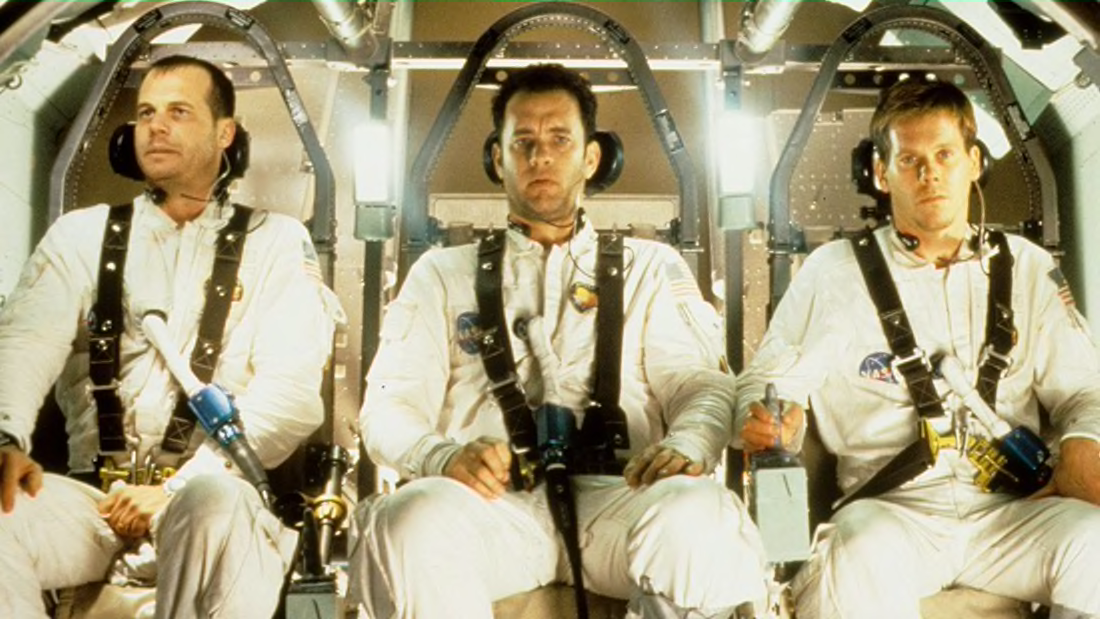
The contrast with the crisis leadership dramatized so effectively in Apollo 13 could not be more stark. So it’s well worth reflecting on what we can learn about coping with and handling exceptional situations and acute crises from this film. Though Apollo 13 is of course a fictionalized account of the mission, Apollo 13 commander Jim Lovell (portrayed by Tom Hanks in the movie) and co-author Jeffrey Kluger both vouch for the general accuracy of the narrative presented by director Ron Howard.
Indeed, the high stakes and time constraints involved make lessons derived from the film all the more worth our while today. Like the proverbial diamond formed under heat and compression, Apollo 13 tautly illustrates the ways in which the stresses and strains of acute crises can bring out the best in us. It also shows we need skilled, driven, and above all competent leadership to obtain that level of performance in high-pressure situations – all qualities in short supply these days.
In that spirit, here are five crisis lessons from Apollo 13.
1. “Let’s look at this thing from a standpoint of status. What have we got on the spacecraft that’s good?”
In extreme and fast-moving situations – not to mention everyday setbacks – it’s easy and understandable to focus on what’s gone wrong above all else. It’s therefore crucial to accurately assess what strengths and capabilities remain available to confront a given crisis – or recover in its aftermath. That’s what Flight Director Gene Kranz (portrayed by Ed Harris) does when he asks one of his flight controllers to evaluate what systems on Apollo 13’s command and service module still work after an oxygen tank explodes and cripples the spacecraft. This mentality proves indispensable when both the crew and and Mission Control quickly determine that the lunar module can be used as a lifeboat, keeping Lovell and fellow astronauts Fred Haise and Jack Swigert (played by Bill Paxton and Kevin Bacon, respectively) alive.
Right now, things in the United States seem especially broken. Medical equipment including ventilators and masks remains insufficient to cope with the numbers of people stricken with coronavirus, due in no small part to President Trump’s indolence and incompetence. Likewise, national testing for the virus remains well behind other advanced economies despite the administration’s promises. Moreover, the relief package intended to help businesses and citizens weather the economic fallout of the pandemic appears to be inadequate to the task at hand. But as inept as virtually all our institutions look at the moment, it’s important to remain mindful of that the nation retains strengths as well – and focus on those that can help ups recover when the immediate crisis passes.
2. “Let’s stay cool, people… I want everybody to alert your support teams. Wake up anybody you need, get them in here. Let’s work the problem, people. Let’s not make things worse by guessing.”
In time-critical situations, it’s vital to keep calm and avoid panic by focusing on the actual problem at hand and learning what’s needed to fix it. What’s more, it’s imperative to get a handle on the challenge before attempting to fix it, lest needless and possibly fatal mistakes get made instead. That’s what Kranz tells his flight controllers after they confirm Apollo 13 is venting oxygen from one of its damaged tanks.
Working the problem also entails calling in as many relevant and knowledgable people as possible to help out. Kranz doesn’t hesitate to tell his Mission Control team to roust other flight controllers; indeed, it’s pretty much the first action he takes once the magnitude of Apollo 13’s predicament becomes clear. Later, Kranz tells his flight controllers and engineers “to find every engineer who designed every switch, every circuit, every transistor, and every light bulb that’s up there. Then I want you to talk to the guy on the assembly line who actually built the thing.” That’s likely a rhetorical flourish, but there’s no reason not to reach out to or consult with anyone who might be able to assist in a crisis scenario – all available hands should be on deck.
Our political leadership, on the other hand, obviously does not want to grasp the scope or nature of the coronavirus problem – nor does it want to bring as many knowledgeable and relevant people as possible on board to work the problem. President Trump repeatedly downplayed the threat, asserting the virus would “miraculously” disappear, erroneously comparing it to the seasonal flu, or calling it a hoax perpetrated by his partisan rivals. Trump has also flirted with firing Dr. Anthony Fauci, the nation’s top infectious disease expert, and appointed unqualified cronies – including his daughter – to the council charged with recommending when to lift the coronavirus lockdown.
3. “All right, there’s a thousand things that have to happen in order. We are on number eight. You’re talking about number six hundred and ninety-two.”
When lunar module pilot Jack Swigert expresses his concern that Mission Control hasn’t come up with a re-entry plan to his fellow crew members, mission commander Jim Lovell warns him that he’s well ahead himself. Over the course of the conversation, tempers flare and Lovell raises his voice to tell his crew that they’re “not going to go bouncing off the walls for ten minutes, because we’re just going to end up back here with the same problems!” Lovell understands that it’s best to work and solve problems as they arise in a crisis. There’s no reason to worry prematurely and unnecessarily about issues that will inevitably arise in due course. It’s accordingly important to stay in the moment and focus on the immense challenges at hand.
Possessing the attention span of a toddler at best, President Trump seems constitutionally incapable of focusing on the tasks before him – whatever they may be. There’s nonetheless a certain consistency in Trump’s unfounded eagerness to reopen the country’s economy. First, he wanted to lift public health restrictions by April 12 – Easter Sunday. More recently (and perhaps upon seeing his sagging poll numbers), he’s targeted May 1 as the next date he’d like to lift lockdowns across the nation. Trump’s even attackedresponsible state governors for maintaining public health restrictions in order to manage the pandemic, once again singling out his partisan rivals. But there’s no short-circuiting the hard work and patience necessary to bring the coronavirus under a modicum of control.
4. “We’ve got to find a way to make this fit into the hole for this using nothing but that.”
As Apollo 13 returns home, flight controllers at Mission Control realize that toxic levels of carbon dioxide will soon start building up in the lunar module as the its cylindrical CO2 filters reach capacity. Since the command module’s carbon dioxide scrubbers are cubical and therefore won’t fit into slots for the lunar module’s filters, Kranz advises his team to “invent a way to put a square peg in a round hole – rapidly.” Using only materials available on the spacecraft itself, NASA engineers hurriedly improvise a solution that brings CO2 levels down and saves the crew from asphyxiation. In more general terms, they used what was available to them at a given moment – even it it wasn’t designed for the the task in question.
5. “With all due respect sir, I believe this is going to be our finest hour.”
Before the command module Odyssey re-enters the Earth’s atmosphere, Kranz overhears a NASA big-wig brooding that Apollo 13 could become “the worst disaster NASA has ever experienced.” Kranz responds by taking responsibility for the outcome of the mission, even though it’s unsure. This self-confidence amidst uncertainty echoes the idea put forward by Admiral James Stockdale, the highest-ranking American pilot taken prisoner during the Vietnam War, that it’s vital not to “confuse faith that you will prevail in the end – which you can never afford to lose – with the discipline to confront the most brutal facts of your current reality, whatever they might be.”
In blunt contrast, President Trump has pointedly refused to fulfill his duties as the nation’s chief executive, let alone take responsibility for his own decisions. “I don’t take responsibility at all,” he responded when queried about his administration’s laggard coronavirus testing program. Though unsurprising, this failure to take responsibility is all the more galling with the revelation that his administration starved a pandemic early-warning program to budgetary death in September 2019.
“Gentlemen, it’s been a privilege flying with you.”
Just before re-entry, the veteran astronaut Lovell conveys his respect for his fellow crew members by giving them the highest praise possible. Though a deluge of crises prevented him from walking on the Moon, Lovell still considers it a privilege to have flown with Haise and Swigert in such desperate circumstances. That’s not surprising, considering how severe crises like Apollo 13 can bring out our best and most capable selves.
Apollo 13 provides us object lessons in crisis leadership, from both Gene Kranz at Mission Control and Jim Lovell aboard the crippled spacecraft. Above all else, Apollo 13 lets us know that when all’s said and done we should be able to say that it was a privilege to handle a particular crisis or other similar extreme circumstances with a certain cohort. We may not be able to control the outcomes of such crises, but we can control our responses to and handling of them.
Indeed, crises are pressure cookers that test and reveal our characters as individuals, organizations, and societies. Despite bright spots among ordinary Americans, civil society, and state governments, it’s hard to say much of anything positive about our national response to the current coronavirus crisis. As a nation, we need to recapture and imbibe the spirit of Apollo 13 – both the actual mission and the film – if we’re to lift ourselves out of our dismal current national predicament.
“Let me level with you: you might not think of yourself as a Jedi, but you act like one – or at least how I want them to be.”
Rafa Martez to Ahsoka Tano, Star Wars: The Clone Wars, “Together Again”
I’m not the biggest fan of Star Wars.
Don’t get me wrong – I like it well enough. The original film trilogy had its compelling moments, even if it never resonated as strongly with me as it obviously did with others. So did an ineptly-told prequel trilogy, though more as an unintentionally absurd masterpiece than anything else – and especially in comparison to the bland and uninspired sequel trilogy that mercifully drew to a close last December. Despite all the attention George Lucas and others devoted to constructing a detailed Star Wars mythos, I’ve never really felt the films lived up to the narrative potential inherent inherent in the fictional universe.
But while were all mesmerized by a lackluster sequel trilogy, Star Wars slowly and stealthily began to fulfill its potential in television shows like The Clone Wars and The Mandalorian. When judged by quality, over the past decade Star Wars has become much more successful on television than in its original cinematic medium. It’s only when the Star Wars mythos moves our of its own shadow that it’s found sufficient room to grow and evolve in compelling ways.Indeed, shows like The Clone Wars and The Mandalorian have added much-needed emotional and moral depth to a fictional universe previously guided by a quite frankly baffling ethical framework.
There’s much to criticize in the Star Wars canon as it exists – starting with the quite frankly reactionary ethos that emerges in the very first film. Too often, the main cinematic entries in the series embrace mysticism and irrationality as unalloyed goods. “Let go your conscious self and act on instinct,” the aged Jedi master Obi-Wan Kenobi advises his young charge Luke Skywalker halfway through the original film. Characters good and evil alike areconstantly advisedto useor search their feelings throughout the series, not to think or reason for themselves. This mishmash of mysticism reflects the fact that Star Wars is at its heart an indulgent romantic fantasy more than anything else.
For me, at least, the fundamental appeal of Star Wars lies in our captivation with the Jedi Order as a noble cadre of warrior-monks who adhere to a strict moral code that governs their individual conduct. “For over a thousand generations,” Obi-Wan tells us in the original film, “the Jedi Knights were the guardians of peace and justice in the old Republic.” In truth, the Jedi resemble nothing so much as the romanticized impressions of the Knights Templar and Japan’s medieval samurai that still inhabit our modern popular imagination. It’s no surprise, for instance, that legendary Japanese filmmaker Akira Kurosawa and his samurai epics exerted a strong and clear influence on Lucas and almost certainly the idea of the Jedi.
Likewise, the Knights Templar of medieval Europe and what the historian Christopher Tyerman calls their “combination of charitable purpose, religious discipline, and armed violence” provide another recognizable historical analogue for the Jedi Order. When we first learn the basics of the Jedi Order from Obi-Wan in A New Hope, for instance, he calls attention to the ideals and commitments that supposedly set Jedi Knights apart – and his remark that he and Anakin Skywalker went off to fight in “some damn fool idealistic crusade” all but gives the parallel away.
In the end, however, it’s the moral decay at the heart of the Jedi Order that makes Star Wars intriguing. Audiences see a chasm open up between the romantic ideals we project onto the Jedi and the fictional reality of what stares back at us from our screens. It’s hard to say that this message was intentional on the part of the creatives behind the films; the main lesson Lucas appears to want his audiences to draw from the fall of the Jedi Order seems to be that power inevitably leads to a blinding hubris.
But throughout the series – and especially in the prequels and The Clone Wars – we see obvious flaws in the Jedi Order and its members. It’s not simply a matter of hubris or even hypocrisy, as Luke Skywalker insists in The Last Jedi. The rot goes much deeper: the Jedi Order may proclaim certain ideals and values, but it lacks the conviction and sense of purpose necessary to live up to them. As its noble guiding philosophy wastes away into a set of empty platitudes, the Order ultimately collapses under the weight of its own moral decay. Almost in spite of itself, Star Wars manages to raise basic questions surrounding our own philosophical commitments and the failure of institutions to measure up to their own declared creeds.
It’s these questions that make Star Wars more than an indulgent fantasy of space knights with laser swords facing down the almost-cartoonish forces of evil. They’re most clearly visible when looking through the eyes of Ahsoka Tano, one-time apprentice of Anakin Skywalker and a central character in The Clone Wars computer-animated television series. Ahsoka is the prism through which viewers can grasp the fundamental flaws – as well as the elemental appeal – of the Jedi Order. Better still, her character and The Clone Wars as a whole do much to rectify the baffling morality of the Star Wars universe, in which genocidaires like Darth Vader and Kylo Ren find easy moral redemption in their final acts after lifetimes spent drenching the galaxy in blood.
Ahsoka’s story exposes the gap between the idea of what she – and we – believes the Jedi stand for and the reality of the Jedi Order as an institution, drawing out the contradiction between the Order’s stated principles and its uninspiring reality to its fullest. She helps us look beneath the gleaming, entrancing surface mythology of the Jedi and tackle the fundamental human questions at stake in the Star Wars universe as a whole: how to reconcile a person’s own dedication to a certain philosophy of life when the institutions meant to uphold it fails to do so? How do you hold to that commitment even in dark times?
Over the course of the initial five seasons of The Clone Wars, we see Ahsoka grow from an inexperienced young apprentice to a mature and capable Jedi warrior. She comes of age and takes command of dangerous missions on her own, from advising guerrilla groups to training Jedi younglings. Though she develops a steadily more complex outlook on life, Ahsoka maintains the fundamental decency and compassion at the core of her character. Unlike the Order itself, Ahsoka’s a true believer in the Jedi ethos: as she herself puts it in the last episode of the show’s original run, “The values of the Jedi are sacred to me.”
In other words, we see Ahsoka as the very model of a chivalrous Jedi Knight. Despite her dedication to the ideals of the Jedi, however, the Order abandons Ahsoka when she’s framed for a crime she didn’t commit. When she’s exonerated, a less-than-apologetic Order invites her back in – but she refuses and leaves of her own volition, contrary to the pleading of her old master. Ahsoka’s departure provokes severe doubts about the Jedi Order: if they manage to convince an inherently good person like Ahsoka that she has no place with them, what good are the Jedi themselves?
After walking away from the Order, Ahsoka becomes a masterless Jedi akin to many of the ronin characters played by Toshiro Mifune in Kurosawa’s samurai epics. In a recent arc in the ongoing revival of The Clone Wars, she tries to hide her past as a Jedibut no matter how hard she tries she cannot escape her own character and sense of self. “In my life, when you find people who need your help, you help them – no matter what,” she responds when asked why she’s helping a pair of down-on-their-luck sisters from the lower levels of the capital planet of Coruscant. “I guess it’s just who I am.”
Later on in the chronology of the Star Wars universe, Ahsoka reappears in the now-concluded Star Wars: Rebels as a spymaster for the incipient rebellion against the Galactic Empire. Assisting a newly-formed rebel cell, she comes face-to-face with Darth Vader – and her duel with her former master possesses far more emotional resonance than any similar confrontation in the entire Star Wars saga. Haunted by the lingering feeling that she abandoned Anakin right before he needed her, Ahsoka vows not to leave Vader even as their surroundings collapse around them while they fight.
This conflict between Ahsoka’s own notions of what a Jedi Knight should be and the reality of what the Jedi Order is in reality reflects a more universal tension between the duties required in maintaining to an individual’s own ethical commitments while remaining part of well-meaning but rudderless institutions. Cynicism would provide an easy out for Ahsoka, as it does for so many in the real world. But in the fictional universe of Star Wars, Ahsoka remains true to her own moral code and the ideal of a Jedi Knight embedded both in her own mind and ours. Unlike her former master Anakin Skywalker, she doesn’t “see through the lies of the Jedi” or adopt a jaundiced and suspicious sense of morality after her own experiences – though she recognizes the Jedi Order as a failed institution when she asserts, “I am no Jedi.”
It’s no exaggeration to say that Ahsoka’s journey adds moral weight and emotional depth to a story told half-heartedly and ineptly by the prequels. Her story subverts the distorted ethical calculus of the Star Wars films and replaces it with its own, more nuanced sense of morality. Unlike the convoluted and baffling ethics of the film trilogies, Ahsoka confronts thorny moral dilemmas and works them out in humane and compassionate – if not always successful – ways. Jedi or not, she adheres to her own moral principles and ethical commitments no matter her circumstance. In that respect, Ahsoka Tano is the one true hero that can be found in the entire fictional universe of Star Wars.
Nonetheless, she’s got some stiff competition from the titular protagonist of The Mandalorian – though that should come as no surprise since both shows share essentially the same creative DNA. The surface similarities between the Jedi and the Mandalorians are striking: both involve societies of lone warriors guided by a strict code that governs an individual member’s actions. But the title character isn’t simply a mercenary gunslinger with a heart of gold; his decision to rescue the adorable Baby Yoda from the clutches of shadowy and nefarious elements springs directly from personal commitments that go beyond the Mandalorian Way.
There’s much more to be said about The Mandalorian, starting with obviously strong influence of Westerns on its aesthetic. But most of all, The Clone Wars and The Mandalorian serve notice that it’s still possible to tell compelling human stories in the fictional Star Wars universe. To do so, however, these shows have had to leave well behind the overly indulgent romanticism, reactionary ethos, and inept storytelling that weighed down the three main film trilogies and the overall mythos.
Taken together, both showstake the core universal appeal of the fictional universe and open it it up for dissection. Ahsoka’s narrative exposes the failings of the Jedi Order without succumbing to the sort of easy cynicism audiences might understandably expect. Amidst the moral decay of the Jedi Order, her refusal to become unmoored from these philosophical commitments stands out. She lives up to the ideal image of a Jedi Knight we’ve all built in our own minds, that of a warrior-monk dedicated to a moral code that guides her actions.
When institutions and individuals detach their stated values and purpose from their words and actions, they enter a spiral of moral decay that’s very difficult to arrest. That’s the warning Star Wars delivers to us, almost despite itself. It’s not necessarily an obvious point, much less an explicit or intended one. But it’s a message that comes across clearly through the character of Ahsoka Tano and her path through the Star Wars mythos. She reminds us that even when we become disillusioned, it’s best to keep faith with ourselves and our principles. After all, what’s truly up to us are our own judgments and act or not to act – and that’s all that really matters in the end.
“It follows that the good of a rational being must be fellowship with others; for it has long been proved that we were born for fellowship.”
Marcus Aurelius, Meditations, 5.16
Fears abound that the current coronavirus pandemic will spawn a second, equally insidious epidemic of loneliness as we all lock down and practice social distancing to slow the rapid spread of the virus across the country and in our communities. Indeed, public health experts raised alarms about what they saw as the deeply harmful individual health consequences of increasing loneliness in the United States and other industrial democracies well before the coronavirus outbreak. Once social distancing became the main defense against the virus, a number of voices raised concernabout the loneliness this necessary practice would inflict on an already isolated society.
I can only speak for myself, but I can’t say I’ve felt particularly lonely in the week and a half or so I’ve been practicing social distancing. We shouldn’t discount or downplay the feelings of loneliness this measure may prompt in others, and I know from personal experience how difficult social isolation can be. Human beings are social creatures, and so it’s hard to be physically disconnected from others. Phone calls, text conversations, and Zoom sessions can’t make up for face-to-face interactions or physical contact. Nonetheless, they’re still a form of human connection and shouldn’t be given short shrift – especially now.
Above all, though, it’s vital to remember that we’re distancing ourselves out of concern for one another. For my own part, I feel more grateful for my relationships and more aware of their importance in my life as a result of the solitude imposed by social distancing. That can be meaningful consolation when we feel alone as a result of our voluntary isolation from others, and it’s a way of thinking about our predicament that’s worth exploring further.
We can start with some philosophical building blocks, most notably the ancient Stoic ideas that all things are interwoven and that we should always act in ways that contribute to the common good. The philosopher-emperor Marcus Aurelius expressed these concepts a number of times in his private philosophical journal, known to us today as the Meditations. He took pains to remind himself, for instance, that “a human being is formed by nature to benefit others, and, when he has performed some benevolent action or accomplished anything else that contributes to the common good, he has done what he was constituted for, and has what is properly his.” (9.42)
Likewise, Marcus conveyed the interconnectedness of human society in simple analogy: “What brings no benefit to the hive brings none to the bee.” (6.54) In other words, individuals only benefit when society does well and vice versa. These two ideas connect with a third concept that also originates with the Stoics: the “the view from above.” Marcus regularly practiced this philosophical exercise, which involves pulling back from our immediate concerns to remember that we live for a short while on a tiny speck amidst a vast ocean of stars and galaxies. The retired NASA astronaut Scott Kelly put forward a version of the view from above in his recent how-to piece on how he coped with social isolation during his year-long stint on the International Space Station:
Seen from space, the Earth has no borders. The spread of the coronavirus is showing us that what we share is much more powerful than what keeps us apart, for better or for worse. All people are inescapably interconnected, and the more we can come together to solve our problems, the better off we will all be.
These philosophical tools can prove invaluable in combatting the loneliness all of us will undoubtedly feel at some point during our practice of social distancing. We should think about why we’re engaging in social distancing first place – and it’s not because of the coronavirus itself or even the incompetence of political leaders at home and abroad in handling this public health crisis. Rather, we’re isolating ourselves for the sake of our friends and family, acquaintances and co-workers, fellow citizens and strangers around the world. We’re doing so in order to slow the spread of this terrible pandemic, reduce its scope, and save lives of the people we care about and those we may never meet.
Also consider how lonely we could be even before we began to engage in social distancing. Remember how worried many of our public health officials and experts were about a loneliness epidemic even before the coronavirus pandemic took hold. Recall how isolated we can feel as parts of crowds, and how anonymous we can feel in larger groups.
Contemplate as well that we all need intimacy and deep connections with other human beings, regardless of whether we’re distancing ourselves from others as the result of a pandemic or we’re going about our normal lives as we would have just several weeks ago. Give thought to how we can achieve intimacy at a distance, whether with friends and family or even people past and present we’ll only know through writing or music. It may not be the kind of intimacy we want and ultimately need, but it can tide us through as we isolate ourselves for the common good. Focus on how disconnected we could be from others under normal circumstances, and think about how often we took our relationships for granted.
Finally, let this consolation serve as preparation to practice social distancing for the duration. We must not delude ourselves into believing that we can resume normal life by Easter, and we should recognize that we’ll likely be called on to do our part much longer than we’d prefer. Social distancing can leave us either isolated and lonely – or it can make us grateful for the connections and relationships we do have, especially now as we work to maintain them while keeping our distance from one another for the sake of the common good.
Ultimately, we can all make a difference in the campaign against the coronavirus if we do our part – and we may find that we come away from this crisis with a renewed sense of gratitude for the relationships with the people we care about, the knowledge that we can endure much more than we previously imagined, and a heightened appreciation for the common good of our fellow men and women.
Review: How to Be a Bad Emperor: An Ancient Guide to Truly Terrible Leaders by Suetonius (Selected, Translated, and Introduced by Josiah Osgood)
“For what can anyone expect from someone he has trained in wickedness? A villainous heart does not show obedience for long, and the scale of its crimes does not depend on the orders it is given.”
Seneca, On Mercy, 1.26.1
“Stupidity has a knack of getting its way; as we should see if we were not always so much wrapped up in ourselves.”
Albert Camus, The Plague
From the very first paragraph, it’s impossible to ignore the eerie and disconcerting parallels between some of ancient Rome’s most notorious emperors and President Donald Trump that can be found in How to Be a Bad Emperor: An Ancient Guide to Truly Terrible Leaders. Drawn from the ancient historian Suetonius’s masterwork Lives of the Caesars and translated by Georgetown classics scholar Josiah Osgood, this latest in a series of fresh translations of ancient Greek and Roman works on politics and philosophy never explicitly draws out similarities between these ancient tyrants and their modern doppelgänger. But this uncanny symmetry remains clear, making a persuasive – and petrifying – case that while the times may change, awful political leadership remains timeless.
It’s a hard lesson, and one humanity seems forced to endure time and again. We learn with difficulty that an amalgam of incompetence, malevolence, and egotism in our political leaders sends our societies careening toward catastrophe. Yet time marches on, and these lessons fade from our collective memory. As a result, societies repeatedly find themselves at the mercy of charlatans and misanthropes who cannot even begin to contemplate the public good or consider anything beyond their own egos. Osgood’s selections from Suetonius therefore perform a salutary task, reminding us that dreadful political leadership both remains inescapable and invariably proves disastrous.
These ancient reminders start with Julius Caesar, the otherwise impressive military commander who proved too arrogant for his own good. According to Suetonius, Caesar held himself high above those who considered themselves his equal – or at least felt they weren’t as far down Rome’s political and social pecking order as Caesar apparently did. This hubris would prove Caesar’s nemesis, blinding him to those conspiring to assassinate him. Ultimately, Suetonius tells us, Caesar “allowed honors to be awarded to him that were too great for any human being… Indeed, there were no honors he did not receive, or bestow, as he liked.”
Caesar’s pride and vanity may have led to his own murder, but his faults would come to pale in comparison with those of his successors. Midway through his more than two-decade reign as Rome’s second full-fledged emperor, Tiberius retreated from the capitol and relocated more or less permanently to the resort island of Capri. Ensconced there, Suetonius recounts, Tiberius “gave up his concern for public affairs.” He failed to appoint replacements for a wide variety of public positions, up to and including provincial governors for vital imperial territories like Spain and Syria. Enemies nibbled away at Rome’s frontiers, leading Suetonius to charge the “dishonor to the empire was as great as the danger.”
Though modern historians discount the tales told by Suetonius of Tiberius’s sexual debauchery – “Roman history is full of salacious rumors, and we should be skeptical,” the historian Barry Strauss cautioned in his own recent group biography Ten Caesars – his brutality toward his imagined enemies remains largely uncontested. Tiberius earned this reputation with his proclivity for treason trials against those among the Roman elite who criticized him, as well as repression of average Romans over quotidian offenses like changing one’s clothes near a statue of the Augustus. As Suetonius remarks, “To go through all his acts of cruelty one by one would be tedious… Every crime was considered a capital one, even if it consisted of a few innocent words.”
Nor did Tiberius leave behind much of a legacy in stone or marble. “He spent little and was tightfisted,” Suetonius says. “As emperor, he did not build any structures of splendor.” Tiberius did not shower the Roman military or the Roman people with much generosity, even in times of hardship. Suetonius also alleges that Rome’s provinces failed to receive much financial support from their emperor, though he does make an exception for recovery efforts that followed an earthquake in the eastern part of the empire.
But the torpor of Tiberius couldn’t compete with the paranoid and cruel megalomania of his immediate successor, Caligula. This emperor’s behavior as emperor certainly accords with what Suetonius says he told his grandmother: “I can do whatever I want to whomever I want.” Caligula executed family members, relatives, and friends on a whim, “suddenly and unexpectedly” killing his adoptive brother when he confused the brother’s cough medicine for a poison antidote and forcing his father-in-law to commit suicide after he failed to join Caligula on a stormy ocean voyage out of concern for seasickness. No sector of Roman society was spared Caligula’s callous brutality, Suetonius writes; he treated them all “with similar arrogance and violence” for trivial reasons like “being critical of his games.” When notified that he had punished the wrong person due to what Suetonius tells us is a confusion over names, Caligula claimed that the unintended victim “deserved it just as much.”
Caligula’s narcissism and contempt for humanity knew few if any bounds. “I wish the Roman People had a single neck!” he shouted because crowds backed a racing team other than the one he favored. “Over and over,” Suetonius tells us, “he wished for military massacres, famine, plague, fires, or a major earthquake” in order to be able to demonstrate his own greatness. He repeatedly made clear that he could execute random individuals and close relatives whenever he felt like it, telling consuls at a dinner party “that with a single nod I could immediately have both of you executed.” “In short,” Suetonius observes, “no matter how bad a man’s circumstances or low his fortune, Caligula still begrudged him whatever advantages he did enjoy.”
Suetonius does give us an explanation for Caligula’s self-indulgence and cruelty: “overwhelming confidence and, on the other hand, excessive fear.” The emperor claimed to have no use for the gods, the ancient historian says, but scurried underneath his bed at “the smallest burst of thunder and clap of lightning.” It shouldn’t be surprising that this combustible cocktail of deep insecurity and grandiosity produced such a vicious and volatile personality. Eventually Caligula went too far, insulting a senior officer in the Praetorian Guard and leading members of that elite unit to assassinate him.
Just thirteen years after Caligula’s death, however, the emperor Nero would mount an impressive challenge to his standing as Rome’s worst leader. Under the influence of advisors like the philosopher Seneca and Praetorian Guard commander Burrus, Nero’s early reign showed promise. But just five years in, Nero murdered his mother and began a full-blown descent into tyranny and self-absorption.
Above all, Nero saw himself as an entertainer and an artist. He took up singing, playing the lyre, and driving chariots, moving up previously scheduled games so he could perform in Rome. When Nero later took his talents to Greece, “it was not permitted to leave the theater, even in an emergency. And so some women, it is said, gave birth during his shows.” Suetonius needed just one line to sum up Nero’s extraordinary narcissism: “To many men he offered friendship, or declared an enmity, based on how much, or how little, they praised him.”
“After putting up with an emperor like this for fourteen years,” Suetonius soberly concludes, “the world finally abandoned him.” Even when top Roman military commanders revolted against his rule, Nero remained focused on his own idle pursuits. Upon hearing the news of the rebellion, for instance, the emperor “immediately made his way to the gymnasium and became deeply engrossed in watching the athletes compete.” It took eight days to wrench any sort of orders or instructions from Nero, and Suetonius informs us that even as he faced this crisis “nothing pained him so much as being criticized as a bad lyre-player or being called Ahenobarbus instead of Nero.”
Even with his throne on the line, Nero could not muster a serious effort to fight his rebellious generals. Rather than concern himself with military preparations, Nero “took most care in choosing carts to carry organs for the theater and in giving the concubines he was bringing with him masculine haircuts.” Oblivious as he was as his regime came crashing down around him, Nero eventually read the writing on the wall and considered his options as Rome’s elites turned on him en masse. After much hesitation, the self-obsessed and theatrical emperor talked himself into taking his own life rather than be captured by his myriad enemies.
In their broad strokes as well as their details, these selections from Suetonius ought to sound disturbing to our modern ears. It’s paradoxically both shocking and unsurprising that humanity hasn’t learned all that much from its experiences with atrocious political leadership over the last two thousand years. Over and over again, societies around the world discover that, as Osgood puts it, “the acquisition of power may not so much corrupt, as the old adage has it, allow our own worst qualities to slide out and harm us.” The megalomania, egoism, and reckless cruelty of such rulers ultimately lead to disastrous consequences for themselves personally and the societies they profess to govern.
Indeed, the trademarks of appalling political leadership Suetonius first identified two millennia ago may well have reached their apotheosis in President Donald Trump. To be sure, there have been some stiff contenders for the title over the decades and centuries since Nero’s death. Italian dictator Benito Mussolini and his brutal if somewhat ramshackle Fascist regime certainly made a strong showing in the early twentieth century. But Trump’s conduct in the world’s most powerful office leaves the impression that he’s taken Rome’s worst leaders as his principal political role models.
It’s not as if the United States hasn’t had its fair share of poor political leadership. Both James Buchanan nor Herbert Hoover proved wholly inadequate to the severe national crises they faced, leaving their exceptional successors Abraham Lincoln and Franklin D. Roosevelt to pick up the pieces of their broken societies and rebuild them. Some presidents like George W. Bush were simply inept when it came to the formulation and execution of public policy, while others like Warren G. Harding and Richard Nixon mired themselves in scandal and corruption.
With his melange of vainglorious incompetence and indolence at a time of acute national crisis, however, Trump has managed to outpace his predecessors by a considerable distance. Like Tiberius, Trump spent an inordinate amount of time at his own Mar-a-Lago resort in South Florida before it was shuttered due to the coronavirus pandemic. Nor will Trump leave behind any “structures of splendor,” despite early promises of substantial infrastructure spending and an “infrastructure week” that’s lasted for nearly three years.
But it’s Trump’s petty cruelty, overweening self-absorption, and obsession with his own image that places him in the company of Caligula and Nero. Like these two terrible leaders, Trump’s narcissism and insecurity function to conceal a weak and unstable personality that has no business anywhere near the reins of power. Trump’s public rallies and adolescent name-calling on Twitter lend credence to repeated claims by those in close working proximity to him – both political allies and opponents – that his personality most closely resembles that of a petulant toddler. Indeed, political scientist Dan Drezner identifies Trump’s temper tantrums, short attention span, and poor impulse control as three of the president’s core personality traits.
Indeed, the coronavirus pandemic illustrates just how disastrous an abysmal political leader like Trump inevitably proves to be at times of crisis. Oblivious to any concerns outside his own ego, Trump repeatedly and consistently underplayed the danger at hand. As the coronavirus began to radiate out from China at the start of 2020, he quickly characterized it as a partisan political hoax. Trump’s own White House “struggled to get him to take the virus seriously” as it rapidly became a global public health threat. In an early telephone call with Secretary of Health and Human Services Alex Azar, for instance, Trump abruptly switched subjects from the virus to vaping. When Centers for Disease Control senior director Dr. Nancy Messonnier publicly stated in late February that the virus would continue to spread, moreover, Trump complained to Azar that she had spooked the stock markets.
The Romans who endured Caligula and Nero were lucky by comparison. Neither bad emperor had to confront the sort of crisis that later emperors like Marcus Aurelius would face later or that the United States faces today. Given the striking similarities between terrible political leaders both ancient and modern, it’s not hard to conclude that atrocious political leadership is just part and parcel of the human condition. Truly awful leaders recur again and again throughout history, and we’d be delusional to think we can somehow immunize ourselves against another Nero or another Trump in the future.
That’s not a call for fatalism or defeatism, however. In previous national crises, Americans got lucky with leaders like Lincoln and Roosevelt. Rome did have an emperor like Marcus to deal with a series of near-simultaneous disasters that included internal rebellion, frontier wars, and the spread of a devastating plague throughout the empire. It may be too soon to do a full and complete accounting of the the Trump administration’s debacles, but it’s clear that the moral failings of terrible leaders often return to haunt them personally – but not before their appalling leadership leads their societies to catastrophe.