Rooting for the Anti-Heroes: A review of “Thunderbolts*”

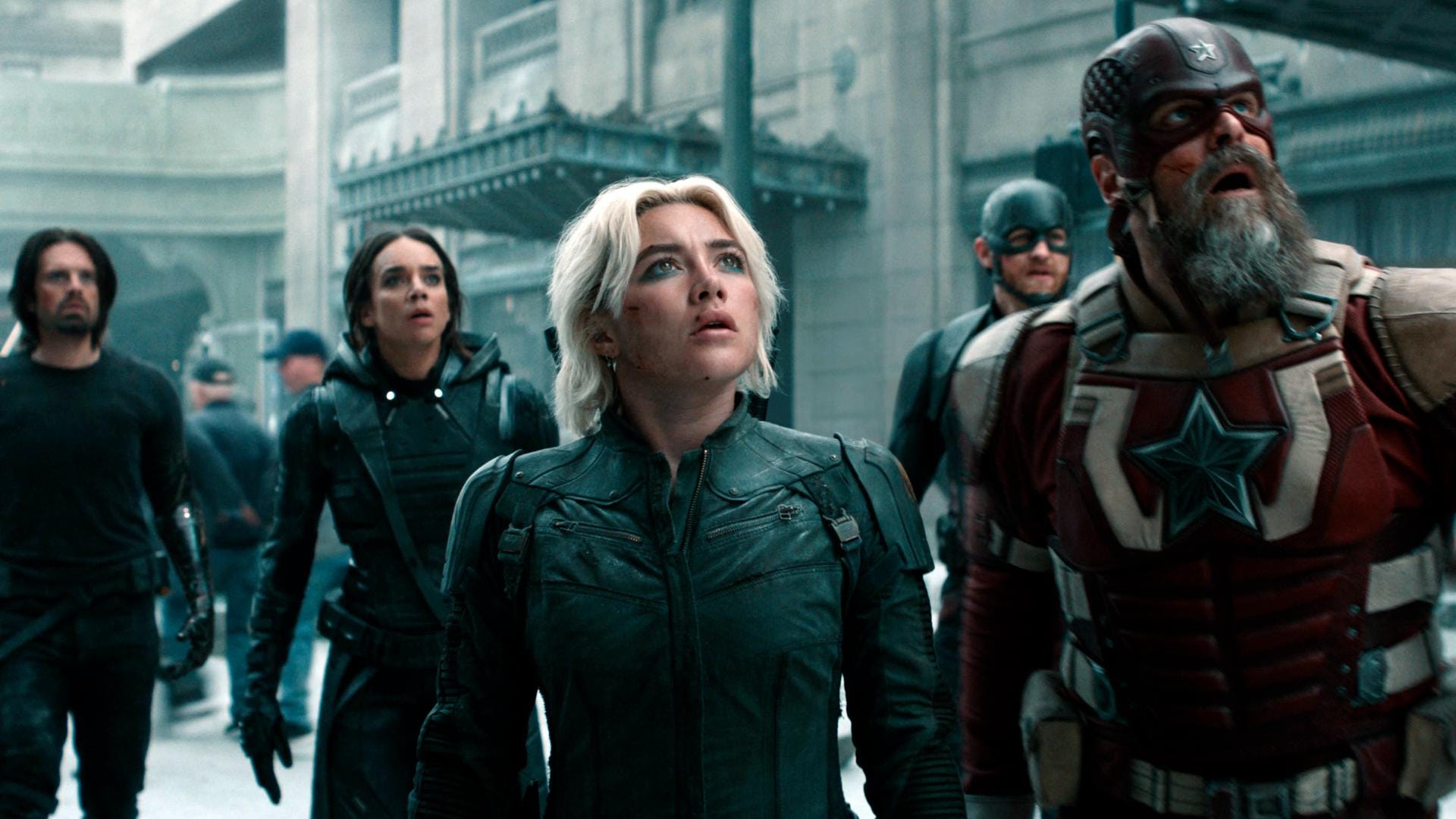
Bucky Barnes (Sebastian Stan), Ava Starr/Ghost (Hannah John-Kamen), Yelena Belova (Florence Pugh), John Walker/U.S. Agent (Wyatt Russell), and Alexei Shostakov/Red Guardian (David Harbour) team up to save the world as the Thunderbolts. Credit: Marvel Studios/Disney

It’s hard to deny that a certain aimlessness has overtaken the Marvel Cinematic Universe in recent years. Despite a fair share of quality offerings since the release of Avengers: Endgame in 2019—the under-appreciated and slept-on Black Widow, the weird and wild Doctor Strange in the Multiverse of Madnessand the swan-song Guardians of the Galaxy Vol. 3 on the silver screen, for instance, and WandaVision and Hawkeye on the Disney+ streaming service—the sprawling film series does seem to have lost narrative momentum after the onset of the COVID-19 pandemic in 2020.

Indeed, the MCU barely regained steam before-off-screen issues forced a shift in narrative direction and the writer’s strike hit in late 2023. Nor has it settled on a new set of core characters to succeed the original six Avengers as focal points, in no small part due to significant gaps between the appearances of their possible successors—before her return in Thunderbolts*, the latest MCU entry released earlier this month, Florence Pugh’s master assassin Yelena Belova last graced our screens at the end of 2021.

If nothing else, Thunderbolts* jolts the MCU back to life with a return to the basics that drove the larger enterprise’s success: character-driven storytelling, charismatic actors with great chemistry, and meaningful action in the service of a bruised and battered humanism. These elements also make Thunderbolts* an excellent film in its own right, one that takes full advantage of its place in a wider narrative to tell a moving story about loss, consequences, and the need for personal purpose.

Contrary to those popular critics who claim that nothing matters in these films and dead characters don’t remain deceased—certainly true enough of the source material—Thunderbolts* reminds us that the MCU is in fact all about the costs and consequences of heroism. It’s something of a thematic throughline across the entire saga, one that can be seen from the very beginning in Iron Man and on through Endgame to Black WidowHawkeye, and Multiverse of Madness. And it’s particularly apparent in Thunderbolts*, where we see Yelena come to terms with both the loss of her sister Natasha Romanoff (aka Black Widow) and her own checkered (to put it mildly) past as an elite killer.

It’s also present in the other main characters of Thunderbolts*. Wyatt Russell’s John Walker, the “junior varsity Captain America” introduced in The Falcon and the Winter Soldier, and Hannah John-Kamen’s intangible Ghost, first seen in Ant-Man and the Wasp, both wrestle with their own personal failings and failures throughout the film. So too, in his own way, does Yelena’s surrogate father Alexei Shostakov, the one-time Soviet super-soldier known as the Red Guardian portrayed with gusto by David Harbour. At the same time, moreover, the world struggles to somehow find a replacement for the Avengers as Earth’s mightiest heroes—as exemplified by CIA Director Valentina Allegra de Fontaine’s (a cheerfully menacing Julia Louis-Dreyfus) amoral quest to create humanity’s ultimate planetary protector.

Still, Yelena remains the beating heart of Thunderbolts*—thanks in no small part to a stellar performance from Florence Pugh that both anchors and elevates the entire film. Yelena’s lack of purpose and self-confidence at the start of the film contrasts sharply with her Alexei’s uncomplicated view of heroism as a noble and desirable vocation. “There is no higher calling,” he tells Yelena as he encourages his surrogate daughter to follow in her late sister’s heroic footsteps and become the best version of herself. He reminds her that she’s got more to offer the world than her many mistakes and regrets, all of which leave Yelena with a dark and deeply distorted image of herself. In the movie’s climax, she gets the chance to prove it in a sequence cribbed from the very first Avengers film that sees Alexei vaulting her into harm’s way to save civilians in danger.

Much the same could be said for Walker, Ghost, and Lewis Pullman’s Bob Reynolds, all of whom simply want to be useful to others. Like Yelena, these characters all want to be heroes but feel burdened by their own disreputable pasts and very real character flaws. Walker, for instance, failed as Captain America, a husband, and a father, and, as Yelena points out, he knows it; only when he stops attempting to assert leadership over others does he find acceptance as a team member. Ghost is a spy and criminal whose reliability as a team player Walker calls into question more than once—yet she’s the first Thunderbolt to head after Yelena when she risks her own life and enters the Void. Bob has it worse as a former drug addict from a broken home, but he too wants to contribute despite his own considerable personal issues.

This desire to contribute positively to society ties into the film’s deft handling of its major thematic preoccupation: depression and existential angst. Yelena again serves as the focal point, feeling empty and adrift at film’s start as she nonetheless carries on with her work. Alexei mentions early on that her inner light is dim “even by Eastern European standards,” while she commiserates with Bob and his own melancholy when they first meet.

Indeed, Thunderbolts* conveys the loneliness, distorted thinking, and internal struggles with oneself involved in depression quite well. As she tells Alexei, Yelena does little else but dwell upon and ruminate about her past wrongs and mistakes over and over again, self-medicating with alcohol and social media. She refuses to look at herself realistically and remember what she’s done well in the past until Alexei gives her proper perspective. And she must deal directly with rather than avoid her past, fighting herself in the process—quite literally in both cases.

It all chimes quite well with both modern cognitive-behavioral therapies and ancient philosophical traditions like Stoicism and Buddhism. The former tells us to identify cognitive distortions and examine them rationally, while the latter reminds us that tackling our emotional and existential problems involves considerable effort and may, as the great Stoic philosopher Epictetus put it, require us to experience pain before we improve. Moreover, finding a sense of purpose and contributing to the common good features in both philosophical traditions like Stoicism and later evolutions of CBT like acceptance and commitment therapy. Yelena and the rest of the Thunderbolts do just that by the end of the film, when they save the day and the unscrupulous Valentina, her initial plan having backfired spectacularly, reveals them to the public as the New Avengers.

Serendipitously, then, Thunderbolts* also manages to come across as a refreshing antidote to the rampant egoism and selfishness that so disfigures our day and age. It may be a bit of a stretch to call a mainstream blockbuster movie that’s part of a multi-billion dollar film franchise countercultural, but a story about characters who seek a sense of individual purpose by doing good in and for the world despite their own profound personal shortcomings and extremely dubious histories certainly cuts against the grain of American public life today and so resonates accordingly. The idea that there is, as Alexei puts it to Yelena, a higher calling than self-aggrandizement throws into stark relief the ethos of our current political leadership as well as many members of our technological, media, and business elites.

More prosaically, though, Thunderbolts* single-handedly resuscitates the Marvel Cinematic Universe ahead of major tentpoles like Fantastic Four: First Steps and Avengers: Doomsday—just when it needed it the mostThe film returns the MCU to its successful roots: Florence Pugh stars as the charismatic lead of a fine ensemble cast with obvious chemistry in a character-focused narrative with compelling core themes. It’s also a welcome bonus that the superheroic concerns and musings of Thunderbolts* clash so strongly with the supremely self-centered zeitgeist that now prevails in public life.

For myself, I’m glad we’ll see the New Avengers (and Bob) again soon—and I hope the MCU can maintain its momentum going forward.

The Greatest Show On Earth

Taylor Swift’s electrifying Eras Tour brings people together like nothing else—and reveals our need for basic human connection

Taylor Swift performs at Lincoln Financial Field in Philadelphia on May 12, 2023. (Credit: Lisa Lake/TAS23/Getty Images)

“If there’s a blueprint for a future utopia in the year 2023,” Minneapolis Star Tribune music critic Chris Riemenschneider confidently declared in the wake of the second Twin Cities show of Taylor Swift’s ongoing Eras Tour, “it could come from a Swift concert.”

After witnessing two of those concerts myself—once in Philadelphia and then in Minneapolis—I believe it. 

Music—and live music in particular—brings people from different backgrounds and walks of life together like little else. We’ve all seen footage of Beatlemania and Woodstock and Queen at Live Aid, for instance, and virtually all of us can recall memorable moments from live shows we’ve attended. I’ve seen it myself many times before, whether at Swift’s own previous stadium show in 2018 or an untold number of arena spectacles put on by Bruce Springsteen, Prince, and the Rolling Stones. It’s a spirit that’s just as present at amphitheater and smaller venue performances from acts like Foo Fighters, Gary Clark, Jr., and Robert Plant and Alison Krauss, as well as comparatively staid locales like jazz or blues clubs and symphony or opera halls. 

Even so, I wasn’t prepared to experience Swift’s current tour. Nothing I’ve seen in all my years of concert-going compares to this extravaganza; it’s a surreal, otherworldly experience, one that needs to be seen and felt first-hand to be believed.

If all that sounds weird or abnormal, well, it is—but in a very good way. These shows are a living, breathing testament to the power of music to bring people together, a three-and-a-half-hour celebration of life and the sort of shared, uplifting experience that’s all too rare in contemporary American society.

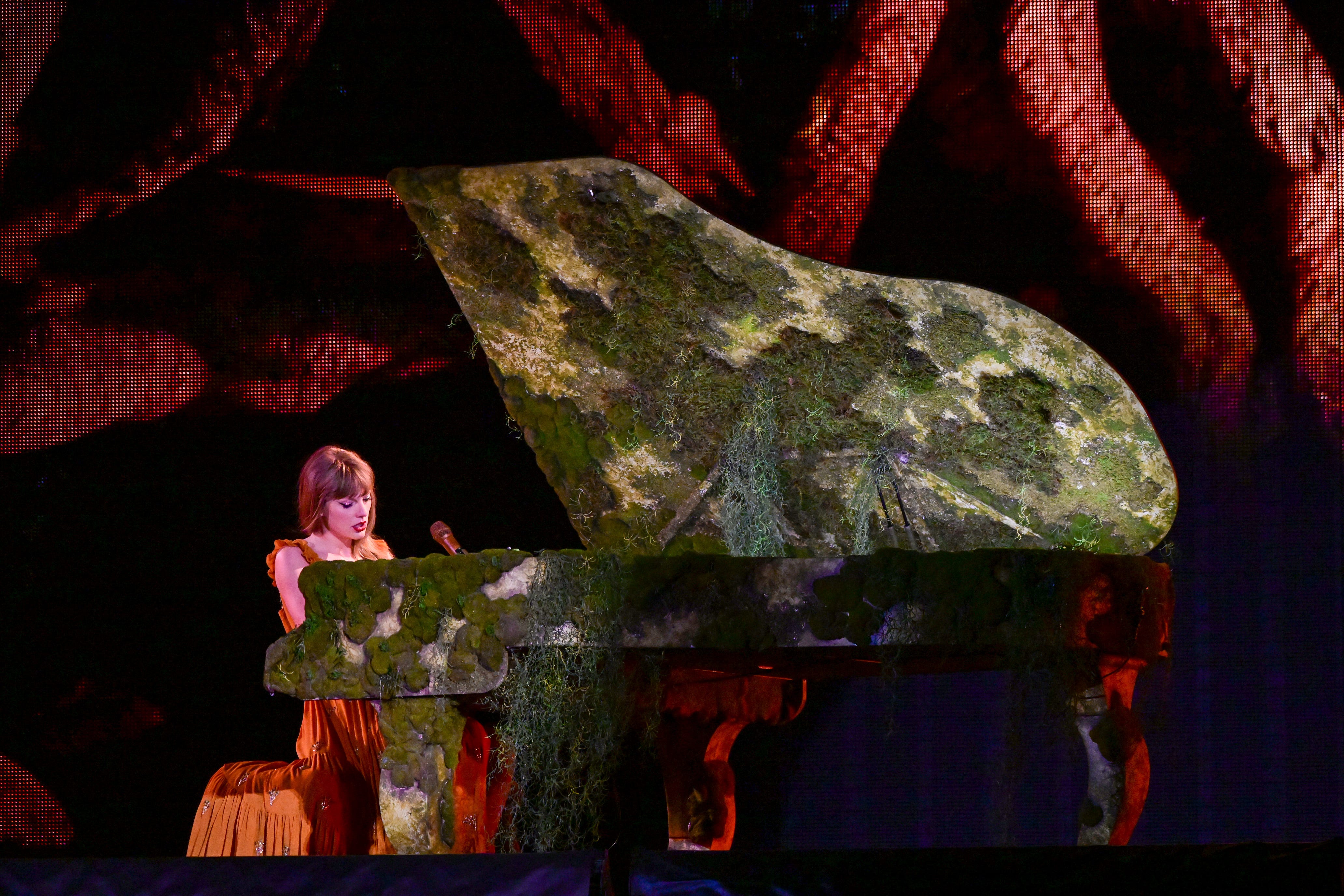
Swift stands at the heart of it all and binds everything together, the magnetism of her stage presence rising to meet her skills as a songwriter. Her performance weaves spectacle and storytelling together into a cohesive whole that’s more than the sum of its parts, transforming immense stadiums into intimate venues with seemingly little effort. She takes even the most introspective and pensive songs from recent albums like folklore and evermore and scales them up into majestic productions fit for such a large stage—all without losing their confessional, soul-searching essence.

That doesn’t detract from the literal pyrotechnics that accompany much of the rest of the show. Sparks shower down at the beginning of one set and flames flash up during the performance of “Bad Blood,” a hit from her smash album 1989, while fireworks and confetti bring the evening to a close. Impressive sets and staging likewise allow the assembled faithful to catch at least one decent glimpse of Swift over the course of the night, whether from a raised platform on the stage itself or on the colossal video display always behind her.

But Swift herself remains the most exhilarating part of the show. She commands the attention and laser-like focus of tens of thousands of people, all amidst the technicolor chaos or vast darkness that surrounds her. What’s more, she displays incredible stamina, dancing and running up and down a football-field length stage, climbing up and down sets and scaffolding, for well over three hours—more often than not in glittering heels—all without missing a note or a mark. It’s impossible not to admire her determination to put on the most spectacular show possible or her dedication to her craft as a performer.

Taylor Swift performs at Lincoln Financial Field in Philadelphia on May 12, 2023, (Credit: Lisa Lake/TAS23/Getty Images)

Long live all the magic we made…

As much as Swift’s concerts illustrate the power of music to bring people together, they also reflect the intimate emotional connection she’s cultivated through her intensely personal yet universal songwriting. Her music means something special to Swift and her legions of fans, something that draws us all together and makes our brief time together transcendent. It’s an experience that satisfies our basic human craving for camaraderie and community, if only for one night.

But not just one night—Swift and her tour don’t just lurch toward your favorite city; they take it by storm. She effectively seized control of both Philadelphia and Minneapolis the weekends she was in town, steamrolling into each city as hordes of fans clog up public transit and swamp downtown areas. Tourism in Philadelphia, for instance, nearly reached pre-pandemic levels during Swift’s weekend shows mid-May, while the estimated economic impact of her pair of late June concerts in Minneapolis rivaled pre-pandemic sporting events like Super Bowl LII in 2018 and the Final Four in 2019.

Indeed, it was hard to make my way around Philadelphia without encountering fellow Swifties, while it proved easy to strike up conversations about the show at craft breweries and shops in and around the Twin Cities. Throngs of fans gathered in the baking midday sun and humid afternoons to queue up in absurdly long lines for merch hours before the show itself, then mingled and sweated together as we waited for the stadium doors to finally open a couple hours before the concert’s posted start time. It’s the sort of communal experience and sense of belonging that people have traditionally sought in religion and more recently, to our collective detriment, in politics.

As might be expected, the audience was heavily female—many decked out in sparkly, sequined outfits related thematically to their favorite albums and songs and music videos or Swift’s own innumerable concert outfits over the years. Devotees of records like Red and Lover and reputation were perhaps most prominent, but virtually every era and facet of Swift’s now-long career could be found among the assembled congregation. It’s an impressive level of commitment, one that helped create the celebratory atmosphere that pervaded the stadium even before the gates opened. More to the point, though, these outfits give a sense of what Swift’s music means to those of us in attendance; it’s cosplay on a scale I’ve only seen once before, at the midnight premiere of The Avengers back in 2012.

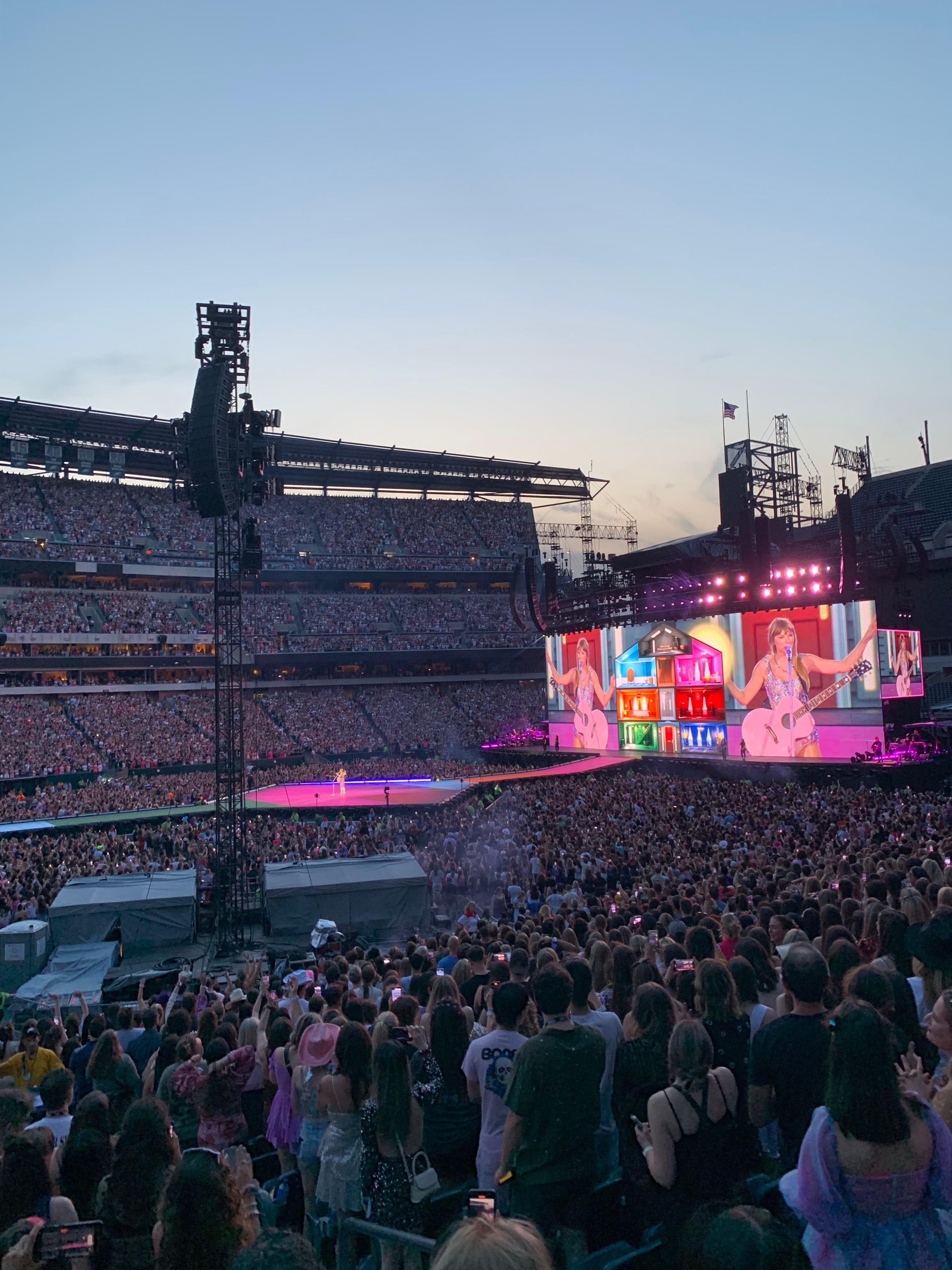
Swift finally took the stage just before eight o’clock on both evenings. In Philadelphia, I could feel the concrete shake as Swift and her band went through the Fearless set—an experience I’ve only had at an AC/DC concert—and I could barely hear Swift herself over tens of thousands of screaming fans belting out the lyrics to favorites like “You Belong With Me” and “Love Story” at the top of their lungs. Back in Minneapolis, time and again some 60,000 voices overwhelmed nearby stacks of speakers and echoed across the cavernous indoor expanse of U.S. Bank Stadium. Swift herself obviously revels in and draws energy off her crowds, constantly expressing gratitude and on occasion taking out her in-ear monitors to receive the full experience.

For just over three hours, we all stop caring about anything other than the moment we were all sharing; we’re totally absorbed in and enthralled by the here and now. Even though we’re all exhausted by show’s end, we’re still fully engaged and more than willing to keep on going for another three hours.

Taylor Swift performs at Lincoln Financial Field in Philadelphia on May 12, 2023. (Credit: Peter Juul)

This night is flawless, don’t you let it go…

And with good reason: Swift’s concerts meet our needs for human connection and desire for intimacy. It’s as if the assembled concert crowd and her performance incarnate the themes she’s explored and expressed in her music, as well as the very power of music itself to bring people together. I’d be shocked if I encounter the couples I stood next to and chatted with in Philadelphia or the two teenage girls in Minneapolis who ransacked their friendship bracelet collection to find one that would fit my wrist ever again—but for two separate nights in May and June, we had something simple but nonetheless vital in common.

Lingering fallout from the COVID-19 pandemic almost certainly has something to do with the intensity of the response to Swift’s current tour; Swift herself noted that the pandemic made it difficult to satisfy her own need to connect with her fans (though that thwarted desire produced her two best albums, folklore and evermore). Swifties or not, though, most of us likely have a pent-up desire for shared experiences that’s gone unfulfilled for so long—whether that involves an ear-splitting heavy metal concert or a quiet stroll through a museum. Put simply, we all want to live our lives after a period of severe disruption and isolation. The intimate nature of Swift’s music and the sincere, deep-seated connection she’s forged with her fans over the years only amplify this baseline yearning, yielding the euphoric collective and individual responses to her tour that I experienced up close.

There may be nothing else quite like Taylor Swift’s Eras Tour in this day and age, but other musical acts and events—like, say, an Opening Day baseball game or a live rendition of Gustav Holst’s The Planets—meet the same underlying need for connection in equally healthy ways. At bottom, they’re all deeply human experiences that elevate as much as they delight and entertain us, ones we need if we’re to break out of the current national funk that’s seen so many on both left and right substitute politics for religion and philosophy, personal meaning, and basic connection with their fellow human beings. 

But the uncomplicated, joyous fellowship I saw and felt at Taylor Swift’s concerts in Philadelphia and Minneapolis gave me hope—a sense of optimism that we’ll be able to fulfill our basic need for human connection and belonging in ways much more meaningful and ultimately beneficial to ourselves and others than mere politics. 

Maybe, just maybe, we can finally glimpse daylight from here.

(Originally published at The Liberal Patriot)