A review of Taylor Swift’s The Tortured Poets Department
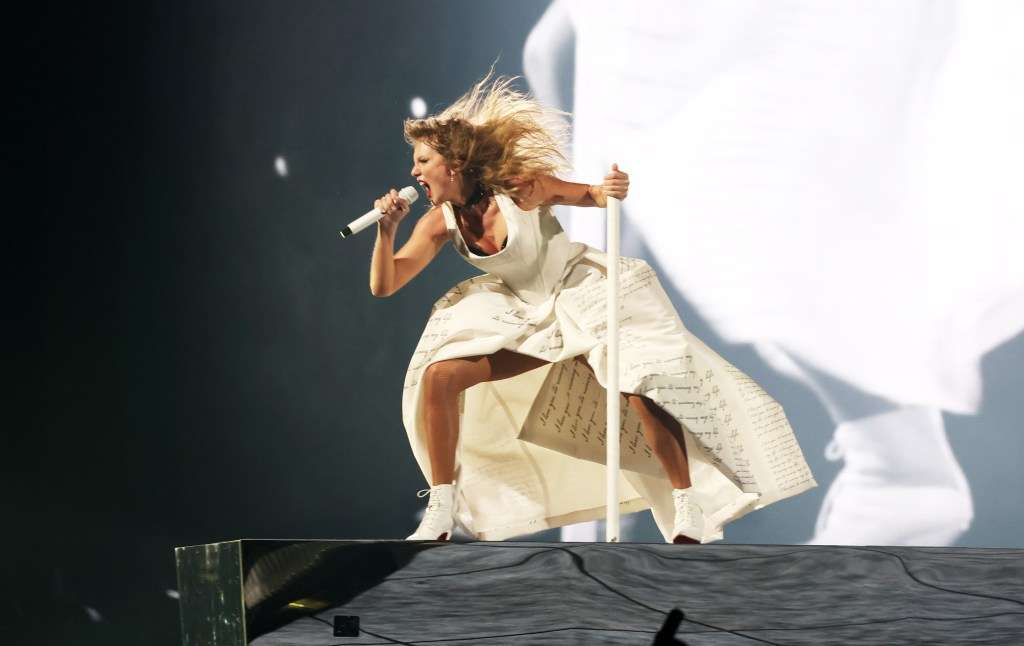
Throughout her career, Taylor Swift written songs that become beloved by fans and critics without receiving much attention on initial release. Tracks like “All Too Well” on Red and “champagne problems” on evermore were never singles, but they lodged themselves in the consciousnesses of Swift’s listeners and took on lives of their own—largely on the strength of her exceptional songwriting and storytelling. Notwithstanding its instant and ongoing commercial success, The Tortured Poets Department—Swift’s recently released eleventh studio album—seems destined for a similar fate: highly esteemed by long-time and die-hard fans today but only praised later on by currently indifferent critics.
Something of a moody doppelganger to Lover, Swift’s bright and gleaming 2019 album, The Tortured Poets Department is a raw and dramatic record that embodies the intense, turbulent, messy emotions that accompany the slow decays and fiery demises of once-promising romances. It’s laced with a deep vein of self-criticism, as Swift dissects her romantic past to uncover the bad habits that seem to chronically doom her relationships. As she puts it in the poem that serves as its written prologue, The Tortured Poets Department stands as “a summary of my findings/A debrief, a detailed rewinding/For the purpose of warning/For the sake of reminding.”
It’s also a record full of easily missed lyrical and sonic subtleties, one that requires close and attentive listening. At turns witty and sly, snarling and seething, introspective and vulnerable, Swift’s layered, textured lyrics contain multiple meanings almost always compatible with one another. What’s more, they’re another testament to her preternatural ability to transmute the deeply personal and highly specific into the universal, to openly express and speak to the deepest hopes and fears, longings and anxieties of her listeners—all despite their obvious differences. This sort of intimacy at a distance forges a very real, very human connection between Swift and her listeners, one that illuminates again just how and why she has cemented a nearly unbreakable bond with her fans.
That’s something reflected in “The Manuscript,” a track that functions as the skeleton key for the entire album. This pensive piano ballad—initially billed as a bonus track, now the conclusion of the surprise double album version of The Tortured Poets Department subtitled The Anthology—serves as the record’s statement of purpose and lays out its reason for being.
“The Manuscript” finds Swift in an obviously contemplative mood. Over the past few years, she’s embarked upon an intense career retrospective with her still-in-progress campaign to re-record her first seven albums and her colossal, still-ongoing Eras Tour—all while going through substantial romantic tumult of her own. Under these circumstances it’s not hard to see why an artist like Swift might want to take stock of her life and career, searching for patterns of behavior that haven’t served her well in the past and might be changed for the better. Or as Swift herself puts it in the song’s bridge, “Looking backward might be the only way to move forward.”
More than that, though, “The Manuscript” amounts to a vindication of Swift’s own body of work—and a compelling account of the alchemy that causes her music to resonate so strongly with so many of her listeners. After looking back over several failed relationships over the course of her own life, Swift understands that her own personal agony has yielded music that speaks to her listeners at a basic level and brings them together in ways all too rare in this day and age. As she told audiences attending her Eras Tour shows,
Let me tell you my secret little dream for this evening. So these are songs that I have written about my life or things I felt at one point in time, whether I was a teenager, in my twenties, or a couple of years ago. But after tonight when you hear these songs out and about in the world, my dream is that you’re going to think about tonight and the memories we made here together.
As the conclusion of “The Manuscript” and The Tortured Poets Department makes plain, it’s an utterly sincere sentiment: “Now and then I reread the manuscript/But the story isn’t mine anymore.”
Still, The Tortured Poets Department feels in many ways like Swift’s most confessional and personal record to date. It’s also her most cohesive one; Swift has always been an album-oriented artist, and The Tortured Poets Department hangs together thematically and musically in ways even earlier gems like 2020’s folklore and evermore—still her two best efforts—didn’t quite manage. That coherence unravels a bit in the second half of the double album, The Anthology, but the complete record remains remarkably focused as a whole.
As a result, though, it’s not an album well-suited for our social media-addled age and its unrelenting demand for instant opinions on just about every subject. The Tortured Poets Department rightly puts Swift’s own vocals and lyrics up front—so much so that it’s easy to miss the record’s subdued production flourishes on a casual or cursory listen. With its claustrophobic intimacy and distinct tendency toward introspection, The Tortured Poets Department requires time to steep and slowly seep into the listener’s consciousness. Unless a listener pays attention, it’s far too easy to lose track of the thematic threads that tie the album together or miss the stringent self-criticism that streaks across the entire record.
Opening track “Fortnight” immediately sets the album’s tone, with what Swift calls “a dramatic, artistic, tragic kind of take on love and loss.” Its lyrics attest to the sweeping, intense emotions at play in a long-lost but still-longed-for relationship; as she rues in the chorus, “I love you, it’s ruining my life.” Though she “took the miracle move-on cure,” Swift’s narrator ruefully notes that “the effects were temporary.” Still agonizing over what might have been, she confesses her fantasy of murdering her former significant other’s spouse and her own cheating husband. Dramatic, yes, but intentionally so—Swift exaggerates for effect to convey the smoldering misery involved in pining away for a passionate but defunct romance.
The high drama continues over the lush synthesizers and drum machine lines of the title track, where Swift tells her romantic partner she “chose this cyclone with you” and both pledge to commit seppuku if the other ever leaves. But self-doubt quickly creeps in—Swift has to reassure herself that “Everyone we know understands why it’s meant to be,” immediately explaining “Cause we’re crazy.” At some level she’s aware that she’s deluding herself, as she repeatedly calls herself and her lover “modern idiots” in the chorus while mocking his self-seriousness throughout the song. It’s not mere self-deprecation, however. “The Tortured Poets Society” sets up a central motif of self-deception that runs throughout the album as a whole: how we manage to convince ourselves that we’ve finally got things figured out only to learn the hard way that, no, we really don’t.
Swift picks up this thread once again on the very next track, the propulsive but melancholy “My Boy Only Breaks His Favorite Toys.” Here, she looks back on a failed relationship to unearth the patterns in her significant other’s behavior and her own that caused their romance to break down. Though it “fit too right” and “there was a litany of reasons why we could’ve played for keeps this time,” the object of her romantic affection declined to commit to their relationship and too often let his depressive moods overwhelm him. Still, Swift valued their time together and refuses to hold her ex solely responsible for the demise of their relationship—she knows she reflexively rationalized away his inconstancy and reproaches herself that she “should’ve known it was a matter of time” before their romance eventually fell apart.
Most of all, though, Swift senses that she’s too hot to handle, that she brings with her too much outside scrutiny to any relationship. As she remarks in a chorus, “there was danger in the heat of my touch.” It’s another persistent theme of Swift’s music, one that lays bare her own lingering insecurities as much as anything else—but she recognizes that there’s nothing much she can do about it; it’s simply a reality she has to accept.
“Down Bad” evinces a similar amalgam of theatrical drama and self-awareness, with Swift taking herself to task for “crying at the gym” and indulging her own “teenage petulance.” But she understands that this adolescent angst came from somewhere (“Fuck it, I was in love”), even as she acknowledges it doesn’t justify her sulky behavior. An otherworldly alien abduction narrative that works unexpectedly well as a conceit for the song’s depiction of the aftermath of a brief but intense romantic encounter.
Swift goes on display notable equanimity on “So Long, London,” a confessional track on need to accept a relationship’s demise. It opens with an introduction eerily similar to that of Lover’s “Death By a Thousand Cuts” before shifting to a constant, pulsating beat overlaid by a wavering, echoing synth line. Though Swift deploys quite a few cutting lines (“You swore that you loved me, but where were the clues?/I died on the altar waitin’ for the proof”), she recognizes that things ultimately just didn’t work out. She reassures both herself and her ex that they’ll both find new romantic partners—but not before making clear how she feels she stayed on too long with a person who refused to commit to their relationship. “And you say I abandoned the ship,” she tells him, “But I was going down with it.”
She then immediately leaps back into shark-infested waters with “But Daddy I Love Him.” Fresh off a long-term relationship, Swift finds she’s blotted out the memory of the rampant commentary and speculation to which her love life has been incessantly subjected: “I forget how the West was won/I forget if it was ever fun.” She proceeds to acidly reprimand all those indulging in this voyeurism and “sanctimoniously performing soliloquies I’ll never see.” The song also cleverly calls back to Swift’s country roots, both thematically and musically; a mildly attentive listen reveals violins and banjo plucking, as well as an ever-so-slight twang in Swift’s vocals and delivery cadence.
When placed in the context of The Tortured Poets Department as a whole, though, “But Daddy I Love Him” comes across as a wry exercise in knowing self-deception as much as an expression of righteous indignation and defiance. That’s clear enough from the album’s next track, “Fresh Out The Slammer,” where Swift ironically asserts she now knows better when, as the rest of the record indicates, she’s painfully aware that she doesn’t. The sultry “Guilty as Sin?” similarly finds an unusually uncertain and unsure Swift wondering if she’s “bad or mad or wise.” In between, she seeks escape and obliteration with fellow songstress Florence Welch in “Florida!!!”: “Love left me like this and I don’t want to exist/So take me to Florida.”
But The Tortured Poets Department truly hits its stride and indeed accelerates on the back end of the main album, as Swift rushes headlong into a cathartic emotional maelstrom and emerges from it not too the worse for the considerable wear—and indeed a little bit wiser for the experience. It’s a magnificent crescendo to the record, a climax that’s as sharp and searing as it is satisfying.
That starts with “Who’s Afraid of Little Old Me?,” a scathing and defiant reflection on her own life in the public eye. Swift lets it be known that all the backbiting and denigration she’s received only leaves her with greater resolve: “If you wanted me dead you should’ve just said/Nothing makes me feel more alive.” The track steadily escalates over rolling, insistent percussion, culminating in a fantastic bridge in which Swift proclaims, “I wanna snarl and show you just how disturbed this has made me/You wouldn’t last an hour in the asylum where they raised me.” Excoriating as the song is—and it’s not even the most vicious track on the record, which is saying something—it’s much more about Swift’s own resilience and forbearance in the face of very public and, to her and many others, baffling attacks on her work and character. Her detractors should be afraid of her, she says, but she’s learned to make the obstacles thrown her direction her own way. As Swift remarks as the song reaches its end, “you lured me/And you hurt me/And you taught me.”
Swift plunges back into extreme self-deception on “I Can Fix Him (No Really I Can),” a track whose haunting guitar work and sparse arrangement conjure up a dead-of-the-night drive down a dark highway. As the song title indicates, Swift indulges in the delusion that only she can rectify the flaws she—and everyone else, for that matter—sees in the object of her affection:
And I could see it from a mile away
A perfect case for my certain skill set
He had a halo of the highest gradе
He just hadn’t met me yеt
But at song’s end, Swift comes to a sudden realization: “Woah, maybe I can’t.” It’s on this track that she directly acknowledges that, despite what she may have told herself in the past, she actually doesn’t quite have everything figured out just yet—and begins to scrutinize the patterns and habits that led to her current romantic impasse.
It’s an attitude that carries over into and drives “loml,” a song that scours Swift’s past relationships and stands as something of a dark inversion of “New Year’s Day,” the closing number from 2017’s reputation. Swift relates that she’s has always been told she’s the love of someone’s life—“about a million times,” she estimates—only for these relationships to inevitably end. After noting her predisposition to easily fall in love in the chorus, Swift reproaches herself for her romantic credulity: “And all at once the ink bleeds/A con man sells a fool a get-love-quick scheme.” That’s prelude to a devasting bridge, where she wishes she “could un-recall/How we almost had it all.” After Swift is done “combing through the braids of lies” woven into her failed relationships, the song closes with a final lament: “And I’ll still see it until I die/You’re the loss of my life.”
But she’s more than eager to show that even the deepest emotional wounds can’t paralyze her and won’t break her spirit. As “I Can Do It With a Broken Heart” makes absolutely clear, it’s much more than that: Swift is proud of her ability to carry on despite her inner turmoil and pain. She’s equally determined to both enjoy herself and put on the best possible live show for her fans. Resilience in the face of adversity, whatever its cause or origin or nature, has been a recurring theme in Swift’s work for some time now, one “I Can Do It With a Broken Heart” conveys with remarkable assuredness:
‘Cause I’m a real tough kid
I can handle my shit
They said, “Babe, you gotta fake it ’til you make it” and I did
Lights, camera, bitch, smile
Even when you wanna die
Or as she confidently asserts in the song’s second verse, “I’m sure I can pass this test.”
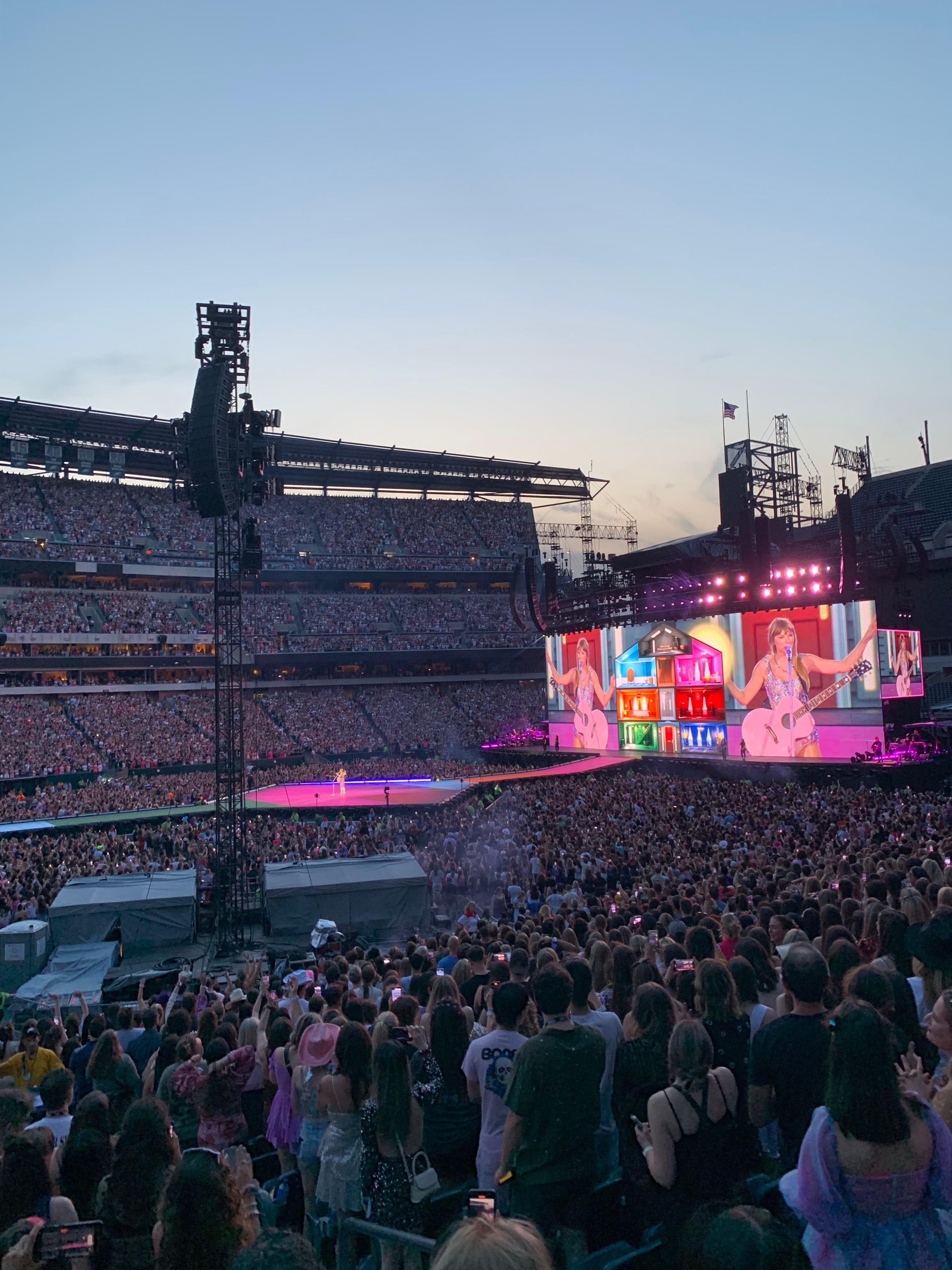
It’s also a song that alludes to the way Swift uses songwriting and touring to recover and recuperate after intense emotional ordeals. As she told the assembled crowd during her first Eras Tour concert in Philadelphia,
Being here and getting to look out into a crowd and seeing you sing the words back to me of songs I that wrote when I was in very, isolated lonely moments oftentimes, it’s something that has helped heal me as I’ve grown up, it’s something I’ve relied on since I was probably—I started playing live when I was like twelve, so that’s a long time… That was my coping mechanism for—ever since I was a child was, I write my feelings down and then I get to sing them with you and then eventually I feel better.
“I Can Do It With a Broken Heart” puts that process to music, with sparkling, upbeat synth lines interlaced with lyrics detailing her interior melancholy. She’s not wallowing in her misery, though, and has in fact moved past it by the end of the track. Her vocals turn positively giddy as she declares, “You know you’re good when you can do it with a broken heart… And I’m good.”
Swift goes on to decisively close the book on her past relationships in the savage, slow-burning “The Smallest Man Who Ever Lived.” It’s an evisceration in the same league as Alanis Morissette’s “You Oughta Know,” albeit one directed at Swift’s previous romantic partners in toto rather than any one particular person. The song builds up from an opening sigh and quiet piano to a thundering, brutally cathartic bridge where Swift’s vocals ever-so-slightly distort and drums kick in as she ferociously interrogates her past lovers:
Were you sent by someone who wanted me dead?
Did you sleep with a gun underneath our bed?
Were you writin’ a book?
Were you a sleeper cell spy?
In fifty years, will all this be declassified?
And you’ll confess why you did it and I’ll say, “Good riddance”
‘Cause it wasn’t sexy once it wasn’t forbidden
I would’ve died for your sins, instead, I just died inside
And you deserve prison, but you won’t get time
As the sonic fury subsides, Swift twists the knife: “And I’ll forget you, but I’ll never forgive.”
The main album’s final two tracks serve as palate cleansers, with the appropriately titled “The Alchemy” illustrating the way Swift’s lyrics can take on multiple and layered meanings. It’s a song that’s all at once about her new significant other, her ongoing concert tour, and her relationship with her fans—all without one interpretation cancelling out the others. Embarking on live tour for the first time in five years and striking out on a new romance at the same time, she acknowledges “I haven’t come around in so long/But I’m coming back so strong” and sees “the sign on your heart/Said it’s still reserved for me.”
“Clara Bow” closes out the main record, with Swift painting impressionistic vignettes about the perilous and precarious nature of fame over gentle but insistent guitar strumming. “This town is fake, but you’re the real thing,” she intones in the chorus, echoing what every generation of starlets has been told by managers and producers since the advent of the modern entertainment industry. When one of these faceless moguls compares an up-and-coming young thing to Swift herself and claims “You’ve got edge, she never did,” moreover, it’s a riposte to critics who fault her music for its supposed harmlessness—and a statement that edginess isn’t an indicator of quality.
The song and album conclude with what feels like a promise from Swift: “The future’s bright, dazzling.”
The surprise second half of the double album, aptly titled The Anthology, delves deeper into the central preoccupations of The Tortured Poets Department. It’s not as tight as the main record—it’s truly an anthology in that respect—but a number of the songs included on The Anthology rank among the double album’s best.
That starts with “The Black Dog,” a hyper-modern post-breakup anthem that sees Swift wonder how her ex can’t miss her as he goes about the same routines he did with her—routines she can still see because he neglected to turn off his smartphone’s location feature. Pulsating staccato percussion underscores this chorus lyric “Old habits die screaming” and underlines the searching self-examination at the heart of the album itself; indeed, this line might as well be the motto for The Tortured Poets Department as a whole. She also once again rebukes her own tendency to deceive herself about her partners: “You said I needed a brave man/Then proceeded to play him/Until I believed it too.”
On “The Albatross,” Swift acknowledges and accepts the fact that she inherently brings a certain amount of chaos to any relationship. In an echo of folklore’s penultimate track, “peace,” she knows she’ll never be able to give her significant other a calm life given her public profile, but she’ll do her best to protect him from the inevitable fallout. “I’m the life you chose,” Swift tells her partner, “And all this terrible danger.”
It’s this obsessive public speculation about her personal life that partly drives “How Did It End?,” an introspective “postmortem” of a failed relationship. A ruminative piano line beautifully encapsulates the state of mind conveyed by Swift’s lyrics; though she thinks she knows why this relationship faltered, she’s not all that confident in her answers and keeps going over it in her own mind. “I can’t pretend like I understand,” she confesses following a gut-punch of a bridge:
How the death rattle breathing
Silenced as the soul was leaving
The deflation of our dreaming
Leaving me bereft and reeling
My beloved ghost and me
Sitting in a tree
D-Y-I-N-G
“It’s happening again,” she laments, referring not just to the end of another relationship but the gossip machines and rumor mills that immediately spin up once word gets out.
Swift’s mood improves dramatically in “So High School,” a blissful track about the first throes of a new romance—albeit one with a skeptical undertow, akin to Sarah McLachlan’s sing-along “Ice Cream.” With lines like “Bittersweet sixteen suddenly,” Swift signals that she’s aware of her tendency to slip too easily into romanticism and needs to maintain a certain distrust of her own emotions. It’s hard-earned wisdom balanced against romantic euphoria, all with an edge of danger: “You know what you wanted, and boy, you, got her,” she warns. Swift’s delivery of this line almost comes across as a threat, but it’s merely a statement of reality—and a tongue-in-cheek one at that.
With “thanK you aIMee,” Swift once more addresses herself to resilience and determination in the face of hardships and setbacks—no matter how personal or cruel they may be. Indeed, she maintains that our worst, darkest moments can bring our greatest strengths to light—so much so that Swift thanks the person who “beat my spirit black and blue” for giving her the opportunity to realize her own capacity to withstand just about anything thrown in her direction. “I can’t forget the way you made me heal,” Swift tells her tormentor, and expresses a Sisyphean resolve to push “each boulder up the hill.” She gets to the heart of the matter in yet another superb bridge:
I wrote a thousand songs that you find uncool
I built a legacy that you can’t undo
But when I count the scars, there’s a moment of truth
That there wouldn’t be this if there hadn’t been you
Swift’s fondness for making meaningful alterations to her repeated lyrics strikes in the final chorus, when “fuck you Aimee” becomes “thank you Aimee.”
She returns to her exploration of self-doubt in the face of romantic failure on “The Prophecy,” a plea to change her perceived destiny to be alone forever. (Amor fati cuts both ways.) It’s another song that captures the spirit of the album as a whole: Swift feels doomed to make the same romantic errors over and over again, tricking herself into thinking she’s “caught lightning in a bottle” before a relationship breaks down once more. There’s a trepidation about her future relationships as well; she believes she’s a “paperweight” and isn’t confident that anyone really “wants my company.” But she won’t give up and begs the powers that be to see if “they can redo the prophecy.”
The final two songs before the album closer “The Manuscript”—“The Bolter” and “Robin”—also reprise its main concerns. On the first, Swift offers a light-hearted and not-quite-so-veiled take on her own dating reputation. It’s a track infused with self-doubt and self-needling (“Excellent fun ‘til you get to know her”) but also self-awareness (“There’s escape in escaping”). “Robin,” on the other hand, is a tender ballad for a youngster in the vein of “Never Grow Up” and “Ronan,” one that seeks to protect a child’s innocence—and encourage him to meet life’s inevitable challenges with strength of character. “The time will arrive for the cruel and the mean,” Swift counsels, “You’ll learn to bounce back just like your trampoline.”
Inspired by her “muses, acquired like bruises,” The Tortured Poets Department finds Swift looking back to take stock of her life and career—both the good and the bad—to learn from her experiences and move forward. She’s more aware than ever before that she doesn’t quite have it all figured out just yet, but she also knows that she can withstand heartbreak, hardship, and just about anything else thrown her way.
There’s still much more that could be said about The Tortured Poets Department and its songs. Taken as a whole, though, it’s a sprawling, complex, and ambitious exercise in personal self-examination. Like all of Swift’s work, the album once more demonstrates her uncanny ability to make the deeply personal universal without losing any sense of intimacy along the way. That’s at the heart of the bond she’s been able to strike with her listeners and fans over the years and now decades.
And as she says, though, the story isn’t just hers anymore—it’s all of ours. We all struggle and accumulate bruises and scars, even—or especially—when we think we’ve got this thing called life down pat and everything seems to be going well. On The Tortured Poets Department, Swift reminds us that we can make it through our trials and come out a little wiser and more self-aware—no matter how painful the path may prove. In the end, it’s worth it all to discover what we can endure and accomplish, acquiring bits of wisdom that we can pass on to others as we forge ahead.
As Swift herself might put it, what else would all the agony be for?

 Peter M. Juul