The Trump administration’s morally bankrupt new National Security Strategy, or the longest geopolitical suicide note in history
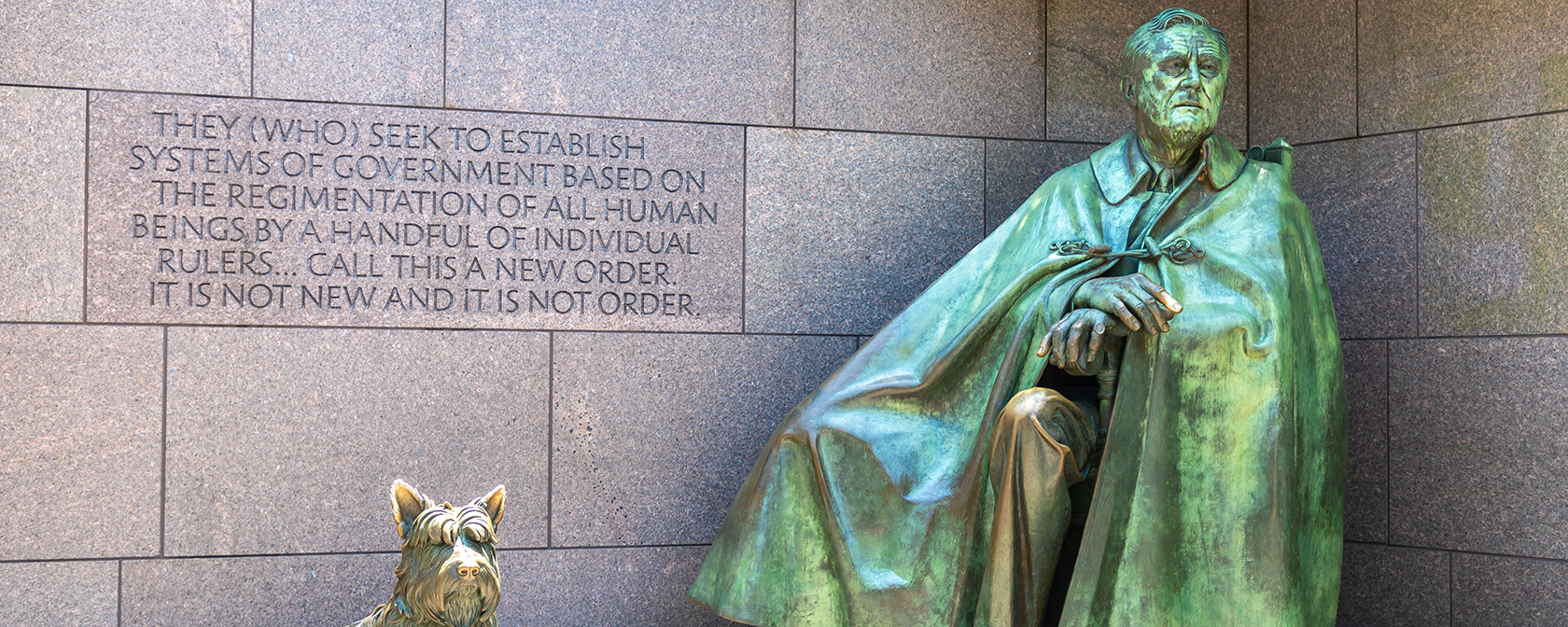
A quote from President Franklin D. Roosevelt’s March 1941 address to the White House Correspondents’ Association dinner at the Franklin D. Roosevelt Memorial on the Tidal Basin in Washington, DC. Source
We’re well beyond the point where we ought to take documents like the Trump administration’s just released National Security Strategy seriously, at least on a practical level. It’s hard to put much stock in such an embarrassingly sycophantic policy document, especially when the administration itself appears to be little more than a pack of scheming viziers to an increasingly nominal president who himself regularly struggles to stay awake during public appearances.
But it’s beside the point to engage with this document as if it’s a matter of policy, programs, or even strategy. It does no good to point out its incoherence and incontinence, much less ponder how what’s proposed in it might play out in the real world or how, if you stand on your head and squint and read it backwards, it might contain worthwhile ideas. The product of below-replacement intellects who fancy themselves world-historical thinkers but evince no real understanding of America or its place in a world permanently changed by revolutions in science, technology, and industry dating back a century and a half now, this national security strategy both betrays American interests overseas and perverts America’s traditional liberal values both at home and abroad.
In short, this national security strategy amounts to nothing less than a declaration of moral bankruptcy—a statement of immoral principle that stands in direct opposition to what America ought to stand for and represent in the world. (As always, it’s the self-styled super-patriot who hates his country the most.) It doesn’t tell us much that we don’t already know about Trump’s foreign policy, but the document does effectively distill the Trump administration’s ongoing renunciation of any real American responsibility for global affairs and international security.
Indeed, it’s a foreign policy that Charles Lindbergh would have loved: a not-quite explicit tripartite carve-up of the globe with dictators in Europe and Asia, with America selling out its allies in those two parts of the world while building a garrison state in the Western Hemisphere to bully our own neighbors the same way Putin and Xi do theirs. Add dollops of insulting illiberalism, crude dollar diplomacy, and thinly veiled racism, and voila: you’ve reinvented the original America First platform.
Let’s look at some of the specifics: the Trump administration promises to abandon America’s allies in Europe while meddling in their own domestic politics. It parrots the Kremlin’s line on NATO, characterizing the alliance as “perpetually expanding,” while seeking “strategic stability” with Moscow—presumably at the expense of Ukraine and other erstwhile American allies. Combined with a purported 2027 deadline for NATO nations to assume primary responsibility for the alliance’s conventional defenses, a reported lack of communication with key alliance militaries like Germany, and Trump’s own eagerness to sell out Ukraine, the Trump administration seems to be setting the stage for an effective American withdrawal from the Atlantic alliance.
Worse, the Trump administration has made its intent to interfere in European politics on behalf of far-right political parties and, not incidentally, American tech oligarchs quite clear. It employs racist rhetoric to claim that the continent will be “unrecognizable in 20 years,” with certain states “majority non-European” and therefore somehow uncommitted to the NATO alliance. It goes on to assert that it must “regain its civilizational self-confidence,” primarily through the victory of illiberal far-right parties and politicians like Germany’s AfD party and Hungary’s Viktor Orban that the Trump administration views as “political allies” whose success it hopes to encourage.
Like Lindbergh and his original America First movement, this national security strategy focuses monomaniacally on the Western Hemisphere. It casts the challenges in this hemisphere—migration, narco-trafficking, and foreign (presumably Chinese) investment in critical industries—as all-important and all-consuming while tacitly dismissing traditional American strategic priorities in Europe and the Pacific as “peripheral or irrelevant to our own” interests. These priorities, the document heavily implies, were not the consequence of a careful consideration of American interests in a world transformed by science, technology, and industry, but rather the result of deceit by treacherous foreigners who have taken advantage of the United States to further their own interests at America’s expense.
Nor is it hard to see the crude, Putin-style sphere-of-influence logic behind the Trump team’s obsession with Latin America specifically and the Western Hemisphere more generally (at least beyond their obvious preoccupation with immigration). Given the language of this national security strategy, it’s difficult to avoid the conclusion that Trump—or, more precisely, his perpetually scheming advisers—would like the United States to do in the Latin America what Vladimir Putin wants to do in Ukraine and Eastern Europe. We’ve already tasted the rancid fruit of this impulse with Trump’s murder spree in the Caribbean and Eastern Pacific, where American special operators blow small boats allegedly running drugs out of the water and, in the first instance at least, massacre the survivors.
China, for its part, is seen primarily as a commercial competitor and not a strategic problem or geopolitical challenger. That’s hardly surprising considering the general emptiness of hawkish Republican rhetoric on China, and this strategy sends yet another signal that Trump talks tough but has no appetite for confrontation with Beijing—a message reinforced by his deep-seated antipathy toward American allies like Japan and South Korea.
It all adds up to a morally bankrupt vision of a world carved up between real and would-be dictators to suit their own whims and fantasies, one supremely hostile to America’s long-standing interests as well as its traditional liberal values. Put another way, the Trump administration now seeks precisely the nightmarish world that American presidents have desperately sought to avoid for more than a century.
On the bright side, it’s unlikely this strategy will ever be fully implemented; national security strategies rarely guide any administration’s foreign policy so much as they reflect it. Moreover, the Trump administration has so hollowed out America’s foreign policy and national security apparatus—his team, such as it is, remains confined to a small clique when not farmed out to one of Trump’s former real estate pals—that it remains a mystery as to how they’d execute any strategy the administration might come up with. Secretary of State Marco Rubio continues to serve as acting national security adviser, for instance, presiding over a National Security Council largely denuded of anything resembling real bureaucratic or subject-matter expertise, while America’s military and intelligence agencies have suffered rolling political purges that will likely reduce their own effectiveness over time.
Trump’s attempt to impose gangster rule at home and abroad will eventually, inevitably fail—though it will inflict enormous damage on America and the world along the way. The danger inherent in this national security strategy lies less with the potential that it might be implemented than in the indecent principles it bases itself upon and seeks to advance. It exposes the moral rot at the heart of the Trump administration and its foreign policy for all to see, presenting us with yet another manifestation of our wider crisis of national virtue and integrity.
In that respect, however, it may paradoxically prove salutary: this strategy should cause a rededication to the basic moral propositions that make America a worthwhile endeavor, an experiment in liberty and self-government that’s more fragile and endangered now than at any point since World War II. Do we stand for freedom, equality, and democracy in the world? Do we keep faith with ourselves and our friends?
Though he could be quite unsentimental in private conversations, President Franklin D. Roosevelt rightly understood that American foreign policy requires a moral sensibility—a spirit that guides it and makes clear that America stands for more than the prerogatives of raw power and the amoral pursuit of national self-aggrandizement offered actual and aspiring dictators as well as self-proclaimed “realists” throughout recent history.1 As Roosevelt himself explained, “order among Nations presupposes something enduring—some system of justice under which individuals, over a long period of time, are willing to live. Humanity will never permanently accept a system imposed by conquest and based on slavery.”
America may not be and may never have been the perfect embodiment of its professed liberal ideals of freedom and equality, but that’s both irrelevant and immaterial. But at its best, America has been the main champion of liberal values in a world where they have had few if any powerful defenders and many influential opponents, a standard to which the the partisans of human liberty could repair when all else failed. In that regard, then, this national security strategy represents a deep and profound betrayal of America itself—one that must be repudiated in the clearest terms and replaced with a renewed moral vision that Roosevelt and his contemporaries would easily recognize.
There was an idea that was America, and it’s well past time to revive it.
In his recent book Allies At War: How the Struggles Between the Allied Powers Shaped the War and the World, author Tim Bouverie repeatedly notes instances of FDR’s private cynicism but ultimately concludes“Roosevelt imbued the [World War II] alliance with a sense of morality and idealism that inspired millions.” (p. 532-33) ↩︎
Taylor Swift makes her own sunshine on “The Life of a Showgirl”
Over the course of her nearly two-decade career, Taylor Swift’s sly sense of humor and puckish nature has often gone overlooked or unnoticed by far too many critics and listeners alike. She’s turned a satirical eye toward her media portrayal as a “psycho serial dater girl” on the hit “Blank Space,” for instance, and poked fun at herself and her literary pretensions on the title track of last year’s The Tortured Poets Department.
That sense of humor is on full display on her latest album, the fun and brilliant The Life of a Showgirl. Light-hearted and sunny but neither lightweight nor pollyannaish, the albumsees Swift shed her insecurities and anxieties to embrace the mischievous side of her personality amidst a catchy, upbeat mélange of 1970s vintage pop sounds that ranges from disco to folk to Fleetwood Mac-style rock over its taut, straight-to-the-point 42-minute runtime. All the while, she sacrifices very little if any of the emotional depth we’ve come to expect from her music; indeed, she maintains a laser-like focus on her lasting artistic preoccupations: resilience in the face of adversity, a love of fate, and the basic human desire for intimacy and connection. In that, she once again manifests her singular ability to transmute the intensely personal and idiosyncratic into the shared and universal.
Or as she herself puts it, her music serves as a mirror for her listeners that can reflect their own experiences at a given moment in their lives.
On The Life of a Showgirl, Swift is less interested in self-doubt and searching introspection—though it still quietly lingers on deep in the background—than in distilling and dispensing hard-earned wisdom. Life can be tough and often takes more than it gives, she reminds us, but it’s how we deal with the hardships and heartbreaks that inevitably come our way that really matters. No matter what happens, it’s up to us to make our own happiness and live life to its fullest regardless of our own circumstances or shared predicaments—and despite the physical and emotional pain that may be involved. It’s a sentiment that resists the rampant cynicism and nihilism of our time in the best possible way, shooting a piercing ray of light through the doom and gloom of an ever-darkening age.
But more on that later.
Album opener “The Fate of Ophelia” kicks off The Life of a Showgirl with a bang, an obviously self-conscious riff on Shakespeare in the vein of “Love Story.” Here, Swift once again inverts the tragic death of a lovelorn character driven to extremes by heartbreak. She finds herself saved from this fate by her new significant other (as well as the massive crowds that turned out for her monumental Eras Tour, if her written prologue is any indication), who “dug me out of my grave” and stopped love from driving her mad. “No longer drowning and deceived,” she intones quietly, “All because you came for me.” This sense of release comes across strong in the chorus, as she sheds the fears and worries that previously held her back.
The next track, “Elizabeth Taylor,” catches Swift in an anxious frame of mind as she reflects on her history of failed relationships and wonders hopefully if her present romance will actually last.1 “All the right guys promised they’d stay,” she laments, “Under bright lights, they withered away/But you bloom.” There’s something different about her current lover, though, and she warns him not to “ever end up anything but mine.” Thundering keyboard strikes and beats accompany Swift’s winding vocals and reflect her moody, ruminative lyrics. And she’s equally apprehensive about her staying power as an artist and performer: “You’re only as hot as your next hit, baby,” she reminds herself.
But it’s “Opalite” that’s both the standout song on The Life of a Showgirl and the album’s thematic crux. The track opens with a first verse that expresses Swift’s former anxiety: she persistently ruminated about past lovers, believed her house to be haunted by her past relationships, and worried that new ones were never going to last. Swift reaches back and reprises imagery and motifs from earlier songs like “Bejeweled” and “Daylight” as well as albums like folklore2and Midnights; she and her significant other were once “Sleepless in an onyx night/But now the sky is opalite.” What’s more, they ought to appreciate the experiences that led them to where they are now. “It’s all right/You were dancing through the lightning strikes,” she reassures us.
An infectiously happy bridge lays out Swift’s overall philosophy of life quite nicely:
This is just
A storm inside a teacup
But shelter here with me, my love
Thunder like a drum
This life will beat you up, up, up, up
This is just
A temporary speed bump
But failure brings you freedom
And I can bring you love, love, love, love, love
Airy, dreamy guitar work and upbeat melodies complement Swift’s lyrics beautifully as she turns setbacks, hardships, and heartbreak into the path forward—not something to be avoided, but in fact embraced or, at least, accepted as a way to “make your own sunshine.”
The ancient Greek and Roman philosophical notion that the perfectly wise sage is content even under torture and other extreme, painful situations because he or she chooses to focus on what really matters suggests itself here: no matter our particular circumstances or experiences, we have the power to create our own contentment. Or as Swift herself explains, “life isn’t going to always give you what you want, you’re not always going to get your way, you’re going to get your heart broken, things are going to happen to you, chaos will ensue, but you have to pick your own happiness… You have to sometimes make your own happiness, just like man-made opal.”
If “Opalite” stands out as The Life of a Showgirl’s exuberant statement of purpose, “Eldest Daughter” and “Ruin The Friendship” together serve as its beating, bleeding heart. On the former track, Swift fires a broadside against online culture and ironic detachment before launching into an encomium to sincerity and vulnerability. Fashionable poses of apathy ring hollow, and Swift no longer feels the need to practice “cautious discretion” in an effort to seem unbothered—she’ll stick with her own innate earnestness instead. A delicate piano and acoustic guitars set a confessional mood as Swift reclaims the innocence and idealism of her childhood over a killer bridge: “I thought that I’d never find that/Beautiful, beautiful life that/Shimmers that innocent light back/Like when we were young.” With her vow to never leave or let down herself, her significant other, and everyone else who matters in her life, she exposes her own personal vulnerabilities and gives us license to to the same—even at the risk of appearing uncool and out of step with the pervasive cynicism of our times.
In “Ruin The Friendship,” Swift paints a striking and heartfelt portrait of a youthful romantic risk not taken. Set to a bouncy 1970s-style bass line, it’s a classic Swift story that’s shot through with evocative detail through the two first verses: “Glistening grass from September rain” as she and her friend speed down Tennessee roads, for instance, while a “Wilted corsage dangles from my wrist” at prom. A quietly devastating emotional blow follows the bridge: “Abigail called me with the bad news/Goodbye/And we’ll never know why.” “My advice is to always ruin the friendship/ Better that than regret it for all time,” Swift counsels as the song climaxes, “And my advice is to always answer the question/Better that than to ask it all your life.” Take advantage of the present moment, she urges, live life to the fullest in the here and now—and don’t dissuade yourself from taking risks out of an irrational fear that the worst might happen.
Swift goes fully tongue-in-cheek with several irreverent and playful tracks on the back half of The Life of a Showgirl. Over an edgy guitar riff on “Actually Romantic,” she springboards off specific incidents to craft a wider critique of her detractors—but more importantly, Swift artfully reframes the vitriol she receives as a strange form of endearment rather than believing it should leave her upset. “It’s honestly wild/All the effort you’ve put in,” she says, marveling at the time and energy others devote to disparaging her. (The dictum of the Stoic philosopher Epictetus that it’s not things themselves that disturb us but our opinions about them comes to mind.) The song also lays a clever trap for its supposed targets and Swift’s other would-be backbiters and denigrators: if they respond in any real way, they simply prove her underlying point.
Then there’s “Wood,” a cheeky disco-inflected number that starts innocently enough as Swift declares she’s done with superstition when it comes to romance; she and her partner now make their own luck. The song then dramatically swerves into sexual innuendo about as subtle as Prince’s on the likes of “Head” and “Erotic City.” Swift proclaims (among other things) that she doesn’t need to catch a wedding bouquet to “know a hard rock is on the way.” It’s a legitimately hilarious song, and deliberately so—as on all her songs, she knows exactly what she’s doing here.3
For its part, “CANCELLED!” weaves satire and serious reflection together as Swift laughs at and learns from her own experience of unwarranted social death, gently teasing her reputation era persona while offering counsel to anyone who might confront similar predicaments. She enumerates the petty pretexts often put forward for cancellation and notes just how quickly a mob mentality takes hold; aspiring cancelers have “already picked out your grave and hearse,” and there’s nothing much to be done about it. As the song proceeds, however, Swift stresses the need for resilience in the face of unjustified opprobrium and ostracism: “Now they’ve broken you like they’ve broken me/But a shattered glass is a lot more sharp/And now you know exactly who your friends are/We’re the ones with matching scars.”
It’s an arch lyric: Swift wasn’t broken by her attempted cancellation but, as she makes clear, emerged stronger for all its torment.3The seemingly worst experiences can, in fact, leave us better off—the most difficult obstacles we face can become the way forward if make proper use of them.
After the sweet and endearing palate-cleanser “Honey,” The Life of a Showgirl concludes with a stirring, valedictory title track that reminds us of the pain and hardship that’s typically involved in doing anything worthwhile—especially in light of the grueling nature of Swift’s own Eras Tour. She and pop starlet Sabrina Carpenter trade verses about an encounter with an experienced entertainer who tries to discourage their dreams of a career in show business. The song steadily escalates to a cathartic bridge, where Swift proudly declares she “took her pearls of wisdom, hung them from my neck/I paid my dues with every bruise, I knew what to expect.” She’s now “married to the hustle” and will “never know another” life outside of the one she’s got—and she “wouldn’t have it any other way.” An outro featuring audio from the end of the Eras Tour puts an exclamation point on the album: pain in life and show business is real, but damn if it isn’t all worth it.
As an album, The Life of a Showgirl has many more layers to peel back, from Swift’s never-ending dialogue with her earlier work and her addictive, purposeful wordplay to the album’s literary conceits and its commentary on the destructive power of social media. Indeed, Swift’s ability to layer meanings and motifs one on top another—all without contradiction—is part and parcel of her particular genius as an artist and songwriter.
Beyond all that, though, The Life of a Showgirl runs directly against the dark and dismal temper of our times—and in the best possible way. Swift has never shied away from vulnerability and emotional sincerity in her music, and this album in particular marks perhaps her most sustained assault yet on the ironic detachment and cynicism that have pervaded and corroded our public lives and personal relationships over the past decade. We live in an era steeped in nihilism, after all, one that gives free rein to our basest instincts and dissolves the bonds that join us together as fellow citizens and, indeed, human beings.
Given this sordid state of affairs, it’s all too easy to assume that we ought to remain moody and angry and joyless lest we fail to take our situation seriously enough—as if drowning ourselves in that cocktail of misery, rage, and despair known as doomerism somehow keeps us vigilant against the encroaching darkness. That’s not a knock against music and other forms of art that express whatever angst and fury we may feel about our ongoing slouch toward fascism, but simply to observe that we already have a surfeit of such material available at the moment. More to the point, though, it’s essential for our own sanity in present circumstances to refuse the temptation to confine ourselves to one single suite of emotions.
With The Life of a Showgirl, Swift tells us to take and feel whatever joy and happiness we can make for ourselves and others—especially those closest to us—even as the world falls apart around us. It’s a bright and shiny antidote to the nihilism and doomerism so prevalent today, a stark contrast to the supermassive moral black hole that is the current presidential administration and the pessimistic, nothing-matters zeitgeist it engenders among too many of its erstwhile opponents. That contrast makes the album and indeed Swift herself strangely countercultural by default, despite her own status as the one mainstream pop culture icon whose albums still sell in the millions.
If nothing else, The Life of a Showgirl provides the sort of re-energizing jolt that many of us need right now—a reminder that we retain the ability to make our own sunshine, no matter how dark things may get in the world. And that’s no small feat these days.
Elizabeth Taylor, it should be noted, became known for her multiple failed relationships as much as her career as an actor—making her a source of advice for Swift as she ponders her own serial romantic failures and strikes out for a new relationship she hopes will last. ↩︎
The contrast with folklore’s “peace” is striking and noteworthy: on that track, Swift plaintively asks her then-significant other if it’d be “enough if I could never give you peace?” Now, however, Swift confidently offers her new partner shelter as the storms rage around her—it’s no longer a question, but an assertion. ↩︎
It’s made all the funnier by the attempts by Swift and fiancé Travis Kelce to insist with barely straight faces that the song is not at all about what we all know it’s obviously about, at least in part. ↩︎
It’s also an intriguing echo of a lyric from folklore’s“mirrorball,” where masked partygoers “watch as my shattered edges glisten” after she breaks into “a million pieces.” And Swift’s own proclaimed artistic ambition for her work “to be a mirror for people” reflects the song’s conceit of Swift herself as a mirrorball who will “show you every version of yourself tonight.” ↩︎
Bucky Barnes (Sebastian Stan), Ava Starr/Ghost (Hannah John-Kamen), Yelena Belova (Florence Pugh), John Walker/U.S. Agent (Wyatt Russell), and Alexei Shostakov/Red Guardian (David Harbour) team up to save the world as the Thunderbolts. Credit: Marvel Studios/Disney
It’s hard to deny that a certain aimlessness has overtaken the Marvel Cinematic Universe in recent years. Despite a fair share of quality offerings since the release of Avengers: Endgame in 2019—the under-appreciated and slept-on Black Widow, the weird and wild Doctor Strange in the Multiverse of Madness, and the swan-song Guardians of the Galaxy Vol. 3 on the silver screen, for instance, and WandaVision and Hawkeyeon the Disney+ streaming service—the sprawling film series does seem to have lost narrative momentum after the onset of the COVID-19 pandemic in 2020.
Indeed, the MCU barely regained steam before-off-screen issues forced a shift in narrative direction and the writer’s strike hit in late 2023. Nor has it settled on a new set of core characters to succeed the original six Avengers as focal points, in no small part due to significant gaps between the appearances of their possible successors—before her return in Thunderbolts*, the latest MCU entry released earlier this month, Florence Pugh’s master assassin Yelena Belova last graced our screens at the end of 2021.
If nothing else, Thunderbolts* jolts the MCU back to life with a return to the basics that drove the larger enterprise’s success: character-driven storytelling, charismatic actors with great chemistry, and meaningful action in the service of a bruised and battered humanism. These elements also make Thunderbolts* an excellent film in its own right, one that takes full advantage of its place in a wider narrative to tell a moving story about loss, consequences, and the need for personal purpose.
Contrary to those popular critics who claim that nothing matters in these films and dead characters don’t remain deceased—certainly true enough of the source material—Thunderbolts* reminds us that the MCU is in fact all about the costs and consequences of heroism. It’s something of a thematic throughline across the entire saga, one that can be seen from the very beginning in Iron Man and on through Endgame to Black Widow, Hawkeye, and Multiverse of Madness. And it’s particularly apparent in Thunderbolts*, where we see Yelena come to terms with both the loss of her sister Natasha Romanoff (aka Black Widow) and her own checkered (to put it mildly) past as an elite killer.
It’s also present in the other main characters of Thunderbolts*. Wyatt Russell’s John Walker, the “junior varsity Captain America” introduced in The Falcon and the Winter Soldier, and Hannah John-Kamen’s intangible Ghost, first seen in Ant-Man and the Wasp, both wrestle with their own personal failings and failures throughout the film. So too, in his own way, does Yelena’s surrogate father Alexei Shostakov, the one-time Soviet super-soldier known as the Red Guardian portrayed with gusto by David Harbour. At the same time, moreover, the world struggles to somehow find a replacement for the Avengers as Earth’s mightiest heroes—as exemplified by CIA Director Valentina Allegra de Fontaine’s (a cheerfully menacing Julia Louis-Dreyfus) amoral quest to create humanity’s ultimate planetary protector.
Still, Yelena remains the beating heart of Thunderbolts*—thanks in no small part to a stellar performance from Florence Pugh that both anchors and elevates the entire film. Yelena’s lack of purpose and self-confidence at the start of the film contrasts sharply with her Alexei’s uncomplicated view of heroism as a noble and desirable vocation. “There is no higher calling,” he tells Yelena as he encourages his surrogate daughter to follow in her late sister’s heroic footsteps and become the best version of herself. He reminds her that she’s got more to offer the world than her many mistakes and regrets, all of which leave Yelena with a dark and deeply distorted image of herself. In the movie’s climax, she gets the chance to prove it in a sequence cribbed from the very first Avengers film that sees Alexei vaulting her into harm’s way to save civilians in danger.
Much the same could be said for Walker, Ghost, and Lewis Pullman’s Bob Reynolds, all of whom simply want to be useful to others. Like Yelena, these characters all want to be heroes but feel burdened by their own disreputable pasts and very real character flaws. Walker, for instance, failed as Captain America, a husband, and a father, and, as Yelena points out, he knows it; only when he stops attempting to assert leadership over others does he find acceptance as a team member. Ghost is a spy and criminal whose reliability as a team player Walker calls into question more than once—yet she’s the first Thunderbolt to head after Yelena when she risks her own life and enters the Void. Bob has it worse as a former drug addict from a broken home, but he too wants to contribute despite his own considerable personal issues.
This desire to contribute positively to society ties into the film’s deft handling of its major thematic preoccupation: depression and existential angst. Yelena again serves as the focal point, feeling empty and adrift at film’s start as she nonetheless carries on with her work. Alexei mentions early on that her inner light is dim “even by Eastern European standards,” while she commiserates with Bob and his own melancholy when they first meet.
Indeed, Thunderbolts* conveys the loneliness, distorted thinking, and internal struggles with oneself involved in depression quite well. As she tells Alexei, Yelena does little else but dwell upon and ruminate about her past wrongs and mistakes over and over again, self-medicating with alcohol and social media. She refuses to look at herself realistically and remember what she’s done well in the past until Alexei gives her proper perspective. And she must deal directly with rather than avoid her past, fighting herself in the process—quite literally in both cases.
It all chimes quite well with both modern cognitive-behavioral therapies and ancient philosophical traditions like Stoicism and Buddhism. The former tells us to identify cognitive distortions and examine them rationally, while the latter reminds us that tackling our emotional and existential problems involves considerable effort and may, as the great Stoic philosopher Epictetus put it, require us to experience pain before we improve. Moreover, finding a sense of purpose and contributing to the common good features in both philosophical traditions like Stoicism and later evolutions of CBT like acceptance and commitment therapy. Yelena and the rest of the Thunderbolts do just that by the end of the film, when they save the day and the unscrupulous Valentina, her initial plan having backfired spectacularly, reveals them to the public as the New Avengers.
Serendipitously, then, Thunderbolts* also manages to come across as a refreshing antidote to the rampant egoism and selfishness that so disfigures our day and age. It may be a bit of a stretch to call a mainstream blockbuster movie that’s part of a multi-billion dollar film franchise countercultural, but a story about characters who seek a sense of individual purpose by doing good in and for the world despite their own profound personal shortcomings and extremely dubious histories certainly cuts against the grain of American public life today and so resonates accordingly. The idea that there is, as Alexei puts it to Yelena, a higher calling than self-aggrandizement throws into stark relief the ethos of our current political leadership as well as many members of our technological, media, and business elites.
More prosaically, though, Thunderbolts* single-handedly resuscitates the Marvel Cinematic Universe ahead of major tentpoles like Fantastic Four: First Steps and Avengers: Doomsday—just when it needed it the most. The film returns the MCU to its successful roots: Florence Pugh stars as the charismatic lead of a fine ensemble cast with obvious chemistry in a character-focused narrative with compelling core themes. It’s also a welcome bonus that the superheroic concerns and musings of Thunderbolts* clash so strongly with the supremely self-centered zeitgeist that now prevails in public life.
For myself, I’m glad we’ll see the New Avengers (and Bob) again soon—and I hope the MCU can maintain its momentum going forward.
Among all the contemplative practices derived from ancient Stoic philosophy, the View From Above stands as one of my favorites. It’s an imaginative way to take a step back, adopt a cosmic perspective, and consider your place in the grand scheme of things—and see how minuscule all your problems and desires and ambitions appear in the vast sweep of time and space.
The French academic Pierre Hadot gave this exercise its name in The Inner Citadel, his excellent 1990s study of Marcus Aurelius and the Meditations, and Marcus leans on this method quite often in his notes to himself. It’s not a technique exclusive to the Stoics; as modern Stoic expositor Donald Robertson notes, it’s found in a variety of ancient Greek and Roman philosophical traditions. Marcus himself mentions Plato and the Pythagoreans in this context, and Robertson argues that the exercise has its origins in the ancient Athenian acropolis overlooking the agora market and all its hectic activity.
Today, we can take our imaginations even further thanks to the views and wonders revealed by modern science and technology—and space exploration in particular. The famous “Earthrise” photo taken by the late astronaut Bill Anders on the Apollo 8 mission in 1968 offers just one example, and the spectacular images of auroras, cities at night, and the like regularly beamed down from the International Space Station provide many, many more. But Carl Sagan’s “Pale Blue Dot,” a photo of Earth taken from Voyager 1 as it hurtled out of the solar system, represents the ultimate View From Above—at least for now.
To put it another way, those of us alive today are able to take a perspective on our own place in the cosmos that ancient philosophers like Marcus Aurelius could have only dreamt about, one that would have seemed fantastical to even the brightest astronomers and physicists just a century ago.
In that spirit, I offer the illustrated View From Above script I’ve written and used myself—though perhaps not as often as I’d like.
Start from wherever you happen to be at the moment. Imagine you’re on a mountain top or tall building, like a skyscraper or the Washington Monument, or an airplane flying at low altitude. You can make out the buildings and streets, the traffic and trees and the like with ease.
Siena, Italy, as seen form the Palazzo Pubblico clock tower. Credit: Peter Juul
Then imagine you’re in an airplane flying at a higher altitude. You can make out large geographic features like lakes and rivers and mountains and glaciers, as well as the sinews of civilization: cities, highways, and the like. If it’s night, you can see the lights of cities glowing in the darkness.
Greenland from the air. Credit: Peter Juul
Next, imagine you’re in orbit on board the International Space Station or the space shuttle. You can see the curvature of the Earth, the oceans and the continents in green and blue and brown, the aurorae dancing colorfully in the atmosphere, the nighttime lights of big urban areas. You can also see the stars with exceptional clarity, and on occasion you’re able to spy a glimpse of the Milky Way.
The Milky Way as seen from the International Space Station in September 2014. Credit: Reid Wiseman/NASA
Head out to the Moon, retracing the journeys of the Apollo astronauts. Picture the image of the Earth hanging in space, as in the Earthrise and Blue Marble photographs. Imagine looking at the Earth from the surface of the Moon, or even going beyond the Moon itself to see it and the Earth in a single view as on the Artemis I mission. That’s our home.
Pull back out even further to Mars, remembering the images taken by the orbiters and rovers that show Earth as a bright blue star in the Martian sky. The Moon remains distinguishable even at this distance as you move on to the outer planets, passing through the asteroid belt and past Jupiter.
Earth as seen from the Mars rover Curiosity in January 2014. Credit: NASA/JPL
At Saturn, the Earth remains bright and blue—but it’s now a point of light more than anything else. That becomes even more apparent as you pass beyond Uranus and Neptune to look back billions of miles and glimpse the Pale Blue Dot first captured by Voyager I all those decades ago: as far as you can see, Earth is just a mote in a sunbeam from here.
Earth as seen from the Cassini robotic explorer in orbit of Saturn, July 2013. Credit: NASA/JPLThe Pale Blue Dot photo taken by Voyager 1 in February 1990. Credit: NASA/JPL
Keep heading out into the universe, out of the solar system and further into the Milky Way galaxy. The sun itself becomes little more than a point of light in the cosmos, and you begin to encounter the nebulae and other interstellar phenomena that are both beautiful in their own right and remind you of the vastness of time as well as space, of stars being born and dying.
The Pillars of Creation, imaged by the James Webb Space telescope in 2022. Credit: NASA
You leave the Milky Way itself behind now, looking back on its spiral arms and bright core. It’s another example of the beauty and structure found in nature, even on a grand cosmic scale. Watch as billions and billions of other galaxies fly past—the universe is so large it’s hard to comprehend it all. There’s so much we don’t yet know about it, including how it will eventually end.
The Hubble Ultra Deep Field, compiled from images taken between 2000 and 2012 and first published in 2014. Credit: NASA
It’s time to return back to ourselves. Retrace your journey, heading back through the Milky Way and the solar system back to Earth and wherever it is you happen to be, refreshed and with a renewed appreciation for life that can only be derived from taking the cosmic perspective.
A review of Taylor Swift’s The Tortured Poets Department
Taylor Swift performs onstage during The Eras Tour in Paris, France. Credit: Kevin Mazur/TAS24/Getty Images.
Throughout her career, Taylor Swift written songs that become beloved by fans and critics without receiving much attention on initial release. Tracks like “All Too Well” on Redand “champagne problems” on evermore were never singles, but they lodged themselves in the consciousnesses of Swift’s listeners and took on lives of their own—largely on the strength of her exceptional songwriting and storytelling. Notwithstanding its instant and ongoing commercial success, The Tortured Poets Department—Swift’s recently released eleventh studio album—seems destined for a similar fate: highly esteemed by long-time and die-hard fans today but only praised later on by currently indifferent critics.
Something of a moody doppelganger to Lover, Swift’s bright and gleaming 2019 album, The Tortured Poets Department is a raw and dramatic record that embodies the intense, turbulent, messy emotions that accompany the slow decays and fiery demises of once-promising romances.It’s laced with a deep vein of self-criticism, as Swift dissects her romantic past to uncover the bad habits that seem to chronically doom her relationships. As she puts it in the poem that serves as its written prologue, The Tortured Poets Department stands as “a summary of my findings/A debrief, a detailed rewinding/For the purpose of warning/For the sake of reminding.”
It’s also a record full of easily missed lyrical and sonic subtleties, one that requires close and attentive listening. At turns witty and sly, snarling and seething, introspective and vulnerable, Swift’s layered, textured lyrics contain multiple meanings almost always compatible with one another. What’s more, they’re another testament to her preternatural ability to transmute the deeply personal and highly specific into the universal, to openly express and speak to the deepest hopes and fears, longings and anxieties of her listeners—all despite their obvious differences. This sort of intimacy at a distance forges a very real, very human connection between Swift and her listeners, one that illuminates again just how and why she has cemented a nearly unbreakable bond with her fans.
That’s something reflected in “The Manuscript,” a track that functions as the skeleton key for the entire album. This pensive piano ballad—initially billed as a bonus track, now the conclusion of the surprise double album version of The Tortured Poets Department subtitled The Anthology—serves as the record’s statement of purpose and lays out its reason for being.
“The Manuscript” finds Swift in an obviously contemplative mood. Over the past few years, she’s embarked upon an intense career retrospective with her still-in-progress campaign to re-record her first seven albums and her colossal, still-ongoing Eras Tour—all while going through substantial romantic tumult of her own. Under these circumstances it’s not hard to see why an artist like Swift might want to take stock of her life and career, searching for patterns of behavior that haven’t served her well in the past and might be changed for the better. Or as Swift herself puts it in the song’s bridge, “Looking backward might be the only way to move forward.”
More than that, though, “The Manuscript” amounts to a vindication of Swift’s own body of work—and a compelling account of the alchemy that causes her music to resonate so strongly with so many of her listeners. After looking back over several failed relationships over the course of her own life, Swift understands that her own personal agony has yielded music that speaks to her listeners at a basic level and brings them together in ways all too rare in this day and age. As she told audiences attending her Eras Tour shows,
Let me tell you my secret little dream for this evening. So these are songs that I have written about my life or things I felt at one point in time, whether I was a teenager, in my twenties, or a couple of years ago. But after tonight when you hear these songs out and about in the world, my dream is that you’re going to think about tonight and the memories we made here together.
As the conclusion of “The Manuscript” and The Tortured Poets Department makes plain, it’s an utterly sincere sentiment: “Now and then I reread the manuscript/But the story isn’t mine anymore.”
Still, The Tortured Poets Department feels in many ways like Swift’s most confessional and personal record to date. It’s also her most cohesive one; Swift has always been an album-oriented artist, and The Tortured Poets Department hangs together thematically and musically in ways even earlier gems like 2020’s folkloreand evermore—still her two best efforts—didn’t quite manage. That coherence unravels a bit in the second half of the double album, The Anthology, but the complete record remains remarkably focused as a whole.
As a result, though, it’s not an album well-suited for our social media-addled age and its unrelenting demand for instant opinions on just about every subject. The Tortured Poets Department rightly puts Swift’s own vocals and lyrics up front—so much so that it’s easy to miss the record’s subdued production flourishes on a casual or cursory listen. With its claustrophobic intimacy and distinct tendency toward introspection, The Tortured Poets Department requires time to steep and slowly seep into the listener’s consciousness. Unless a listener pays attention, it’s far too easy to lose track of the thematic threads that tie the album together or miss the stringent self-criticism that streaks across the entire record.
Opening track “Fortnight” immediately sets the album’s tone, with what Swift calls “a dramatic, artistic, tragic kind of take on love and loss.” Its lyrics attest to the sweeping, intense emotions at play in a long-lost but still-longed-for relationship; as she rues in the chorus, “I love you, it’s ruining my life.” Though she “took the miracle move-on cure,” Swift’s narrator ruefully notes that “the effects were temporary.” Still agonizing over what might have been, she confesses her fantasy of murdering her former significant other’s spouse and her own cheating husband. Dramatic, yes, but intentionally so—Swift exaggerates for effect to convey the smoldering misery involved in pining away for a passionate but defunct romance.
The high drama continues over the lush synthesizers and drum machine lines of the title track, where Swift tells her romantic partner she “chose this cyclone with you” and both pledge to commit seppuku if the other ever leaves. But self-doubt quickly creeps in—Swift has to reassure herself that “Everyone we know understands why it’s meant to be,” immediately explaining “Cause we’re crazy.” At some level she’s aware that she’s deluding herself, as she repeatedly calls herself and her lover “modern idiots” in the chorus while mocking his self-seriousness throughout the song. It’s not mere self-deprecation, however. “The Tortured Poets Society” sets up a central motif of self-deception that runs throughout the album as a whole: how we manage to convince ourselves that we’ve finally got things figured out only to learn the hard way that, no, we really don’t.
Swift picks up this thread once again on the very next track, the propulsive but melancholy “My Boy Only Breaks His Favorite Toys.” Here, she looks back on a failed relationship to unearth the patterns in her significant other’s behavior and her own that caused their romance to break down. Though it “fit too right” and “there was a litany of reasons why we could’ve played for keeps this time,” the object of her romantic affection declined to commit to their relationship and too often let his depressive moods overwhelm him. Still, Swift valued their time together and refuses to hold her ex solely responsible for the demise of their relationship—she knows she reflexively rationalized away his inconstancy and reproaches herself that she “should’ve known it was a matter of time” before their romance eventually fell apart.
Most of all, though, Swift senses that she’s too hot to handle, that she brings with her too much outside scrutiny to any relationship. As she remarks in a chorus, “there was danger in the heat of my touch.” It’s another persistent theme of Swift’s music, one that lays bare her own lingering insecurities as much as anything else—but she recognizes that there’s nothing much she can do about it; it’s simply a reality she has to accept.
“Down Bad” evinces a similar amalgam of theatrical drama and self-awareness, with Swift taking herself to task for “crying at the gym” and indulging her own “teenage petulance.” But she understands that this adolescent angst came from somewhere (“Fuck it, I was in love”), even as she acknowledges it doesn’t justify her sulky behavior. An otherworldly alien abduction narrative that works unexpectedly well as a conceit for the song’s depiction of the aftermath of a brief but intense romantic encounter.
Swift goes on display notable equanimity on “So Long, London,” a confessional track on need to accept a relationship’s demise. It opens with an introduction eerily similar to that of Lover’s “Death By a Thousand Cuts” before shifting to a constant, pulsating beat overlaid by a wavering, echoing synth line. Though Swift deploys quite a few cutting lines (“You swore that you loved me, but where were the clues?/I died on the altar waitin’ for the proof”), she recognizes that things ultimately just didn’t work out. She reassures both herself and her ex that they’ll both find new romantic partners—but not before making clear how she feels she stayed on too long with a person who refused to commit to their relationship. “And you say I abandoned the ship,” she tells him, “But I was going down with it.”
She then immediately leaps back into shark-infested waters with “But Daddy I Love Him.” Fresh off a long-term relationship, Swift finds she’s blotted out the memory of the rampant commentary and speculation to which her love life has been incessantly subjected: “I forget how the West was won/I forget if it was ever fun.” She proceeds to acidly reprimand all those indulging in this voyeurism and “sanctimoniously performing soliloquies I’ll never see.” The song also cleverly calls back to Swift’s country roots, both thematically and musically; a mildly attentive listen reveals violins and banjo plucking, as well as an ever-so-slight twang in Swift’s vocals and delivery cadence.
When placed in the context of The Tortured Poets Department as a whole, though, “But Daddy I Love Him” comes across as a wry exercise in knowing self-deception as much as an expression of righteous indignation and defiance. That’s clear enough from the album’s next track, “Fresh Out The Slammer,” where Swift ironically asserts she now knows better when, as the rest of the record indicates, she’s painfully aware that she doesn’t. The sultry “Guilty as Sin?” similarly finds an unusually uncertain and unsure Swift wondering if she’s “bad or mad or wise.” In between, she seeks escape and obliteration with fellow songstress Florence Welch in “Florida!!!”: “Love left me like this and I don’t want to exist/So take me to Florida.”
But The Tortured Poets Department truly hits its stride and indeed accelerates on the back end of the main album, as Swift rushes headlong into a cathartic emotional maelstrom and emerges from it not too the worse for the considerable wear—and indeed a little bit wiser for the experience. It’s a magnificent crescendo to the record, a climax that’s as sharp and searing as it is satisfying.
That starts with “Who’s Afraid of Little Old Me?,” a scathing and defiant reflection on her own life in the public eye. Swift lets it be known that all the backbiting and denigration she’s received only leaves her with greater resolve: “If you wanted me dead you should’ve just said/Nothing makes me feel more alive.” The track steadily escalates over rolling, insistent percussion, culminating in a fantastic bridge in which Swift proclaims, “I wanna snarl and show you just how disturbed this has made me/You wouldn’t last an hour in the asylum where they raised me.” Excoriating as the song is—and it’s not even the most vicious track on the record, which is saying something—it’s much more about Swift’s own resilience and forbearance in the face of very public and, to her and many others, baffling attacks on her work and character. Her detractors should be afraid of her, she says, but she’s learned to make the obstacles thrown her direction her own way. As Swift remarks as the song reaches its end, “you lured me/And you hurt me/And you taught me.”
Swift plunges back into extreme self-deception on “I Can Fix Him (No Really I Can),” a track whose haunting guitar work and sparse arrangement conjure up a dead-of-the-night drive down a dark highway. As the song title indicates, Swift indulges in the delusion that only she can rectify the flaws she—and everyone else, for that matter—sees in the object of her affection:
And I could see it from a mile away A perfect case for my certain skill set He had a halo of the highest gradе He just hadn’t met me yеt
But at song’s end, Swift comes to a sudden realization: “Woah, maybe I can’t.” It’s on this track that she directly acknowledges that, despite what she may have told herself in the past, she actually doesn’t quite have everything figured out just yet—and begins to scrutinize the patterns and habits that led to her current romantic impasse.
It’s an attitude that carries over into and drives “loml,” a song that scours Swift’s past relationships and stands as something of a dark inversion of “New Year’s Day,” the closing number from 2017’s reputation. Swift relates that she’s has always been told she’s the love of someone’s life—“about a million times,” she estimates—only for these relationships to inevitably end. After noting her predisposition to easily fall in love in the chorus, Swift reproaches herself for her romantic credulity: “And all at once the ink bleeds/A con man sells a fool a get-love-quick scheme.” That’s prelude to a devasting bridge, where she wishes she “could un-recall/How we almost had it all.” After Swift is done “combing through the braids of lies” woven into her failed relationships, the song closes with a final lament: “And I’ll still see it until I die/You’re the loss of my life.”
But she’s more than eager to show that even the deepest emotional wounds can’t paralyze her and won’t break her spirit. As “I Can Do It With a Broken Heart” makes absolutely clear, it’s much more than that: Swift is proud of her ability to carry on despite her inner turmoil and pain. She’s equally determined to both enjoy herself and put on the best possible live show for her fans. Resilience in the face of adversity, whatever its cause or origin or nature, has been a recurring theme in Swift’s work for some time now, one “I Can Do It With a Broken Heart” conveys with remarkable assuredness:
‘Cause I’m a real tough kid I can handle my shit They said, “Babe, you gotta fake it ’til you make it” and I did Lights, camera, bitch, smile Even when you wanna die
Or as she confidently asserts in the song’s second verse, “I’m sure I can pass this test.”
It’s also a song that alludes to the way Swift uses songwriting and touring to recover and recuperate after intense emotional ordeals. As she told the assembled crowd during her first Eras Tour concert in Philadelphia,
Being here and getting to look out into a crowd and seeing you sing the words back to me of songs I that wrote when I was in very, isolated lonely moments oftentimes, it’s something that has helped heal me as I’ve grown up, it’s something I’ve relied on since I was probably—I started playing live when I was like twelve, so that’s a long time… That was my coping mechanism for—ever since I was a child was, I write my feelings down and then I get to sing them with you and then eventually I feel better.
“I Can Do It With a Broken Heart” puts that process to music, with sparkling, upbeat synth lines interlaced with lyrics detailing her interior melancholy. She’s not wallowing in her misery, though, and has in fact moved past it by the end of the track. Her vocals turn positively giddy as she declares, “You know you’re good when you can do it with a broken heart… And I’m good.”
Swift goes on to decisively close the book on her past relationships in the savage, slow-burning “The Smallest Man Who Ever Lived.” It’s an evisceration in the same league as Alanis Morissette’s “You Oughta Know,” albeit one directed at Swift’s previous romantic partners in toto rather than any one particular person. The song builds up from an opening sigh and quiet piano to a thundering, brutally cathartic bridge where Swift’s vocals ever-so-slightly distort and drums kick in as she ferociously interrogates her past lovers:
Were you sent by someone who wanted me dead? Did you sleep with a gun underneath our bed? Were you writin’ a book? Were you a sleeper cell spy? In fifty years, will all this be declassified? And you’ll confess why you did it and I’ll say, “Good riddance” ‘Cause it wasn’t sexy once it wasn’t forbidden I would’ve died for your sins, instead, I just died inside And you deserve prison, but you won’t get time
As the sonic fury subsides, Swift twists the knife: “And I’ll forget you, but I’ll never forgive.”
The main album’s final two tracks serve as palate cleansers, with the appropriately titled “The Alchemy” illustrating the way Swift’s lyrics can take on multiple and layered meanings. It’s a song that’s all at once about her new significant other, her ongoing concert tour, and her relationship with her fans—all without one interpretation cancelling out the others. Embarking on live tour for the first time in five years and striking out on a new romance at the same time, she acknowledges “I haven’t come around in so long/But I’m coming back so strong” and sees “the sign on your heart/Said it’s still reserved for me.”
“Clara Bow” closes out the main record, with Swift painting impressionistic vignettes about the perilous and precarious nature of fame over gentle but insistent guitar strumming. “This town is fake, but you’re the real thing,” she intones in the chorus, echoing what every generation of starlets has been told by managers and producers since the advent of the modern entertainment industry. When one of these faceless moguls compares an up-and-coming young thing to Swift herself and claims “You’ve got edge, she never did,” moreover, it’s a riposte to critics who fault her music for its supposed harmlessness—and a statement that edginess isn’t an indicator of quality.
The song and album conclude with what feels like a promise from Swift: “The future’s bright, dazzling.”
The surprise second half of the double album, aptly titled The Anthology, delves deeper into the central preoccupations of The Tortured Poets Department. It’s not as tight as the main record—it’s truly an anthology in that respect—but a number of the songs included on The Anthology rank among the double album’s best.
That starts with “The Black Dog,” a hyper-modern post-breakup anthem that sees Swift wonder how her ex can’t miss her as he goes about the same routines he did with her—routines she can still see because he neglected to turn off his smartphone’s location feature. Pulsating staccato percussion underscores this chorus lyric “Old habits die screaming” and underlines the searching self-examination at the heart of the album itself; indeed, this line might as well be the motto for The Tortured Poets Department as a whole. She also once again rebukes her own tendency to deceive herself about her partners: “You said I needed a brave man/Then proceeded to play him/Until I believed it too.”
On “The Albatross,” Swift acknowledges and accepts the fact that she inherently brings a certain amount of chaos to any relationship. In an echo of folklore’s penultimate track, “peace,” she knows she’ll never be able to give her significant other a calm life given her public profile, but she’ll do her best to protect him from the inevitable fallout. “I’m the life you chose,” Swift tells her partner, “And all this terrible danger.”
It’s this obsessive public speculation about her personal life that partly drives “How Did It End?,” an introspective “postmortem” of a failed relationship. A ruminative piano line beautifully encapsulates the state of mind conveyed by Swift’s lyrics; though she thinks she knows why this relationship faltered, she’s not all that confident in her answers and keeps going over it in her own mind. “I can’t pretend like I understand,” she confesses following a gut-punch of a bridge:
How the death rattle breathing Silenced as the soul was leaving The deflation of our dreaming Leaving me bereft and reeling My beloved ghost and me Sitting in a tree D-Y-I-N-G
“It’s happening again,” she laments, referring not just to the end of another relationship but the gossip machines and rumor mills that immediately spin up once word gets out.
Swift’s mood improves dramatically in “So High School,” a blissful track about the first throes of a new romance—albeit one with a skeptical undertow, akin to Sarah McLachlan’s sing-along “Ice Cream.” With lines like “Bittersweet sixteen suddenly,” Swift signals that she’s aware of her tendency to slip too easily into romanticism and needs to maintain a certain distrust of her own emotions. It’s hard-earned wisdom balanced against romantic euphoria, all with an edge of danger: “You know what you wanted, and boy, you, got her,” she warns. Swift’s delivery of this line almost comes across as a threat, but it’s merely a statement of reality—and a tongue-in-cheek one at that.
With “thanK you aIMee,” Swift once more addresses herself to resilience and determination in the face of hardships and setbacks—no matter how personal or cruel they may be. Indeed, she maintains that our worst, darkest moments can bring our greatest strengths to light—so much so that Swift thanks the person who “beat my spirit black and blue” for giving her the opportunity to realize her own capacity to withstand just about anything thrown in her direction. “I can’t forget the way you made me heal,” Swift tells her tormentor, and expresses a Sisyphean resolve to push “each boulder up the hill.” She gets to the heart of the matter in yet another superb bridge:
I wrote a thousand songs that you find uncool I built a legacy that you can’t undo But when I count the scars, there’s a moment of truth That there wouldn’t be this if there hadn’t been you
Swift’s fondness for making meaningful alterations to her repeated lyrics strikes in the final chorus, when “fuck you Aimee” becomes “thank you Aimee.”
She returns to her exploration of self-doubt in the face of romantic failure on “The Prophecy,” a plea to change her perceived destiny to be alone forever. (Amor faticuts both ways.) It’s another song that captures the spirit of the album as a whole: Swift feels doomed to make the same romantic errors over and over again, tricking herself into thinking she’s “caught lightning in a bottle” before a relationship breaks down once more. There’s a trepidation about her future relationships as well; she believes she’s a “paperweight” and isn’t confident that anyone really “wants my company.” But she won’t give up and begs the powers that be to see if “they can redo the prophecy.”
The final two songs before the album closer “The Manuscript”—“The Bolter” and “Robin”—also reprise its main concerns. On the first, Swift offers a light-hearted and not-quite-so-veiled take on her own dating reputation. It’s a track infused with self-doubt and self-needling (“Excellent fun ‘til you get to know her”) but also self-awareness (“There’s escape in escaping”). “Robin,” on the other hand, is a tender ballad for a youngster in the vein of “Never Grow Up” and “Ronan,” one that seeks to protect a child’s innocence—and encourage him to meet life’s inevitable challenges with strength of character. “The time will arrive for the cruel and the mean,” Swift counsels, “You’ll learn to bounce back just like your trampoline.”
Inspired by her “muses, acquired like bruises,” The Tortured Poets Department finds Swift looking back to take stock of her life and career—both the good and the bad—to learn from her experiences and move forward. She’s more aware than ever before that she doesn’t quite have it all figured out just yet, but she also knows that she can withstand heartbreak, hardship, and just about anything else thrown her way.
There’s still much more that could be said about The Tortured Poets Department and its songs. Taken as a whole, though, it’s a sprawling, complex, and ambitious exercise in personal self-examination. Like all of Swift’s work, the album once more demonstrates her uncanny ability to make the deeply personal universal without losing any sense of intimacy along the way. That’s at the heart of the bond she’s been able to strike with her listeners and fans over the years and now decades.
And as she says, though, the story isn’t just hers anymore—it’s all of ours. We all struggle and accumulate bruises and scars, even—or especially—when we think we’ve got this thing called life down pat and everything seems to be going well. On The Tortured Poets Department, Swift reminds us that we can make it through our trials and come out a little wiser and more self-aware—no matter how painful the path may prove. In the end, it’s worth it all to discover what we can endure and accomplish, acquiring bits of wisdom that we can pass on to others as we forge ahead.
As Swift herself might put it, what else would all the agony be for?
Taylor Swift’s electrifying Eras Tour brings people together like nothing else—and reveals our need for basic human connection
Taylor Swift performs at Lincoln Financial Field in Philadelphia on May 12, 2023. (Credit: Lisa Lake/TAS23/Getty Images)
“If there’s a blueprint for a future utopia in the year 2023,” Minneapolis Star Tribune music critic Chris Riemenschneider confidently declared in the wake of the second Twin Cities show of Taylor Swift’s ongoing Eras Tour, “it could come from a Swift concert.”
After witnessing two of those concerts myself—once in Philadelphia and then in Minneapolis—I believe it.
Music—and live music in particular—brings people from different backgrounds and walks of life together like little else. We’ve all seen footage of Beatlemania and Woodstock and Queen at Live Aid, for instance, and virtually all of us can recall memorable moments from live shows we’ve attended. I’ve seen it myself many times before, whether at Swift’s own previous stadium show in 2018 or an untold number of arena spectacles put on by Bruce Springsteen, Prince, and the Rolling Stones. It’s a spirit that’s just as present at amphitheater and smaller venue performances from acts like Foo Fighters, Gary Clark, Jr., and Robert Plant and Alison Krauss, as well as comparatively staid locales like jazz or blues clubs and symphony or opera halls.
Even so, I wasn’t prepared to experience Swift’s current tour. Nothing I’ve seen in all my years of concert-going compares to this extravaganza; it’s a surreal, otherworldly experience, one that needs to be seen and felt first-hand to be believed.
If all that sounds weird or abnormal, well, it is—but in a very good way. These shows are a living, breathing testament to the power of music to bring people together, a three-and-a-half-hour celebration of life and the sort of shared, uplifting experience that’s all too rare in contemporary American society.
Swift stands at the heart of it all and binds everything together, the magnetism of her stage presence rising to meet her skills as a songwriter. Her performance weaves spectacle and storytelling together into a cohesive whole that’s more than the sum of its parts, transforming immense stadiums into intimate venues with seemingly little effort. She takes even the most introspective and pensive songs from recent albums like folkloreand evermoreand scales them up into majestic productions fit for such a large stage—all without losing their confessional, soul-searching essence.
That doesn’t detract from the literal pyrotechnics that accompany much of the rest of the show. Sparks shower down at the beginning of one set and flames flash up during the performance of “Bad Blood,” a hit from her smash album 1989, while fireworks and confetti bring the evening to a close. Impressive sets and staging likewise allow the assembled faithful to catch at least one decent glimpse of Swift over the course of the night, whether from a raised platform on the stage itself or on the colossal video display always behind her.
But Swift herself remains the most exhilarating part of the show. She commands the attention and laser-like focus of tens of thousands of people, all amidst the technicolor chaos or vast darkness that surrounds her. What’s more, she displays incredible stamina, dancing and running up and down a football-field length stage, climbing up and down sets and scaffolding, for well over three hours—more often than not in glittering heels—all without missing a note or a mark. It’s impossible not to admire her determination to put on the most spectacular show possible or her dedication to her craft as a performer.
Taylor Swift performs at Lincoln Financial Field in Philadelphia on May 12, 2023, (Credit: Lisa Lake/TAS23/Getty Images)
As much as Swift’s concerts illustrate the power of music to bring people together, they also reflect the intimate emotional connection she’s cultivated through her intensely personal yet universal songwriting. Her music means something special to Swift and her legions of fans, something that draws us all together and makes our brief time together transcendent. It’s an experience that satisfies our basic human craving for camaraderie and community, if only for one night.
But not just one night—Swift and her tour don’t just lurch toward your favorite city; they take it by storm. She effectively seized control of both Philadelphia and Minneapolis the weekends she was in town, steamrolling into each city as hordes of fans clog up public transit and swamp downtown areas. Tourism in Philadelphia, for instance, nearly reached pre-pandemic levels during Swift’s weekend shows mid-May, while the estimated economic impact of her pair of late June concerts in Minneapolis rivaled pre-pandemic sporting events like Super Bowl LII in 2018 and the Final Four in 2019.
Indeed, it was hard to make my way around Philadelphia without encountering fellow Swifties, while it proved easy to strike up conversations about the show at craft breweries and shops in and around the Twin Cities. Throngs of fans gathered in the baking midday sun and humid afternoons to queue up in absurdly long lines for merch hours before the show itself, then mingled and sweated together as we waited for the stadium doors to finally open a couple hours before the concert’s posted start time. It’s the sort of communal experience and sense of belonging that people have traditionally sought in religion and more recently, to our collective detriment, in politics.
As might be expected, the audience was heavily female—many decked out in sparkly, sequined outfits related thematically to their favorite albums and songs and music videos or Swift’s own innumerable concert outfits over the years. Devotees of records like Redand Lover and reputation were perhaps most prominent, but virtually every era and facet of Swift’s now-long career could be found among the assembled congregation. It’s an impressive level of commitment, one that helped create the celebratory atmosphere that pervaded the stadium even before the gates opened. More to the point, though, these outfits give a sense of what Swift’s music means to those of us in attendance; it’s cosplay on a scale I’ve only seen once before, at the midnight premiere of The Avengersback in 2012.
Swift finally took the stage just before eight o’clock on both evenings. In Philadelphia, I could feel the concrete shake as Swift and her band went through theFearlessset—an experience I’ve only had at an AC/DC concert—and I could barely hear Swift herself over tens of thousands of screaming fans belting out the lyrics to favorites like “You Belong With Me” and “Love Story” at the top of their lungs. Back in Minneapolis, time and again some 60,000 voices overwhelmed nearby stacks of speakers and echoed across the cavernous indoor expanse of U.S. Bank Stadium. Swift herself obviously revels in and draws energy off her crowds, constantly expressing gratitude and on occasion taking out her in-ear monitors to receive the full experience.
For just over three hours, we all stop caring about anything other than the moment we were all sharing; we’re totally absorbed in and enthralled by the here and now. Even though we’re all exhausted by show’s end, we’re still fully engaged and more than willing to keep on going for another three hours.
Taylor Swift performs at Lincoln Financial Field in Philadelphia on May 12, 2023. (Credit: Peter Juul)
And with good reason: Swift’s concerts meet our needs for human connection and desire for intimacy. It’s as if the assembled concert crowd and her performance incarnate the themes she’s explored and expressed in her music, as well as the very power of music itself to bring people together. I’d be shocked if I encounter the couples I stood next to and chatted with in Philadelphia or the two teenage girls in Minneapolis who ransacked their friendship bracelet collection to find one that would fit my wrist ever again—but for two separate nights in May and June, we had something simple but nonetheless vital in common.
Lingering fallout from the COVID-19 pandemic almost certainly has something to do with the intensity of the response to Swift’s current tour; Swift herself noted that the pandemic made it difficult to satisfy her own need to connect with her fans (though that thwarted desire produced her two best albums, folklore and evermore). Swifties or not, though, most of us likely have a pent-up desire for shared experiences that’s gone unfulfilled for so long—whether that involves an ear-splitting heavy metal concert or a quiet stroll through a museum. Put simply, we all want to live our lives after a period of severe disruption and isolation. The intimate nature of Swift’s music and the sincere, deep-seated connection she’s forged with her fans over the years only amplify this baseline yearning, yielding the euphoric collective and individual responses to her tour that I experienced up close.
There may be nothing else quite like Taylor Swift’s Eras Tour in this day and age, but other musical acts and events—like, say, an Opening Day baseball game or a live rendition of Gustav Holst’s The Planets—meet the same underlying need for connection in equally healthy ways. At bottom, they’re all deeply human experiences that elevate as much as they delight and entertain us, ones we need if we’re to break out of the current national funk that’s seen so many on both left and right substitute politics for religion and philosophy, personal meaning, and basic connection with their fellow human beings.
But the uncomplicated, joyous fellowship I saw and felt at Taylor Swift’s concerts in Philadelphia and Minneapolis gave me hope—a sense of optimism that we’ll be able to fulfill our basic need for human connection and belonging in ways much more meaningful and ultimately beneficial to ourselves and others than mere politics.
Maybe, just maybe, we can finally glimpse daylight from here.
Part seven in my ongoing and apparently endless series on the music of Taylor Swift – see parts one, two, three, four, five, and six)
With Midnights, her tenth studio album, Taylor Swift leaves no doubt that she’s in a creative league all her own. That reality has been apparent for some time now, especially after the surprise releases of folkloreand evermorein 2020 – and Midnights puts the matter beyond any reasonable doubt. But the album is more than a just portrait of an artist at the height of her powers – Midnights is a brilliant record in its own right. Painfully intimate, relentlessly introspective, and intrinsically universal all at once, it’s an album that sinks its emotional hooks deep into listeners before we even have a chance to realize it.
On Midnights, Swift invites us to get lost in the labyrinth of her – and our own – late-night ruminations, the hall of mirrors that reflects our anxieties and insecurities and ecstasies back at ourselves. It’s a far moodier album than its immediate predecessors, one that perfectly captures the writhing emotional contortions we endure when we stay up to wrestle with our hopes, fears, and worries in the middle of the night. Swift conjures up an aura of claustrophobia on Midnights, giving us a queasy sense that we’re all on our own as we embark on what she calls our nocturnal “journey through terrors and sweet dreams.”
Appropriately, then, it’s a record that deals extensively with the questions and issues surrounding intimacy, human connection, and lacerating self-doubt that have preoccupied Swift throughout her career. On Midnights, she refracts her thematic concerns through a neon-lit soundscape of purring, ambient synthesizers and palpitating drum machines, complemented by the occasional buzz of distorted electric guitars and pensive acoustic strumming. This sonic panorama does more than evoke the up-at-midnight vibes that concern Swift on this record; it puts her own vocals front and center, calling attention to Swift’s emotive performance as well as her lyrics.
That’s apparent with the pulsating opening track “Lavender Haze,” a song that sets the tone for the album as a whole. It’s a finely drawn portrait of the narcotic exhilaration inherent in falling in love, both sedate and urgent in its sound and lyrics. Swift also gives us a glimpse into the sort of unconditional acceptance and intimacy she and most everyone searches for in a romantic partner, namely a person who accepts us for who we are and doesn’t care about what others say or think about us. Indeed, the song’s a call to indifference in the face of the criticism and gossip that might swirl about our personal lives: “Talk your talk and go viral/I just need this love spiral.” Or as Swift put it elsewhere, “this song is sort of about the act of ignoring that [external] stuff to protect the real stuff.”
Midnights immediately turns darker with “Maroon,” an exceptional song that continues Swift’s penchant for using color as a mode of musical and emotional expression. This time around, however she paints in rather somber shades: maroon, scarlet, and burgundy, and rust, blood, rubies, and wine. It’s a stark contrast with the burning red of her 2012 song and album (it’s perhaps no coincidence that “Maroon” is also the second track its album), one that reminds us that love often leaves us with emotional bruises and scars – even when there’s no enmity involved. The song draws its emotional power from the way Swift dexterously superimposes the beginning and the collapse of a relationship on one another, reflecting the way heartache often mingles with euphoria in memory. Its first verse recounts the romance’s promising start, while the second depicts its unfortunate but inevitable demise in brutal and unsparing terms:
When the silence came
We were shaking, blind and hazy
How the hell did we lose sight of us again?
Sobbing with your head in your hands
Ain’t that the way shit always ends?
You were standing hollow-eyed in the hallway
Carnations you had thought were roses, that’s us
I’ll feel you, no matter what
The rubies that I gave up
Again, Swift doesn’t harbor any ill will toward her ex; it’s simply a relationship that didn’t – couldn’t – work out in the end. But she does “wake with your memory over me/That’s a real fuckin’ legacy to leave.”
Then there’s “Anti-Hero,” as pure a distillation of the profound self-doubts and deep insecurities that fuel anxiety as can be found in popular music – or anywhere else, for that matter. It’s easily the best track on Midnights and stands as one of the finest songs Swift has yet written, an intimate and uncompromising examination of her own self-perceived flaws and shortcomings that strikes a raw nerve with those of us who have had to wrestle with anxiety at some point in our own lives. Swift’s visceral, self-lacerating lyrics play out against a dreamy sonic background, creating an ironic but emotionally and thematically compelling tension between the song’s music and its meaning.
Swift immediately worries in “Anti-Hero” that she doesn’t simply learn or grow from her experiences: “I have this thing where I get older, but just never wiser.” After all, she proclaims, she shouldn’t be “left to my own devices/They come with prices and vices” as she’ll invariably “end up in crisis.” She goes on to assert that she’ll “stare directly at the sun, but never in the mirror.” “It’s me, hi/I’m the problem, it’s me,” Swift declares in the chorus, noting that just about everyone agrees with her own savage self-criticisms. That’s of a piece with the irony that courses through and indeed defines the song; “Anti-Hero” is nothing if not an exercise in self-examination of the sort Swift claims she evades. But it’s also a remarkably perceptive observation of how anxious rumination works, how we paint inaccurate portraits of ourselves and let our “depression work the graveyard shift” as we brood over all the mistakes we think we’ve made over the course of our days, years, and lives.
Swift’s subtly affective vocals elevate “Anti-Hero” even further. A slight crack of her voice at the start of certain phrases, for instance, and slight quavers during particularly poignant lyrics leave listeners with the sense of a woman on the emotional edge. Her pitch lowers as she repeats “everybody agrees” during the song’s post-bridge section, as if she’s convincing herself that her worst critics are in fact right that she’s the problem.
“It must be exhausting always rooting the anti-hero,” Swift tells herself at the end of the chorus. It’s a line that’s directed as much toward her friends, family, and fans as much as herself – and also one that reflects the Swift’s prowess as a songwriter. Here as elsewhere, her lyrics contain multiple meanings, often obvious but rarely if ever contradicting one another and typically cohering together quite nicely. It’s impossible to praise “Anti-Hero” too highly; the song is simply that well written and executed.
A sense of anxiety – if not dread – pervades even some of the brighter songs on Midnights. “Snow on the Beach” avers (correctly) that “life is emotionally abusive” even as it describes, as Swift remarks elsewhere, “falling in love with someone at the same time as they’re falling in love with you.” Likewise, Swift gives her younger self sage counsel on “You’re On Your Own, Kid,” albeit advice marked by a gnawing sense of isolation and loneliness despite its underlying message of resilience.1 It’s something of an existential quandary; the “blood, sweat, and tears” needed to pursue her dreams were worth it, she says, and while she may be on her own, she’s “got no reason to be afraid” and “can face this.” There’s clearly a silver lining here, but it’s just as evident that life invariably leaves its fair share of scars and bruises when we actually try and live it.
No other track on Midnights so embodies Swift’s artistic purposes as “Midnight Rain,” a song that marries sparse, downbeat sonic textures with intense rumination about a youthful romance dashed on the rocks of incompatible life goals. As she relates,
He wanted it comfortable, I wanted that pain
He wanted a bride, I was making my own name
Even when we accept the past for what it was, she reminds us, it can still possess us on rare occasions . “I guess sometimes we all get/Some kind of haunted, some kind of haunted,” Swift concludes in the outro, “And I never think of him/Except on midnights like this.”
Midnights soon begins to open up in sound and tone, with Swift slowly but surely navigating her way out of her own late-night hall of mirrors. A marked undertow of anxiety and angst still permeates the album’s remaining songs, but we can see the cracks of light that herald the inevitable dawn with each track. An alcohol-soaked conversation on “Question…?” presents something of a false start before Swift moves on to “Vigilante Shit,” a smoldering revenge fantasy that could have been lifted from 2017’s criminally underrated reputation.
Matters only truly begin to brighten up both sonically and lyrically with “Bejeweled,” Swift’s shiny, bubbly anthem to breaking away from a romantic partner who took her for granted. “I polish up real nice,” she says as she heads out for a night on the town. “What’s a girl gonna do?/A diamond’s gotta shine.” On the ethereal “Labyrinth,” Swift expresses the self-protective anxiety involved in picking oneself up and moving on after the end of a relationship all while remaining open to the possibility of a new one:
It only feels this raw right now
Lost in the labyrinth of my mind
Break up, break free, break through, break down
You would break your back to make me break a smile
Stomach-churning metaphors of elevators and airplanes capture the dizzy, nauseous sensation of vaulting from one relationship into another – or indeed any other leap from a familiar situation to a new and uncertain one.
“Karma,” on the other hand, represents the most upbeat and unabashedly radiant track on Midnights, with Swift confidently accepting all that fate throws her way. “Karma is the breeze in my hair on the weekend/Karma’s a relaxing thought/Aren’t you envious that for you it’s not?” she reports with impressive self-assurance. It’s another conspicuous instance of amor fati, the philosophical “love of fate,” making an appearance in Swift’s recent albums – one that’s made all the more attractive by the song’s dazzling, video game-style synthesizers and steady, reliable backbeat.
But it’s on the album’s last two songs that Swift finally takes her listeners back to the daylight, returning to the unconditional acceptance and intimacy she seeks in an ideal romantic partner – a desire that surfaced all the way back on “Lavender Haze.” She divulges and defines her deepest romantic longings on “Sweet Nothing,” the album’s delicate and affectionate penultimate trackwith faint musical echoes of Lover’s “It’s Nice to Have a Friend.” Accompanied by an electric piano and little else for much of the song, Swift lets her significant other know that she loves him because “all that you ever wanted from me was sweet nothing.” In the face of incessant external criticism, she can open up and “admit that I’m just too soft for all of it.” He gives her shelter from the hurricane that rages all around her, even though she knows she can never give him the same measure of peace in return.
On the equally intimate but much more buoyant “Mastermind,” however, Swift’s anxieties seep back in. She feels she has to plot and scheme to win over the object of her affection – “I’m only cryptic and Machiavellian ‘cause I care,” she professes – but he sees through her machinations and “knew the entire time.” It’s “the first time I’ve felt the need to confess” her romantic intrigues, tacitly acknowledging that they don’t really matter all that much.
It’s remarkable just how open Swift is about her own relationship in her music, given how justifiably private she’s been about it over the years. As she lets informs us on “Paris” – one of the vault tracks released with the album – that “romance is not dead if you keep it just yours.” That she’s willing to reveal so much about herself, her insecurities, and her personal life in her songwriting and music testifies not just to the intense sense of intimacy she’s forged with her listeners over the years but the premium she places on music as a mode of raw emotional exposure and personal expression. As Swift herself remarked in a recent interview, writing songs about “pain or grief or suffering or hard things you go through in life” offers a way to “suck the poison out of a snakebite.”
As stellar as Midnights is in its own right, then, it’s important to take a step back and appreciate Swift and her music in the moment – not years or decades after the fact, as has been the case with a number of artists in recent years. She taps into the most basic and universal elements of the human condition, especially our shared desire for emotional connection and intimacy. Her supremely confessional music gives her listeners an opportunity to share our own vulnerabilities and insecurities, offering us a chance to clearly see our common humanity and shared predicament.
For its own part, Midnights certainly takes us on an introspective odyssey. It’s a journey that demonstrates that our emotional cages are almost entirely mental and self-made – and that we’ve got the wherewithal to break out of them. After all, midnights always give way to the dawn.
On this song and “Midnight Rain,” it’s clear that Swift lacks the sort of complicated affection that artists like Prince and Bruce Springsteen had for their own hometowns and states.
Will Artemis I be the start of our Next Giant Leap – or our One Last Shot?
Artemis I arrives at Launch Complex 39B in the dawn on August 17. Credit: NASA/Joel Kowsky
It’s an image that immediately brings to mind the golden era of human spaceflight: an enormous rocket at rest in the purple-pink light of dawn at Kennedy Space Center, ready to blast off to destinations once thought beyond humanity’s grasp. But this rocket isn’t the mighty Saturn V standing vigil in the twilight or under the watchful gaze of searchlight beams on hot July nights in 1969 as it waits to send the three Apollo 11 astronauts on their way to the Moon. Instead, it’s the uninspiringly named Space Launch System, a brawny orange rocket carrying the new Orion crew vehicle and a series of instruments (including a plush astronaut Snoopy as a zero-gravity indicator) on a crucial test flight to lunar orbit and back again to Earth.
If all goes well on this first mission of the Artemis Program, it’ll be the first step toward what NASA officials and others occasionally call our Next Giant Leap: sending astronauts back to the Moon by 2025 at the earliest, and then on to Mars and points beyond. It’s entirely possible that Artemis I will help rekindle our exhausted imaginations, raise our shared horizons, and spark a modest renaissance in space exploration that’ll eventually lead to astronauts hiking on the surface of Mars. I personally hope that’s the case, and about two-thirds of the time that’s what I think will happen – at least to some small and uncertain degree.
At the same time, though, it’s hard not to sense an aura of unease and foreboding that occasionally lingers over Artemis I. It’s almost as if the mission represents one last shot at a better future, not humanity’s next giant leap into the cosmos – an attempt to prove to the world and, most of all, to ourselves that we can keep the light of our shared hopes and common ambitions burning. Every now and again, the mission feels more like an elegy for our nation’s once-soaring aspirations and determination to achieve the seemingly impossible than a powerful measure of our talents and energies. This launch takes place in a time of palpable national and even global pessimism, when far too many of us seem to have lost our grip on reality altogether and many more harbor serious, corrosive doubts about the future of the country, the planet, and indeed humanity at large.
It’s a far cry from the nervous anticipation that accompanied the launch of Apollo 11 in July 1969, an electric mood eloquently captured early on in Todd Douglas Miller’s stark but euphoric 2019 documentaryApollo 11. If anything, the times were even more grim then than they are now: a raging war in Vietnam, riots in major cities across the country, and the ever-present specter of nuclear war with the Soviet Union only begin to scratch the surface. Nor did matters improve much over the next several years, with energy crises, inflation, and Watergate all hitting in the five years that followed Neil Armstrong’s first steps on the moon. Even if it just offered most Americans a breather from the seemingly constant upheaval and frequent bad news of the late 1960s, Apollo embodied a sense of national optimism and faith in the future that’s diminished and faded in the intervening decades.
Artemis doesn’t carry with it the same colossal burdens and hopes as Apollo, at least not in as obvious or conscious a way. Amidst our present national miasma, however, Artemis has been burdened with an unappreciated significance that few realize but most of us intuitively understand at some level: do we still have the sort of ambition that drove Apollo, and the confidence in ourselves necessary to carry it out? It’s hard to give a positive or even minimally certain answer to that question right now, especially with everything that could possibly (or even probably) go wrong for America and the world over the next several years. At times it feels like we’ve entered our national twilight, a long, drawn-out decline into collective senescence – or worse, a dramatic collapse into national senility and madness.
It’s up to Artemis to help prove this widely-held defeatism wrong. That’s the heavy burden that rests on the shoulders Apollo’s twin sister today, one largely unencumbered by the hopes we invested in its predecessor. Instead, Artemis bears an outsized share of the responsibility of keeping our heads above water as we make our way through the rest of this decade. Of course, it won’t have to carry that particular weight alone: the Mars rover Perseverance and the James Webb Space Telescope have already given us steady drips of optimism in recent months and years. If successful, though, Artemis has the potential to do that on a much grander scale in sending astronauts further than anyone has ever gone before and, in time, returning them to the lunar surface.
Again, most of the time I’m personally hopeful that Artemis can help inoculate us against despair and revive our atrophied sense of national possibility. There’s no denying the considerable enthusiasm for and interest in Artemis I that exists among ordinary people around the world, much as it does for the Webb Space Telescope and the stunning images of the heavens it’s beamed down since July. More robotic missions are on the way as well, including one later this decade that will pick up samples collected by Perseverance on Mars and return them back to Earth. Even the legacy of Apollo remains strong, as evidenced by the crowds that showed up in the sweltering summer heat in July 2019 to commemorate the fiftieth anniversary of the first Moon landing. It’s not as if there aren’t good, solid grounds for optimism, at least when it comes to America’s space exploration program.
Still, it’s hard to shake the disquieting sense that Artemis offers us a reminder of passed ambitions more than anything else. Like the ruins of the Colosseum in Rome or the Great Sphinx of Giza or the carcasses of aqueducts and amphitheaters that litter the Mediterranean world, Artemis recalls of the grandeur and passions of an age still remembered but long since passed. And like those ancient wonders of art and architecture, it invites us to contemplate the impermanence of even the most spectacular and epochal of our achievements – ones that pushed ourselves to the limits of our intellect, endurance, and skills.
Will Artemis be our next giant leap into the heavens or our one last attempt to reach for the stars before we fall off a precipice of our own making? Does it mark the beginning of a new era or the end of an old one, a new dawn or a darkening national twilight? For my own part, I remain fundamentally optimistic about both Artemis and America. But I also know that it’s far too soon to know the answers to these questions, and there’s only one thing we can really do to find out: turn the page and see what happens next.
I’d taken the day off to attend an all-day marathon of the five films that then constituted to the Marvel Cinematic Universe ahead of the main event: a midnight screening of The Avengers on May 4, 2012. It had been a long day for those of us assembled at the theater, but the excitement was palpable as the clock ticked toward midnight. To pass nearly of a nice early summer day indoors with fellow fans watching Iron Man, Captain America, Black Widow, and company on the big screen and then see The Avengers was something of an exceptional experience, one that’s fairly easy to put into words yet hard to fully capture in substance.
Other moviegoers soon started to show up at the multiplex for their own midnight screenings, some of them decked out in superhero costumes for the occasion. I’m ever so slightly embarrassed by this style of enthusiasm for, well, anything, both in this particular case and in general. There’s no doubt that I share something of the same passion put on display by these cosplayers – after all, I spent an entire day and a decent chunk of change for the privilege of occupying a dark theater to see these movies one after another. I won’t be able to put my finger on it until years later, when I read the writer Oliver Burkeman describes this sheepish feeling as a trustworthy sign that an activity or interest is “a source of true fulfillment,” one that’s enjoyed for its own sake rather than social approval.
Today, however, it’d be impossible to replicate the electric atmosphere of that early May night a decade ago. Though it was successful enough in its own right at the time, the Marvel Cinematic Universe wasn’t yet the juggernaut we know today – a perhaps too-well-known quantity with an enormous base of devoted fans spanning the entire spectrum of American life. Indeed, it’s become easy to forget just what a risky and uncertain betIron Man and star Robert Downey, Jr. in particular were in 2008, and many people have. Characters that average, normal people couldn’t have picked out of a lineup if they tried back when Iron Man debuted are now household names, and it’d now take the better part of two days to watch the more than twenty films that now make up the MCU uninterrupted.
What’s more, midnight screenings of highly anticipated blockbusters like The Avengershave long since faded into oblivion. The frission and excitement of being amongst the first to see a movie, or even the sort of dedication and interest required to make a midnight showing of a particular film, no longer exists – not when theaters desperate to fill seats make it easy to see them in on late Thursday afternoons, as I’ll be doing with Doctor Strange in the Multiverse of Madness. That’s not to downplay the social aspect of certain movies – indeed, the best way to watch Marvel films like Avengers: Endgame or Spider-Man: No Way Home is in a packed, cheering theater – but it’s still clear that the feeling of exhilaration that coursed through the air that night in 2012 has gone forever and will prove impossible to resurrect.
It was around 2:30 in the morning when The Avengers finally finished, but we’re all energized and invigorated by what we’ve just seen. I drove away from the multiplex in a car I’d rented for the day from a carsharing service, but I felt so amped up and alive that I found it hard to get to sleep when I got home – or even sleep at all. I’m exhausted the next day at work but still fired up by the previous day’s marathon, akin to the sort of high a person achieves after a tiring but vigorous workout.
That night showed us all something magical up on the silver screen, a vivid and inimitable cinematic experience that came together by serendipity and good fortune – if not plain sheer luck. A whole new universe had opened up right before our eyes, pulling us in and leaving us rubbing our eyes in wonder at the new possibilities we glimpsed. That’s hard to imagine now given the colossus the Marvel Cinematic Universe since became and the fashionable flak it now takes, but our shared and individual responses to that first showing of The Avengers spoke to the power of cinema as a medium and the awe it can inspire in audiences.
Above all else, though, The Avengers gave us flawed but deeply human characters who strive to do the right thing and live up to their own potential. We want to spend time with this unlikely, fractious band of heroes and watch them struggle to overcome their fears, mistakes, and self-doubts. We’re with these characters every step of the way as they proceed on their difficult and costly moral journeys, seeking to become better people in spite of it all.
The spirit and appeal of The Avengers – and the Avengers themselves – can be witnessed in two very different scenes: the team’s initial assembly at the climax of the film and a short, silent post-credits shot of the exhausted Avengers enjoying shawarma at a local storefront diner. The first scene sees the camera circle around the Avengers as they come together for the first time as a unit and fight off an alien invasion of New York City, all with composer Alan Silvestri’s rousing orchestral theme thundering in the background. It’s a scene that works only because audiences have seen these characters butt heads with each other and wrestle with themselves over the previous hour and fifty minutes. Without these conflicts – Thor, Captain America, and Iron Man duking it out in their first encounter, the entire team bickering amongst themselves as the villainous Loki sets his scheme in motion – and the emotional ties they forge, this stirring shot would have had nowhere near the same dramatic effect on audiences it did.
But it’s the post-credits shawarma scene that truly captures the heart and soul of The Avengers and, indeed, the Marvel Cinematic Universe as a whole. Clearly worn out by their battle with Loki and his army, our six heroes sit around a table the shawarma joint Tony Stark spotted during the course of the fighting. It’s a brief moment based on what at first glance seems like a throwaway line Stark utters at the very end of the battle, but it’s one that producer Kevin Feige and director Joss Whedon ran with and eventually shot on the very night of the film’s world premiere in Los Angeles. The unlikely camaraderie on display gets directly to the heart of the matter: audiences enjoy seeing these characters and seeing them together, even if they’re just munching on shawarma at the end of a long and grueling day.
There’s also a distinct and elemental faith in humanity beating at the heart of The Avengers, one that’s all the more noteworthy given the often-checkered pasts and transparent shortcomings of its protagonists. Indeed, the faith the movie places in its characters reflects and embodies its weathered, world-weary faith in humanity. Both as individuals and a team, the Avengers themselves stand as avatars of humanity as well as its defenders and, ultimately, vindicators. It’s a notion that’s encapsulated by the arcs of individual characters like Tony Stark and Natasha Romanoff across the MCU’s larger narrative; they’re as messy, imperfect, and full of self-doubt as humanity itself can be. But they do their best to transcend these shortcomings and become better people, genuinely and sincerely seeking to rise to the occasion and do the right thing in spite of the physical pains and emotional losses they inevitably encounter along the way.
It’s an underlying streak of humanism that’s also neatly revealed by a pair of sequences that bookend the film. The first occurs at the very beginning of the movie, where a voiceover brings audiences up to speed on the premise of The Avengers: Loki has been deputized by an as-yet unnamed and unseen antagonist – later shown to be the arch-villain Thanos – to retrieve an artifact known as the Tesseract from “little world” called Earth. “And the humans?” this chief henchman known as the Other sneers, “What can they do but burn?” After the Avengers prevail against Loki and his army, however, in a mid-credits scene the Other is forced to concede, “Humans… They are not the cowering wretches we were promised. They stand. They are unruly, and therefore cannot be ruled. To challenge them is to court… death.”
Does humanity in fact deserve to be saved? That’s an open and rather large question, but one The Avengers resolutely answers in the affirmative. Over the course of the film, the Avengers themselves show that humanity is at the very least worth fighting for and believing in, no matter our failings and imperfections. This is the sort of faith in humanity The Avengers offers us: bruised and bloodied, perhaps, but heartfelt and ultimately unbowed – even in the face of impossible odds.
None of this should be surprising given how these stories and characters flow from the same emotional and thematic streams as myths and legends have drawn from for millennia. But to see The Avengers up on the big screen for the first time that night ten years ago was to partake in a unique experience, to inhabit a fleeting moment in time when a universe of endless possibilities opened up right before our eyes. That sense of infinite potential was inevitably lost with the onward march of time and the progress of the MCU’s overarching narrative. It’s a loss that naturally stings, no matter how well we think the subsequent entries in this sprawling cinematic enterprise are done or how much we may enjoy them. This onward march foreclosed possibilities as it took certain paths and not others – as in life, so in cinema.
In the end, The Avengers left us with a set of six remarkable, flawed, larger-than-life, indelible, and above all human characters. It’s a profoundly humanistic experience to spend more than a decade with this particular group of fictional characters, one the likes of which will not come again any time soon. This sort of alchemy is virtually impossible to create on purpose; it emerges organically rather than by design. The chemistry and camaraderie between the original six cast members (matching tattoos involved, naturally), for instance, isn’t something that could have been planned out or calculated ahead of time. Looking back ten years later, it’s clear The Avengers and the wider, character-driven cinematic odyssey it anchors represent a very real storytelling achievement – one that reminds us in equal measure that there’s no substitute for serendipity and that humanity is worth believing in, all its faults and foibles included.
That’s the true status of The Avengers in contemporary popular culture – and it’s more than earned it.
That’s the question at the heart of Hawkeye, the latest television series produced by Marvel Studios for the Disney Plus streaming service. There’s a double meaning inherent in the way the showposes this question as well: Hawkeye is concerned just as much with the personal sacrifices and losses heroes endure along the way as it is with the personal attributes and attitudes that make someone a hero. It’s a series very much in keeping with the best of the Marvel Cinematic Universe, telling a story driven by flawed, human characters who struggle with the meaning of their roles as heroes.
Hawkeye draws much of its emotional depth and power from its place in a narrative tapestry that stretches back nearly a decade and a half. Audiences may not have spent as much time with Jeremy Renner’s Clint Barton as we did with Robert Downey Jr.’s Tony Stark or Scarlett Johansson’s Natasha Romanoff, but we’ve nonetheless been around the block with his master archer and original Avenger. It’s this history that makes Hawkeye and its preoccupation with the nature and cost of heroism work so well, building on the experiences audiences have shared with the show’s eponymous protagonist and showing the full range of their consequences. In that respect, it makes the seriesa strong companion piece to previous entries in the overall mythos – especially Avengers: Endgame and Black Widow.
This background also allows the series to show events and characters we already know from different perspectives within the MCU’s mythos. That’s clear from the very first episode, when in we witness the battle of New York depicted in The Avengers through the eyes of a young and terrified Kate Bishop, who goes on to idolize Hawkeye after he unknowingly saves her with an ace arrow shot during the fighting. Hoping to emulate her own personal hero, Hailee Steinfeld’s Kate goes on to become a skilled archer and martial artist in her own right before stumbling into Clint under less-than-ideal circumstances.
Then there’s Rogers: The Musical, a Broadway show depicting the events of The Avengers that Clint and his three children attend during a holiday season visit to New York City. Written to be deliberately cheesy and, more importantly, irritate Clint, the production includes Ant-Man for reasons unclear. When his daughter Lila chides him for turning off his hearing aid, a visibly irked Clint replies, “I know what happens… Since I was there.” That the musical apparently receives rave reviews within the MCU itself gives us as viewers another perspective on how the world at large sees the Avengers.
More than anything else, though, this history imbues Hawkeye with a streak of melancholy that elevates its animating themes of sacrifice and loss. It’s perhaps most pronounced in the spectral presence of the late Avenger and Clint’s best friend Natasha Romanoff throughout the show. From the start, Natasha’s memory – and her ultimate sacrifice in Avengers: Endgame in particular – haunts Clint. He leaves his seat during Rogers: The Musical after the production reminds him of his lost friend, for instance, and appears fairly ill at ease when Kate’s mother (portrayed by Vera Farmiga) asserts that he must be familiar with personal loss in his line of work.
Clint most directly expresses his intense and abiding sense of loss when he goes to a memorial plaque erected to commemorate the events of The Avengers, one inscribed with the names of the team’s six original members. He takes out his hearing aid to talk to Natasha, noting she “was the bravest of us all” and that she always had to win – even to the point of sacrificing herself “for a stupid orange rock.” Renner delivers an impressive performance in this emotional soliloquy, dredging up powerful yet reserved emotions over Clint’s intimate friendship with Natasha and her self-sacrifice in Avengers: Endgame. As he later admits to Florence Pugh’s Yelena Belova – Natasha’s adopted sister and fellow assassin introduced in Black Widow – Natasha “made her choice. We’re going to have to find a way to live with that.”
Likewise, Natasha’s memory weighs heavily on Clint as he reluctantly takes Kate Bishop under his wing. When Kate asks him about the best shot he ever took, Clint replies that it’s “the shot I didn’t take” against Natasha. He waves off further discussion, but Kate presses him – only for Clint to forcefully shut her down by vehemently insisting, “It’s not a good story.” Later, he sees Kate dangle on a rope from the edge of a rooftop in a scene clearly meant to parallel Natasha’s final scene in Endgame, a parallel reinforced by the effective use of musical cues from that film’s score by series composers Christophe Beck and Michael Paraskevas. (The composers make similarly worthwhile use of certain cues from the Black Widow score as well.)
Kate’s also essential to perhaps the most poignant moment of the series, one that showcases the excellent chemistry between Renner and Steinfeld and speaks to the broader questions about heroism at its heart. With Clint’s hearing aid broken, Kate helps him keep up a phone conversation with his youngest son Nathaniel, writing down the son’s end of the conversation so Clint can reply. As a result, she’s privy to the fact that Clint’s son says it’s OK if he can’t be home for Christmas – a sacrifice Clint’s making to help her out of a predicament of her own making.
For Clint, heroism is something takes more than it gives and requires enormous personal sacrifice. What’s more, he’s clearly uncomfortable with his own status as a hero – like other original members of the Avengers, he’s not sure he deserves it. When we meet up with him again at the start of Hawkeye, Clint plainly harbors doubts as to whether all the sacrifice and loss we’ve seen him endure was actually worth it. Bathroom graffiti and coffee mugs asserting that “Thanos was right” certainly don’t encourage him to think otherwise. It also explains why he tries to warn Kate off the path of heroism, telling her it “comes with a lot of sacrifices… And some things you’ll lose forever.” He goes even further, claiming he’s “not a role model. I’m sorry, Kate. I’m not a role model to anyone. Never have been.”
But Kate passionately believes otherwise, and slowly but surely convinces Clint that he is indeed a hero – all while shedding her own hero worship of him. Whenever Clint tries to disavow his own hero status, Kate immediately offers a rejoinder to the contrary. As a hero, she tells him, he’s selling inspiration whether he realizes it or not. Similarly, when Clint claims he’s not a role model, she retorts, “you left your family at Christmas because you thought some stranger was going to get hurt” and “stuck around even though I screwed up.”
This repartee culminates in a heart-to-heart between the two before the series’ big finale. Wanting to make sure she’s ready for what’s ahead, Clint reminds Kate that sacrifice and loss are inherent in heroism. She replies that when she saw him “fighting aliens with a stick and a string” in The Avengers, he showed her that heroism is “for anyone who’s brave enough to do what’s right no matter the cost” – a conviction she’s brought Clint himself back around to over the course of the show. It’s put to an acid test at the end of the final episode, when Kate turns her mother over to the police (it’s complicated). Asked by her mother if arresting their parents on Christmas is what heroes do, Kate doesn’t respond directly but it’s clear she’d answer in the affirmative.
As somber and serious as Hawkeye can get, it’s not a dreary or dour series – far from it. Indeed, the show strikes an impressively effortless tonal balance between dark themes of sacrifice and loss on the one hand and light-hearted moments of fun and levity on the other. It rarely if ever strikes a discordant note, drawing its both its humor and humanity organically from its characters and the events of previous films. “Don’t mention it,” Clint replies with bemusement when thanked for saving the world; when Kate demands Yelena stop making Kate like her, Yelena disarmingly admits that she can’t help it.
The simple fact that there’s a canine companion lovingly known as Pizza Dog(eventually named Lucky after much trial and error on Kate’s part) and a contingent of good-natured live-action role players play a critical role in the narrative shows that the series can’t be tarred as a mirthless exercise. Indeed, Hawkeye manages to maintain this equipoise throughout from start to finish, smoothly sliding from one emotional register to another without ever feeling abrupt or even standing out.
The lion’s share of the credit for Hawkeye’s success must go to the actors who bring these characters to life, especially leads Jeremy Renner and Hailee Steinfeld. Without them, it’s hard to imagine Hawkeye – or the rest of the Marvel Cinematic Universe for that matter – working at all. Renner quietly brings a soulful, intense melancholy to Clint, almost single-handedly maintaining the show’s emotional equilibrium as it shifts in tone. Steinfeld likewise plays Kate with an infectious enthusiasm that’s easy to see, and she shares obvious chemistry with Renner and Florence Pugh. As elsewhere in the MCU, plot largely serves as a narrative scaffolding that allows Hawkeye’s characters to meet and interact with one another in various ways. It’s hard not to want to see them ricochet off one another all day.
Hawkeye ends with Clint Barton in a much better place, having laid down his emotional burdens and accepting that he is, indeed, a hero – all while picking up a new protégé in Kate Bishop and a new family pet in Pizza Dog. It’s an example of the MCU at its best, driven by its characters and drawing on its own mythos to explore fundamental questions surrounding heroism. What’s more, the show moves from these serious questions to wry humor with remarkable ease. We can only hope there are more adventures in store for Clint, Kate, and Lucky in the years to come.
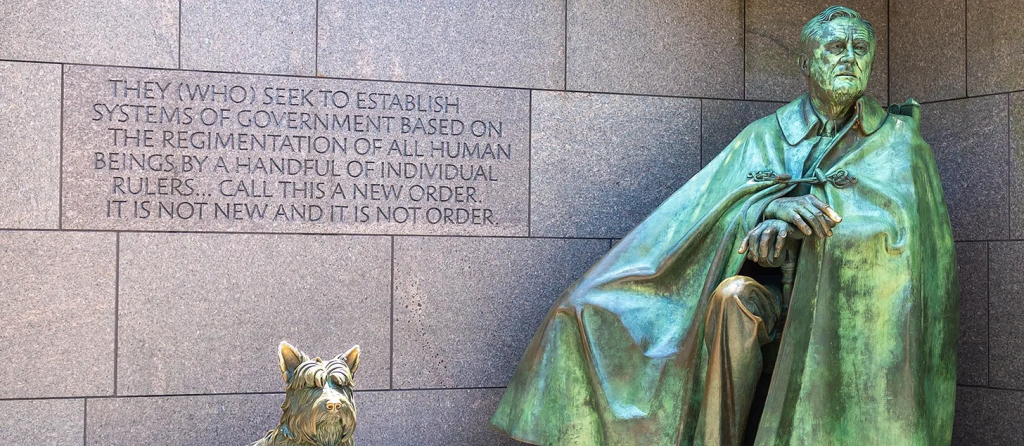
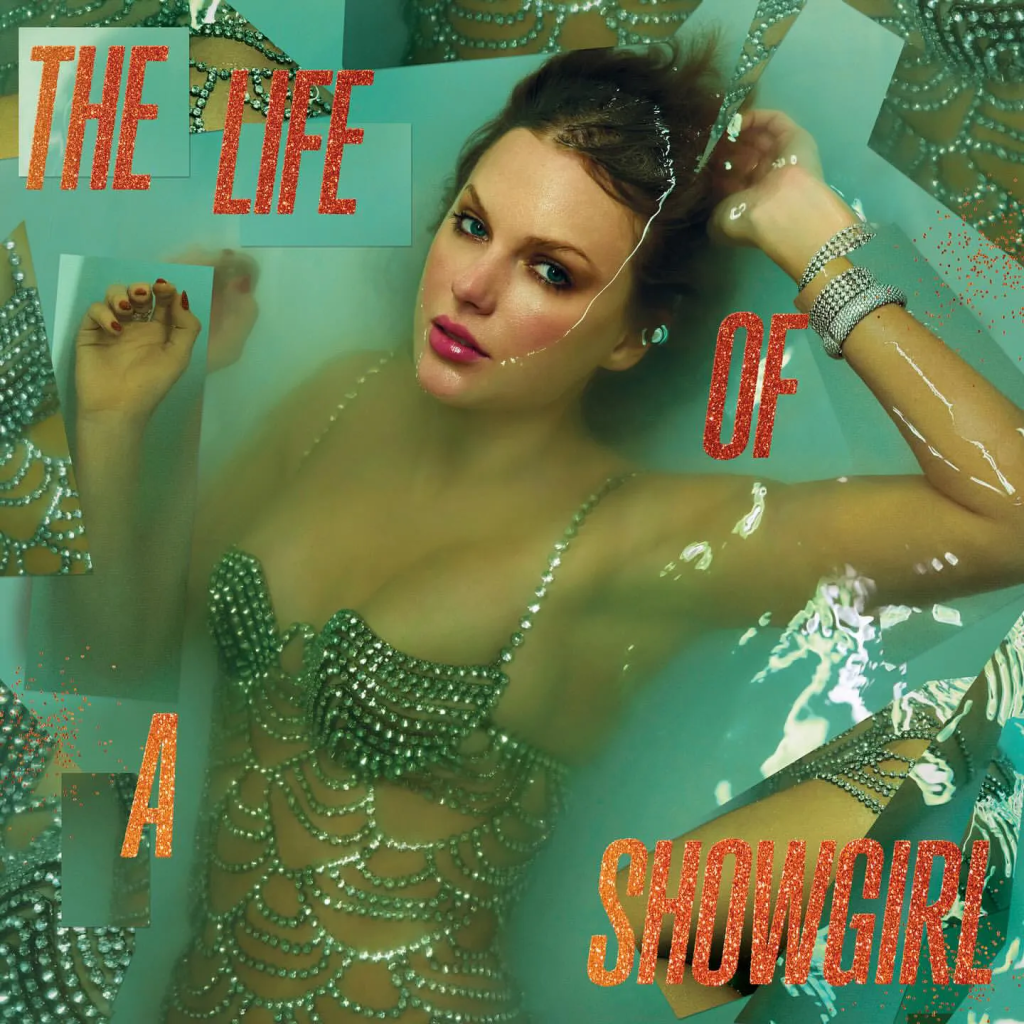
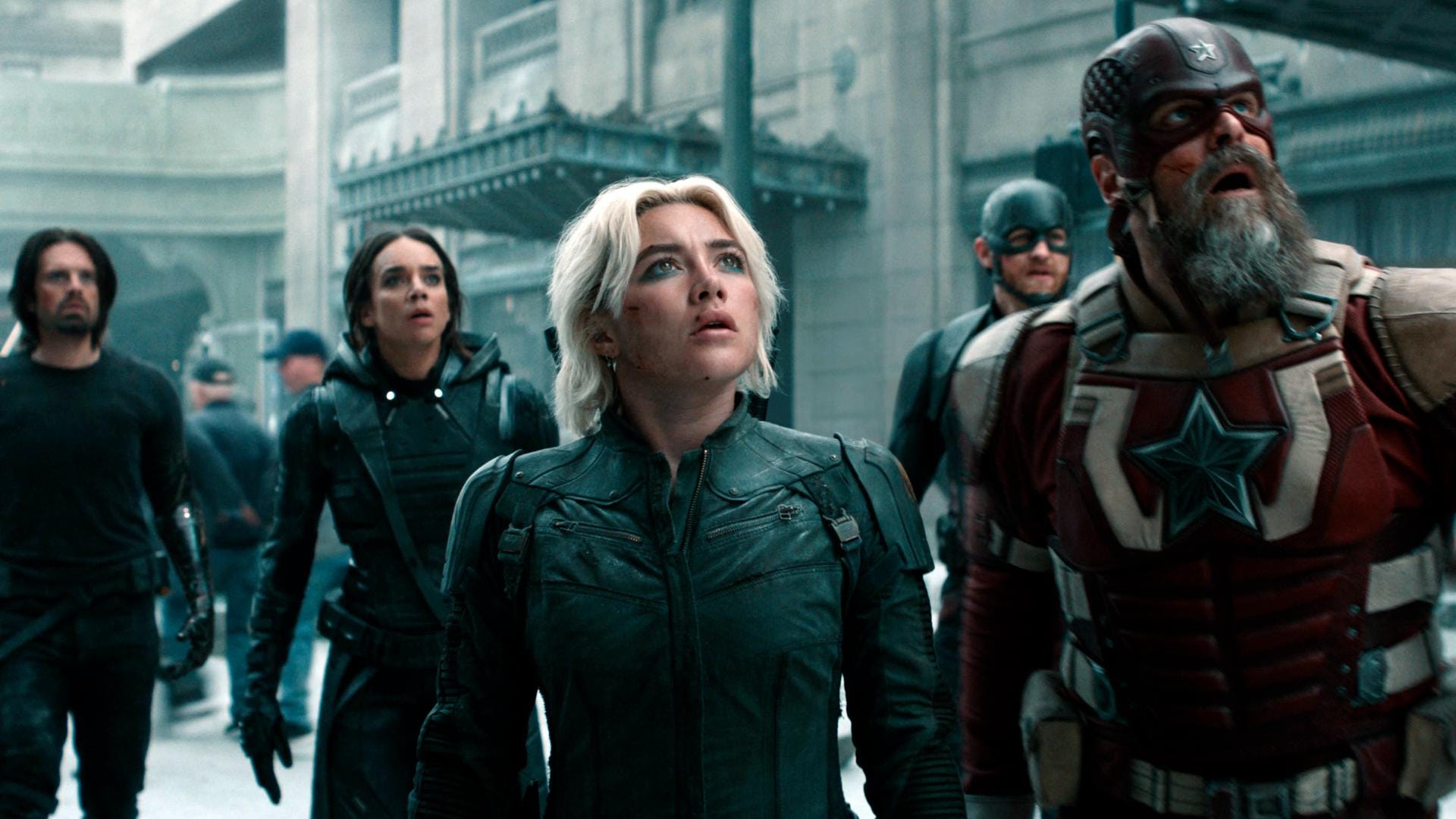


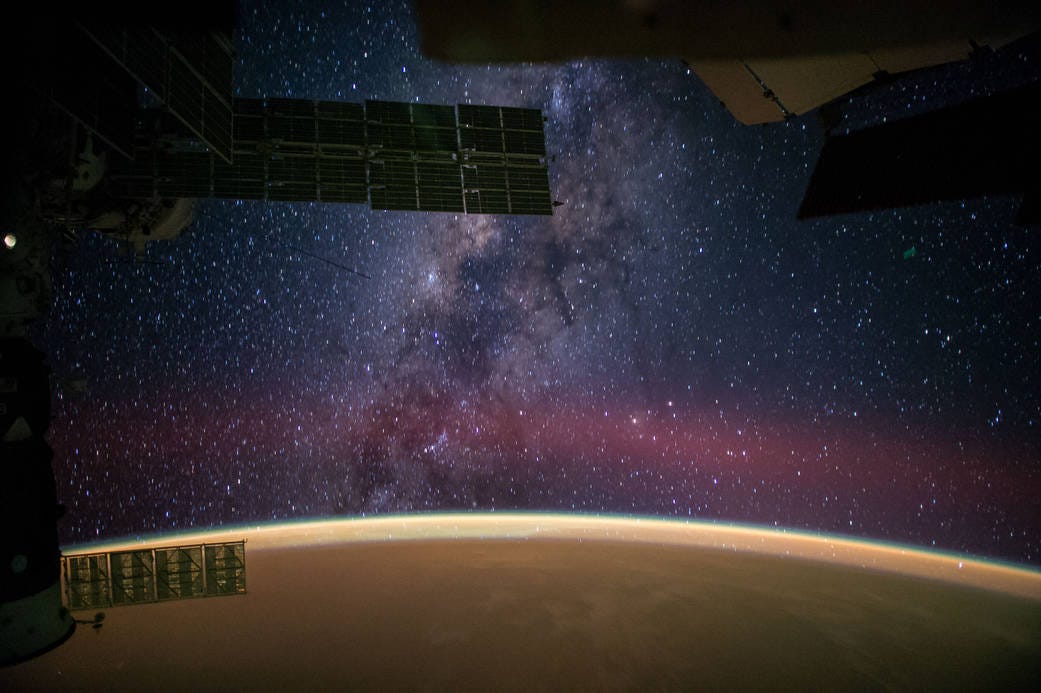
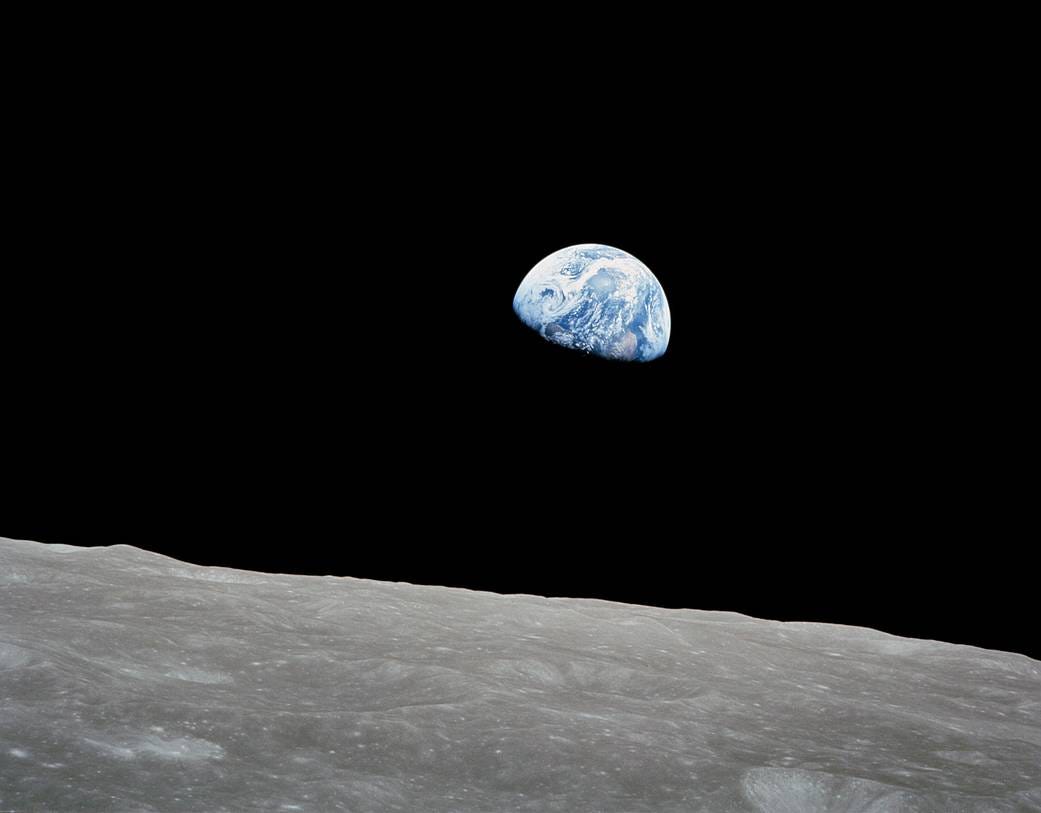

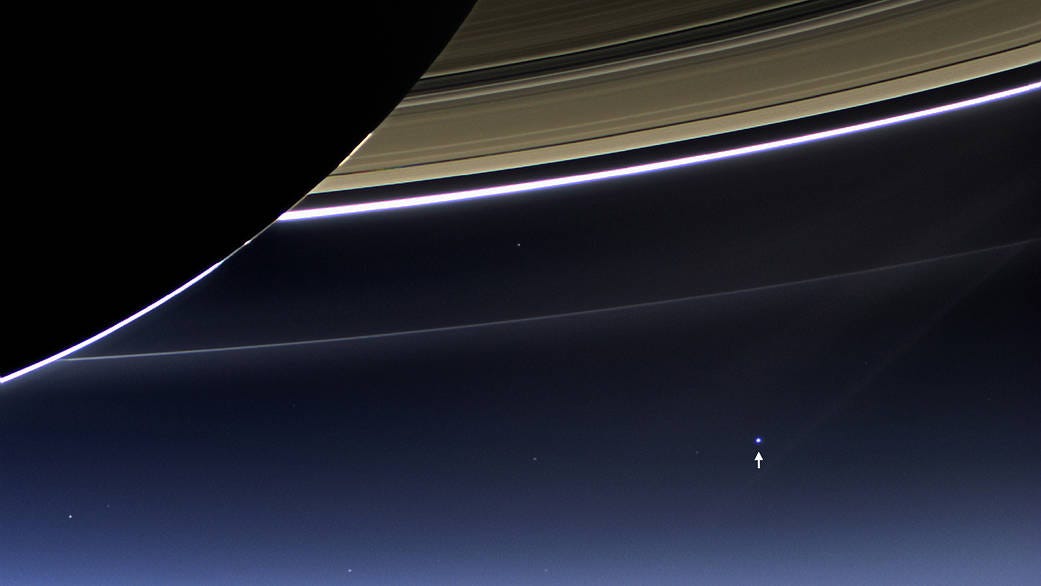

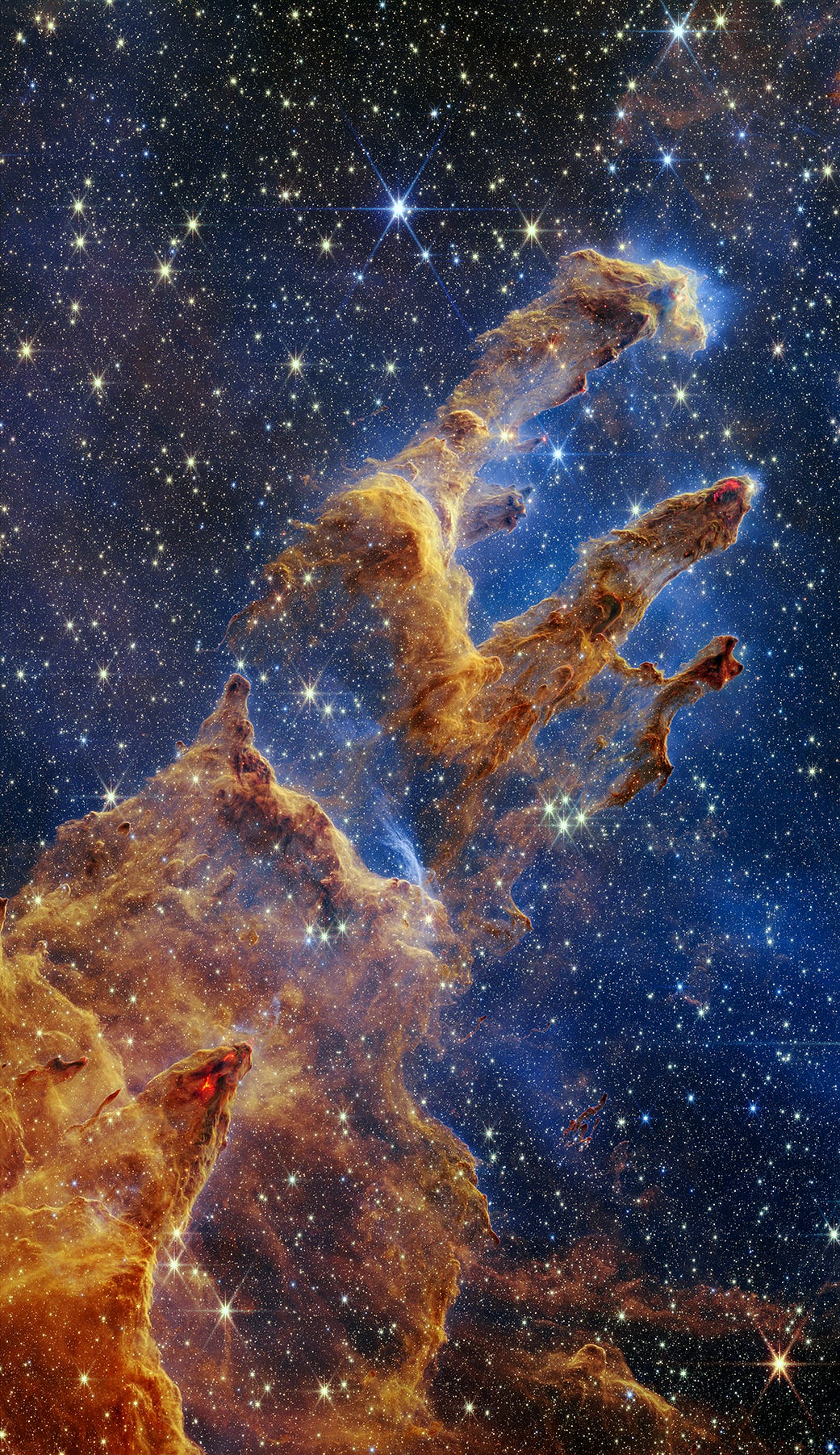
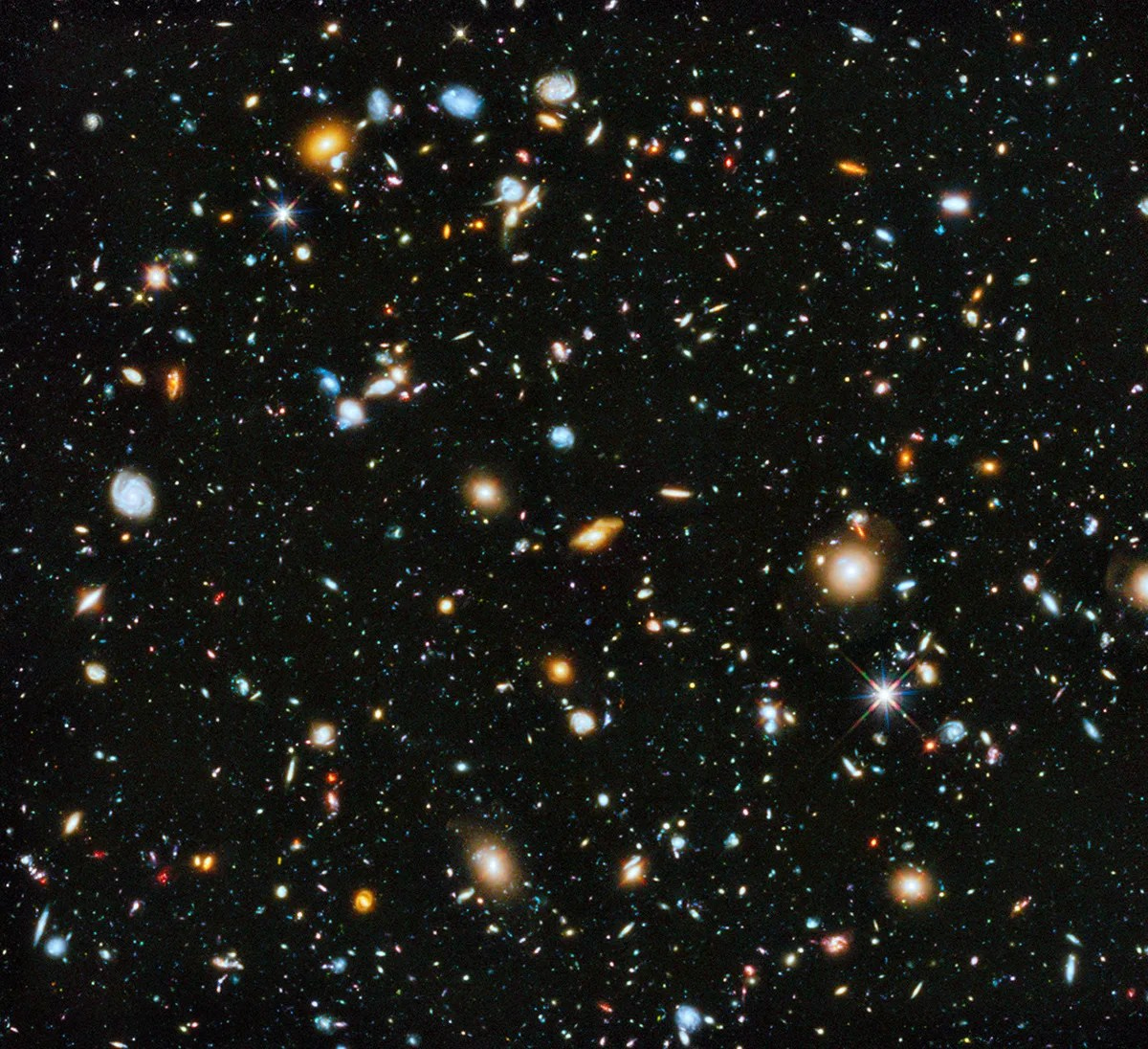
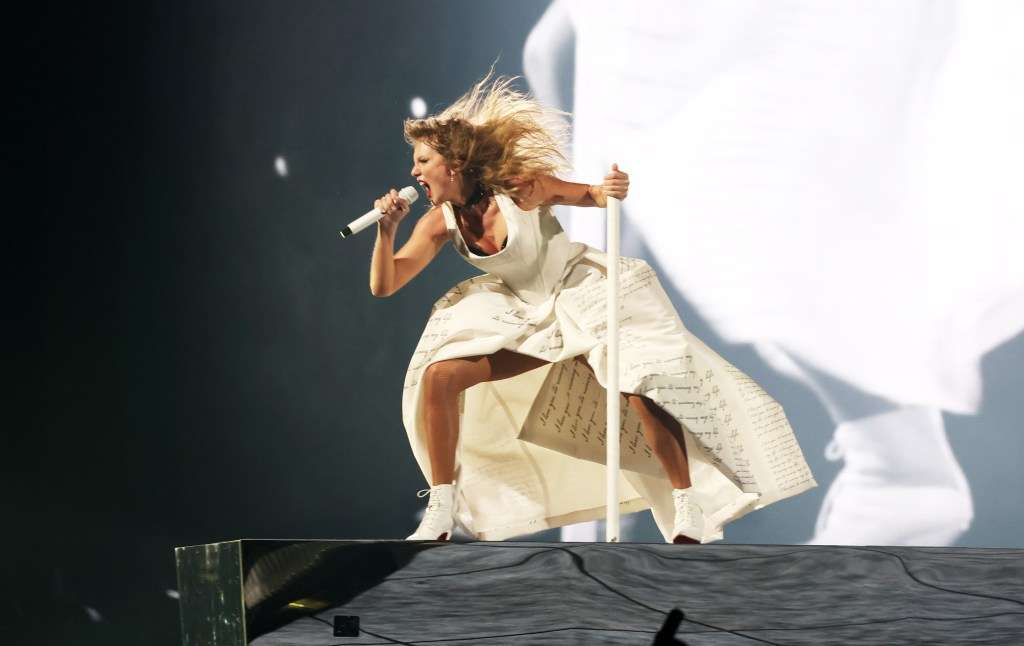

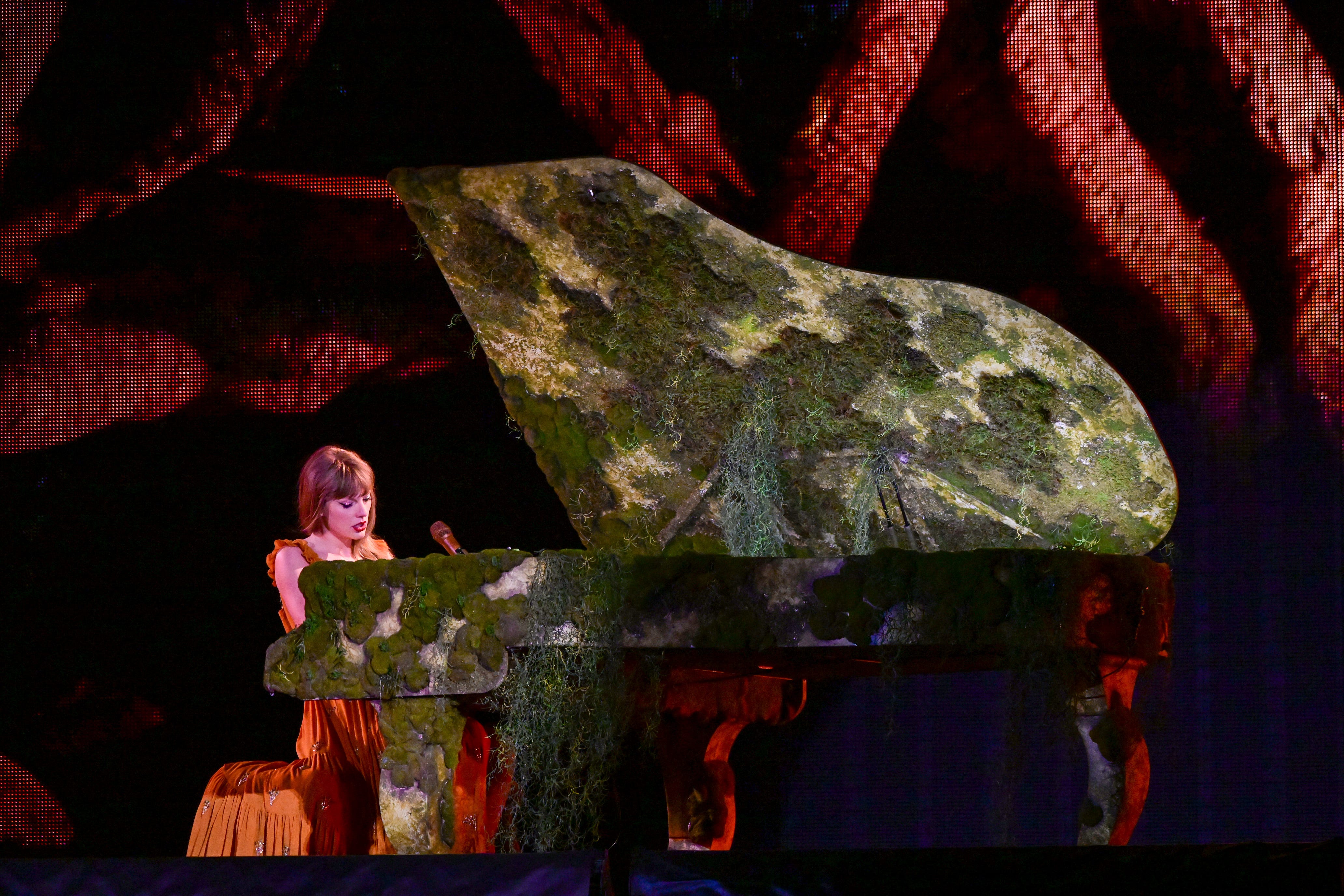
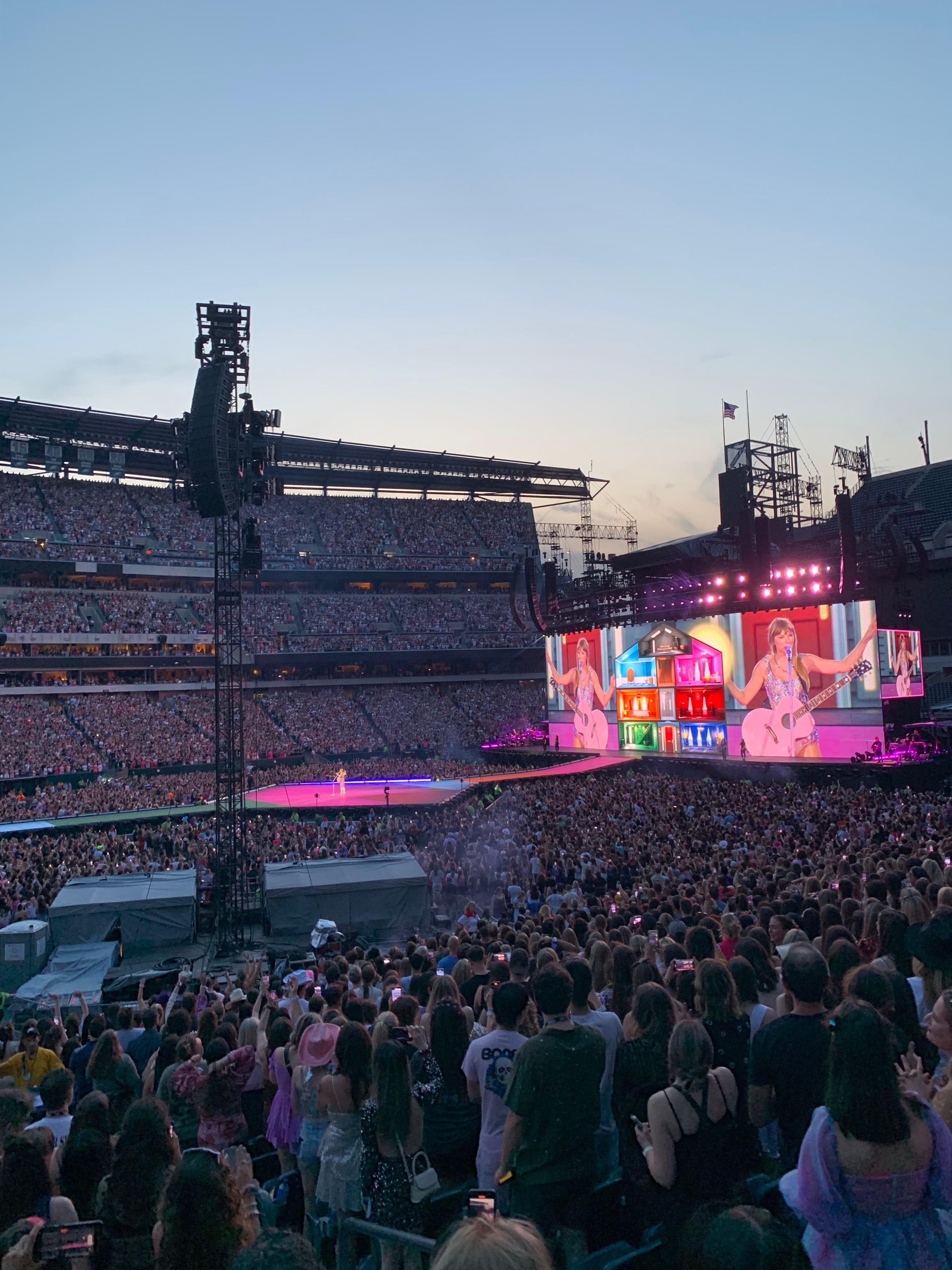



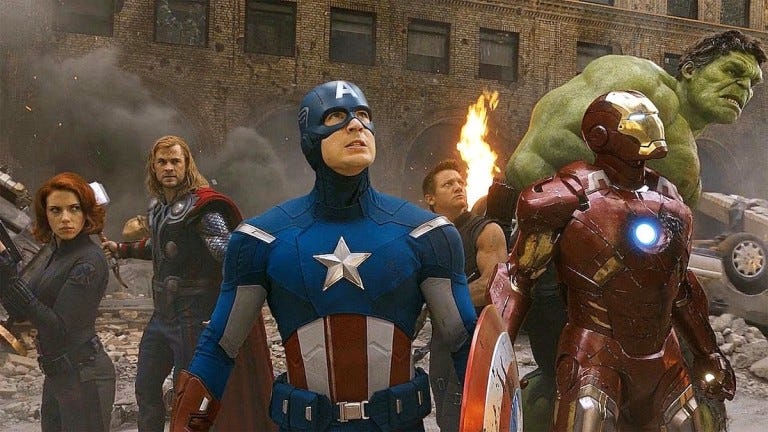
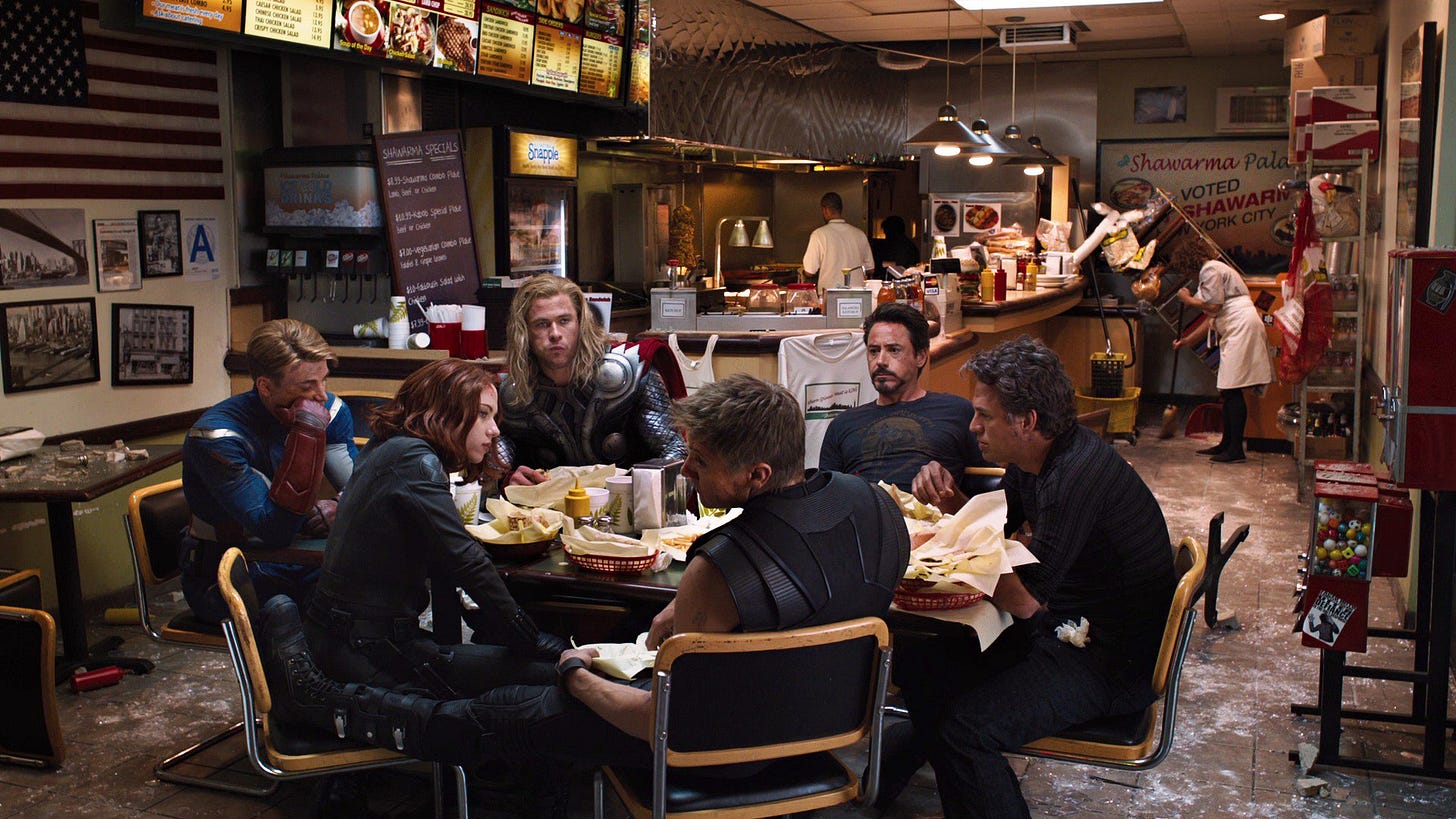
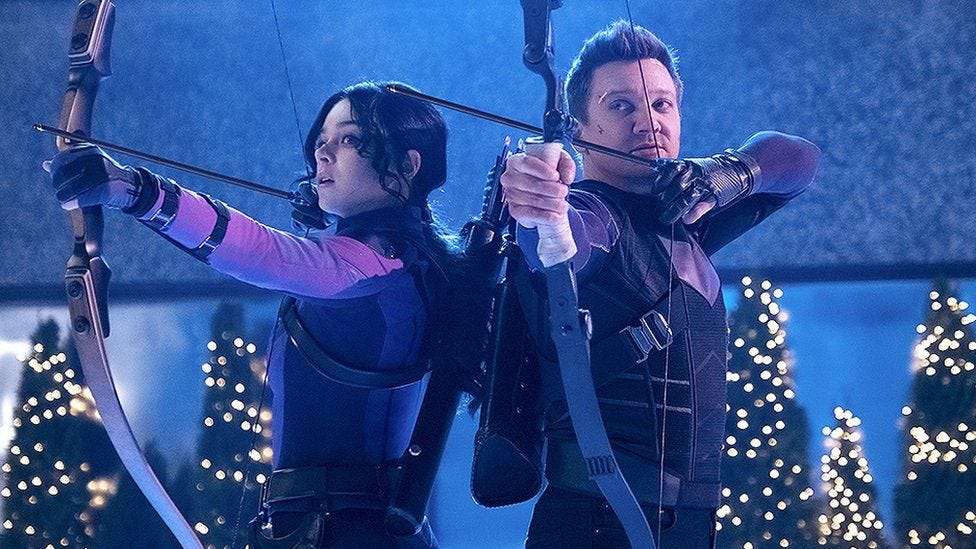

 Peter M. Juul