Why Artemis II represents the end of an era for NASA and America
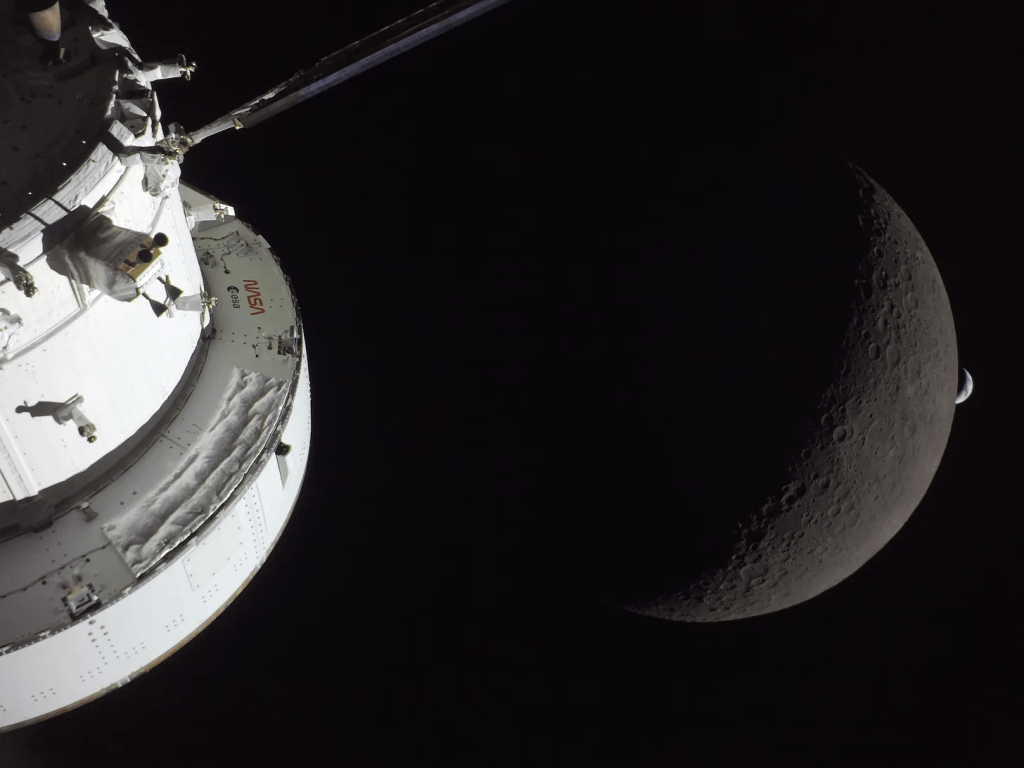
Last Friday evening, the four astronauts of Artemis II—commander Reid Wiseman, pilot Victor Glover, and mission specialists Christina Koch and Jeremy Hansen—returned safely to Earth as their Orion spacecraft Integrity splashed down in the deep blue waters of the Pacific Ocean. During a ten-day voyage that took them farther from terra firma than anyone has gone before, the Artemis II crew gave a sterling example of teamwork in action, surveyed previously unseen swathes of the lunar surface and witnessed an eclipse, and beamed back home a plethora of breathtaking, razor-sharp images of Earth, the Moon, and the wider cosmos.
It’s tempting to say that Artemis II offered a brief but welcome respite from the maelstrom of madness that’s engulfed America and the world over these past fifteen months, much in the same way Apollo 8’s first lunar circumnavigation “saved” the violent, tumultuous year of 1968. But there’s also something deeply unsettling about watching these four intrepid astronauts journey to the Moon and back again as a dissolute, self-absorbed president drags us all ever-deeper into his own supermassive moral black hole, issuing increasingly deranged threats as he tries to find a way out of his pointless, unwinnable war in Iran.
This strange, striking juxtaposition laid bare the profound moral and spiritual crisis America has inflicted upon itself, one far deeper and more corrosive than the dissonance between the high-minded ideals of space exploration and the Great Society and sordid realities of the war in Vietnam or urban riots at home that marked the Apollo era in the late 1960s. Indeed, Artemis II feels less like humanity’s next giant leap out into the cosmos and more like an elegy to a dying era: a majestic tribute to the world that once was—and a bright, shining reminder of what it could be again.
It’s a sense of deep pessimism buttressed by the way the Trump administration made plain its intent to gut the agency and cripple Artemis. Just before the launch of Artemis II, new NASA administrator Jared Isaacman—a billionaire with little experience beyond buying seats on a pair of SpaceX flights and whose main qualification appears to be his close relationship with Elon Musk—“restructured” the program so thoroughly as to effectively cancel it. He eliminated the Exploration Upper Stage, the powerful new upper stage for the unfairly maligned Space Launch System rocket, as well as the second SLS mobile launcher, both of which were nearing completion.
Isaacman also torpedoed the Gateway lunar space station, a project NASA had been working on with partners like Japan, Canada, and the United Arab Emirates, in favor of an illusory Moon base that will teach scientists and engineers far less about living in deep space—critical knowledge for any human journeys to Mars—than they’d learn with Gateway. While Isaacman didn’t cancel Artemis outright, his decisions make it likely the program will begin to bleed out over the next several years.
And even as Artemis II circled the Moon, the Trump administration released yet another NASA budget that cuts the agency’s funding to the bone along with the rest of American science. Scientific research and robotic exploration in particular would take a big hit, with some 53 science projects—and 10 robotic exploration missions—terminated if Trump’s proposed budget actually passed. That’s on top of the administration’s previous efforts to disembowel NASA, forcing thousands of experienced NASA workers out of their jobs and hollowing out major research centers like Maryland’s Goddard Space Flight Center. Along with the maiming of Artemis, this budget would transform NASA into a glorified contracting agency—not the engine of scientific research and exploration it has been since its founding in 1958.
In truth, however, Artemis has had more than its fair share of difficulties over the years—and the Trump administration seems dead set on doubling down on them. The fetish for “commercial” solutions in particular led NASA to try and outsource a number of critical program components to private companies that aren’t exactly up to the job. One company contracted to design new space suits for the International Space Station, for instance, gave up on the task, while the complexity inherent in designing a lunar space suit remains a daunting challenge. An attempt to contract out deliveries to the lunar surface, the Commercial Lunar Payload Service, has likewise encountered significant snags, with two missions failing and another cancelled, then revived.
But the most spectacular failure of NASA’s commercial fixation has been the attempt to contract out the lunar lander that would take Artemis astronauts to the Moon’s surface. SpaceX received a $3 billion deal to build a human landing system based on its Starship rocket; more than five years after the initial contract, Starship has yet to reach orbit—and it’d take more than a dozen Starship tanker launches to get a Starship-based lander to lunar orbit, and even then just barely. Blue Origin received a second lunar lander contract in 2023, and while its mission architecture appears less demanding it will still require multiple launches and refueling on orbit. Right now, though, it seems unlikely that either SpaceX or Blue Origin will be ready to land astronauts on the Moon by NASA’s new early 2028 goal.
The irony here is that the two main NASA-owned and -operated parts of Artemis, SLS and Orion, are the parts of the program that actually work. Naturally, then, the Trump administration and Administrator Isaacman want to reinforce commercial failures and let these two spacecraft wither on the vine. All in all, it’s hard to see the future of American spaceflight anything other than bleak—and the American space program as a whole may enter terminal decline over the next three years.
That’s partly why Artemis II feels so elegiac: it represents not only the passing of an age but also the something much more noble in shared purpose and public enterprise. As such, the mission itself stands as an implied rebuke to the venality, self-aggrandizement, and meanness that so dominate American public life today. It embodies the loftier ambitions and higher ideals once defined and fired us as a nation, spurred us on to achieve great things and expand the horizons of the possible—not just for ourselves, but for humanity as a whole. Put another way, Artemis II threw America itself into stark relief and showed Americans who and what we could be at our best.
It’s quite fitting, then, that the Artemis II crew named their Orion spacecraft Integrity, a virtue that’s in quite short supply these days. The crew itself brought humanity with them in both main meanings of the word: humanity as a species and society, on the one hand, and humanity as a sense of fundamental decency toward our fellow human beings on the other. Their humane professionalism and obvious camaraderie—as well as the close international cooperation involved in the mission—provided yet another clear and jarring contrast to the vicious, barrel-of-crabs mentality embraced by President Trump and the general incompetence of his administration.
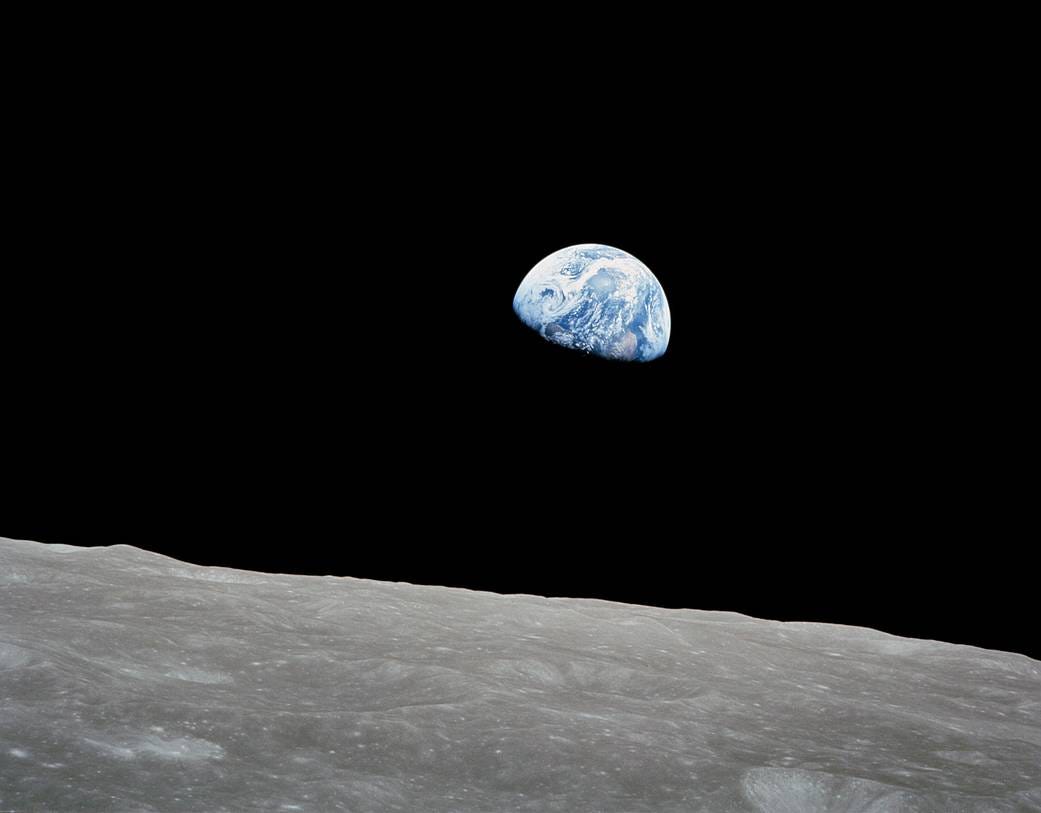
Artemis II offered something much more important than this contrast, however, braiding together moving, individual human moments with a grander cosmic perspective. Perhaps the single most emotional episode of the mission came when the crew named a newly observed lunar crater after commander Reid Wiseman’s late wife Carroll. But Artemis II also supplied a surfeit of deeper and more philosophical reflections from both the crew itself and those of us watching back on Earth, from new images of Earthset—a deliberate echo of Apollo 8’s indelible Earthrise photo—to mission specialist Christina Koch’s view-from-above-style epiphany on how a glimpse of our home planet in the black void of space ought to underscore our common humanity:
It truly emphasized how alike we are, how the same things keep every single person on planet Earth alive. We evolved on the same planet, and we have some shared things about how we love and live that are just universal.
Or as pilot Victor Glover put it, Artemis II presents “an opportunity for us to remember where we are, who we are, and that we are the same thing. And that we got to get through this together.”
If Artemis II truly represents one last blaze of glory for NASA and America’s space program, it’s at least one that will burn brightly enough to inspire us to build a better future after the present dark age finally passes—an incandescent candle in the dark that reminds us of what we once were and shows who we can be again.